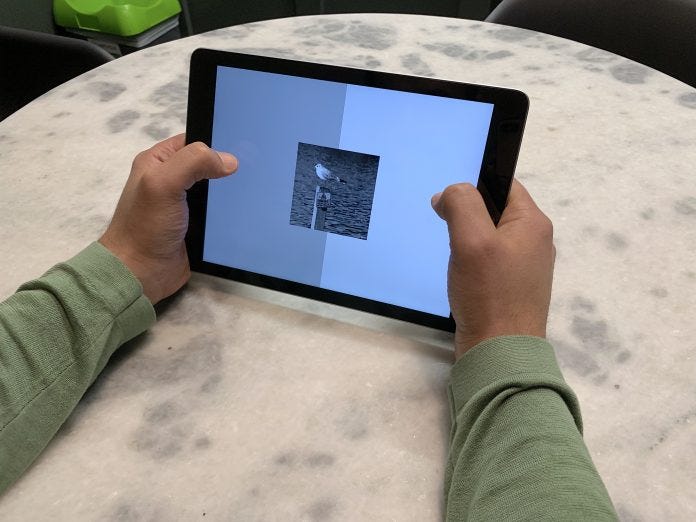
"Cognitive decline is one of those conditions where the timing of detection matters. Catching it earlier means more time for treatment, planning, and lifestyle change. The standard approach involves the Mini-Mental State Examination or the Montreal Cognitive Assessment. Both are short clinician-administered tests, around 10 minutes long, that walk patients through tasks like recalling a list of words, drawing a clock, and naming objects."
"To address the gap, several self-administered assessment products have been developed. They can't replace the standard test, but they can serve as supplementary data, or as an early warning sign that prompts someone to seek professional help. Some are gamified, because as Michael Hornberger from the University of East Anglia put it: "Very often, people don't want to participate in scientific tests because they're boring and dull. We realized that, if we could make something fun but still scientifically valid, that would be a fantastic way to engage lots of people.""
"These tools each pick a cognitive domain that neuropsychology has shown to be sensitive to early disease (spatial navigation, processing speed, working memory, executive function), and design tasks related to it. As the user performs the task, the program captures behavioral data such as reaction times per trial, accuracy and error patterns, movement traces, hesitations, and how performance changes over time. Those measurements are then compared against models of typical performance, derived either from large normative samples or from machine-learning classifiers trained on data from healthy and clinical populations."
Cognitive decline detection depends on timing because earlier identification allows more time for treatment, planning, and lifestyle changes. Standard screening uses clinician-administered tests such as the Mini-Mental State Examination and the Montreal Cognitive Assessment, which take about ten minutes and include tasks like word recall, clock drawing, and object naming. Many people do not get screened due to limited access or reluctance. Self-administered tools have been created to supplement standard testing and act as early warning signals. These tools use gamified tasks tied to cognitive domains sensitive to early disease, including spatial navigation, processing speed, working memory, and executive function. They collect behavioral measures such as reaction time, accuracy, error patterns, movement traces, hesitations, and performance changes over time, then compare results to normative models or machine-learning classifiers trained on healthy and clinical data.
#cognitive-decline #early-detection #neuropsychological-assessment #gamified-testing #behavioral-data-analytics
Read at Medium
Unable to calculate read time
Collection
[
|
...
]