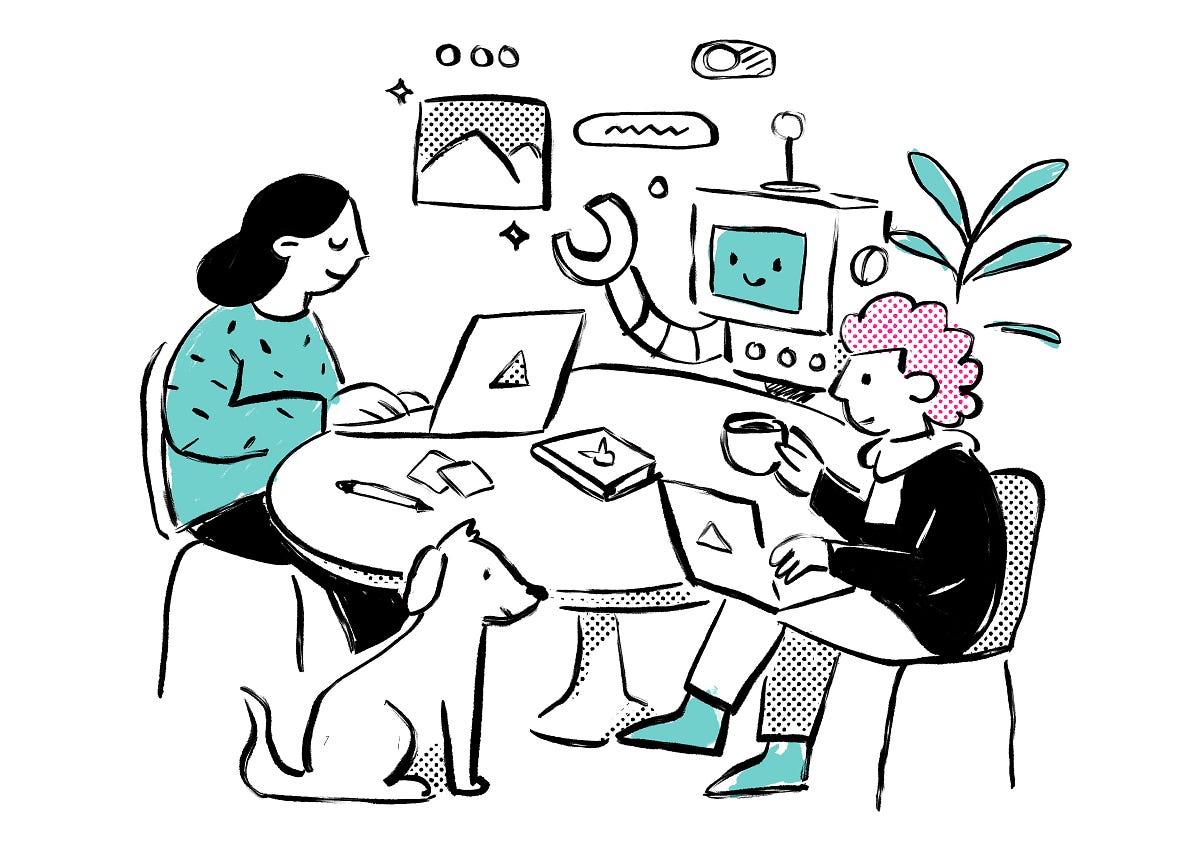
"Something's been slowly shifting in the design zeitgeist. I've been watching my feed on X and the vibe has changed. More and more, I see designers sharing finished experiments or prototypes they coded themselves, rather than static Figma files. Moving from working on a canvas to talking to an LLM. The conversation isn't "here's a design I made" anymore... it's "here's something I shipped this afternoon.""
"Figma is a great tool, real-time collab, no local file drama, browser-based so u could work from anywhere, focused on ux/ui, an infinite canvas, components... etc etc. But heading into 2026, the conversation has changed. Designers are increasingly calling it slow or less central compared to AI tools like Claude Code, Cursor, and v0. It's not about tools like Figma or Webflow disappearing. It's about code becoming the primary playground for creative workflows."
Designers are increasingly sharing shipped experiments and coded prototypes instead of static Figma files. More work moves from designing on a canvas to iterating by talking to language models and shipping runnable code. AI-assisted coding tools like Claude Code, Cursor, and v0 enable faster iteration and make code a more immediate medium for creative exploration. Figma retains strengths—real-time collaboration, browser access, UX-focused features—but is perceived by many as slower or less central for building interactive, ship-ready experiences. The shift centers on code becoming the primary playground for creative workflows rather than the disappearance of design tools.
Read at Medium
Unable to calculate read time
Collection
[
|
...
]