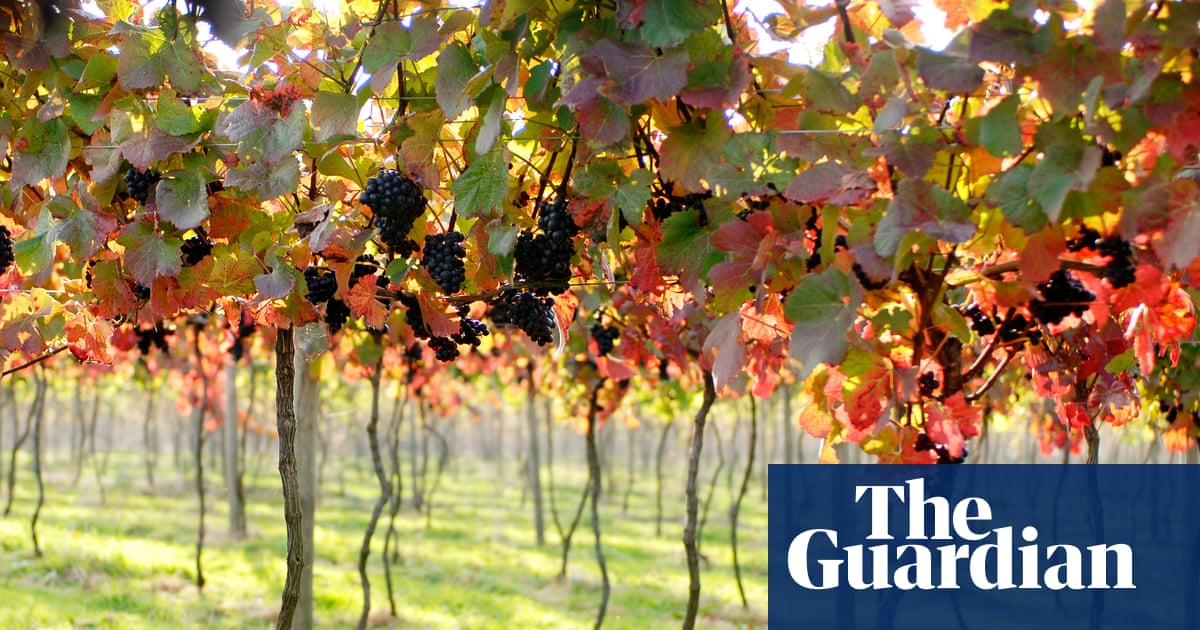
"According to WineGB, the national trade organisation for British winemakers, red probably accounts for less than 5% of all English wine. The cost issue, however, transcends red wine alone; winemaking in England might be one of our fastest-growing agricultural sectors, but it still operates on a relatively small scale, which naturally bumps up that price tag."
"Not only does climate change make red wine production look a bit more possible in the UK, but wine tastes are shifting. There is a growing appetite for light, juicy reds the trend for chilled glou-glou as an alternative to rose in summer which often go hand-in-hand with a lower ABV: good news for a wine-drinking culture that's increasingly committed to moderate boozing."
"If you're ready to dip in your toes, pinot noir and, to a lesser extent, pinot meunier (the red grapes that accompany chardonnay in classic champagne blends) dominate the English red scene, but for something a bit darker, I recently enjoyed Winbirri's dornfelder from Norfolk alongside a pizza."
English red wine accounts for less than 5% of domestic wine production and struggles with high prices, typically ranging from £15-25 per bottle, making it unaffordable for everyday drinking. The small scale of English winemaking and cooler climate unsuitable for traditional red varieties contribute to elevated costs. However, market conditions are improving. Climate change enables increased red wine production in the UK, while consumer tastes shift toward lighter, lower-alcohol wines and chilled alternatives to rosé. Pinot noir and pinot meunier dominate English red production, with emerging options including dornfelder, hybrid varieties like rondo and regent, and divico. These developments position English reds as increasingly viable options for consumers seeking moderate alcohol consumption.
#english-wine-production #red-wine-pricing #climate-change-and-viticulture #consumer-beverage-trends #low-alcohol-wines
Read at www.theguardian.com
Unable to calculate read time
Collection
[
|
...
]