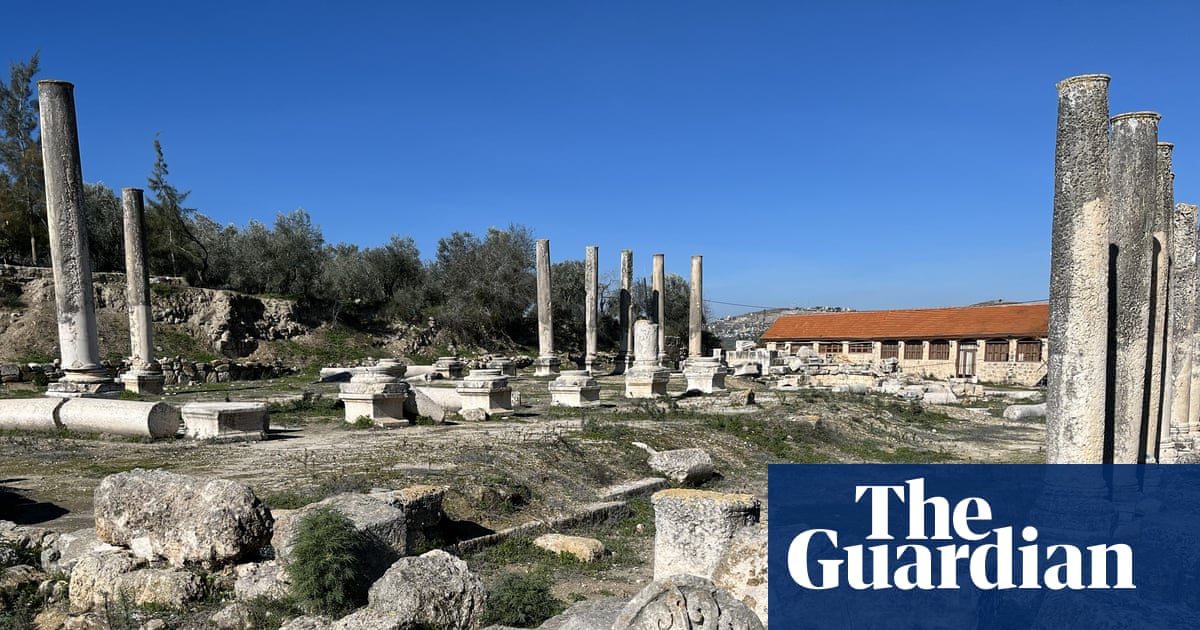
"The Byzantine-era church lies half hidden in the shade. Roman columns rise from among the olive trees, even older ruins linked to Israelite kings are overgrown. To the west, the Mediterranean is just visible on the horizon. To the north and south are the hills of the occupied West Bank. In the small town of Sebastia, a hundred metres or less east of the ruins, everyone is very worried."
"Though there have been reports of an Israeli government project to develop the site for several years, the notice came as a shock. Most of the 3,500 Palestinian residents depend on either tourism at the site or their olive trees for their livelihoods. The current plans for development of the site involve a visitors' centre, a car park, and a fence that will separate the ruins from the rest of the town, cutting residents off from the ruins and any olive orchards that survive."
The Byzantine-era church and Roman columns stand amid overgrown Israelite-linked ruins on a hilltop near Sebastia, with the Mediterranean visible to the west and West Bank hills nearby. In November the mayor received notice that Israeli authorities would seize the entire archaeological site. The expropriation of 182 hectares is the largest archaeological land seizure in the occupied West Bank since 1967. About 3,500 Palestinian residents rely on tourism and olive orchards for livelihoods. Planned development includes a visitors' centre, car park and a fence that would separate the ruins from the town and cut off orchards. Supporters emphasize the site's ancient Israelite identity, while critics view the project as part of settlement expansion.
Read at www.theguardian.com
Unable to calculate read time
Collection
[
|
...
]