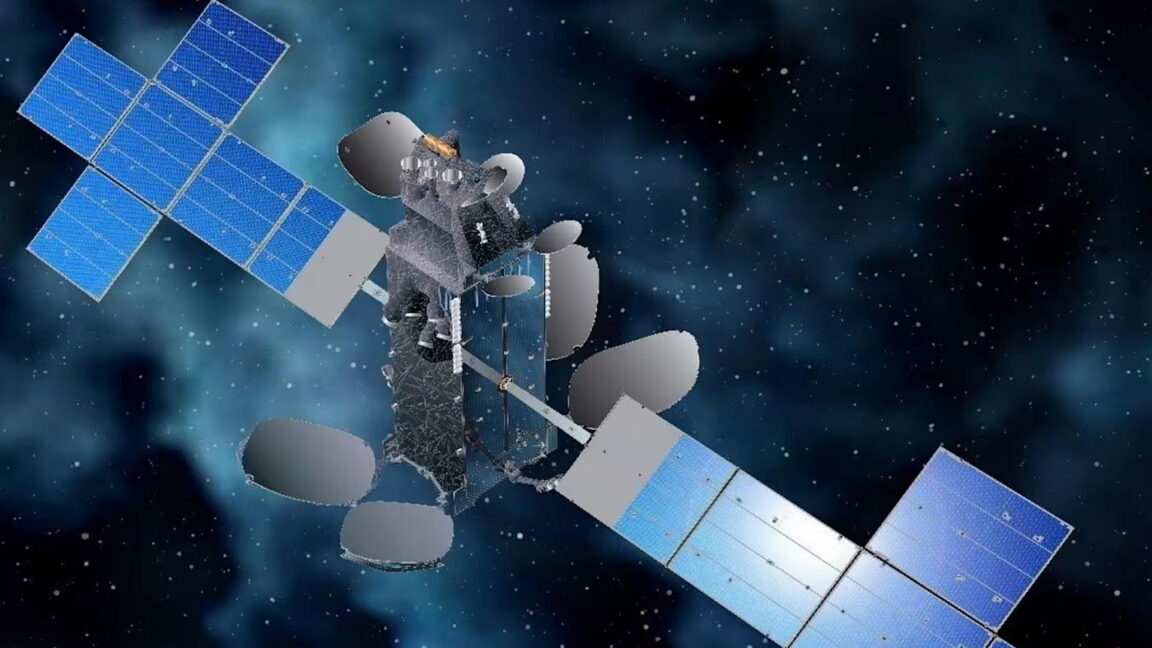
"Those thrusters could also be used to knock satellites out of alignment or even cause them to crash back to Earth or drift into space. Intelligence gathered by Luch 1 and 2 could also help Russia coordinate less overt attacks on Western interests. Monitoring other satellites can reveal who is using them and where-information that could later be exploited for targeted ground-based jamming or hacking operations."
"The Luch vehicles were "maneuvring about and parking themselves close to geostationary satellites, often for many months at a time," said Belinda Marchand, chief science officer at Slingshot Aerospace, a US-based company that tracks objects in space using ground-based sensors and artificial intelligence. She added that Luch 2 was currently "in proximity" to Intelsat 39, a large geostationary satellite that services Europe and Africa."
""They have visited the same families, the same operators-so you can deduce that they have a specific purpose or interest," said Norbert Pouzin, senior orbital analyst at Aldoria, a French satellite tracking company that has also shadowed the Luch satellites. "Even if they cannot decrypt messages, they can still extract a lot of information... they can map how a satellite is being used, work out the location of ground terminals, for example," he added."
Russian Luch 1 and Luch 2 spacecraft have maneuvered close to multiple geostationary communications satellites, parking near them for months and shadowing at least 17 targets above Europe. Proximity operations enable collection of operational intelligence that can reveal which ground terminals and operators are using those satellites, information usable for targeted ground-based jamming, hacking, or other less overt attacks. Maneuvering thrusters also create the potential to misalign, force re-entry, or drift targeted satellites. Tracking firms report repeated visits to NATO-based operators, and Russia has launched additional maneuverable reconnaissance satellites, Cosmos 2589 and 2590, with Cosmos 2589 heading toward geostationary range.
Read at Ars Technica
Unable to calculate read time
Collection
[
|
...
]