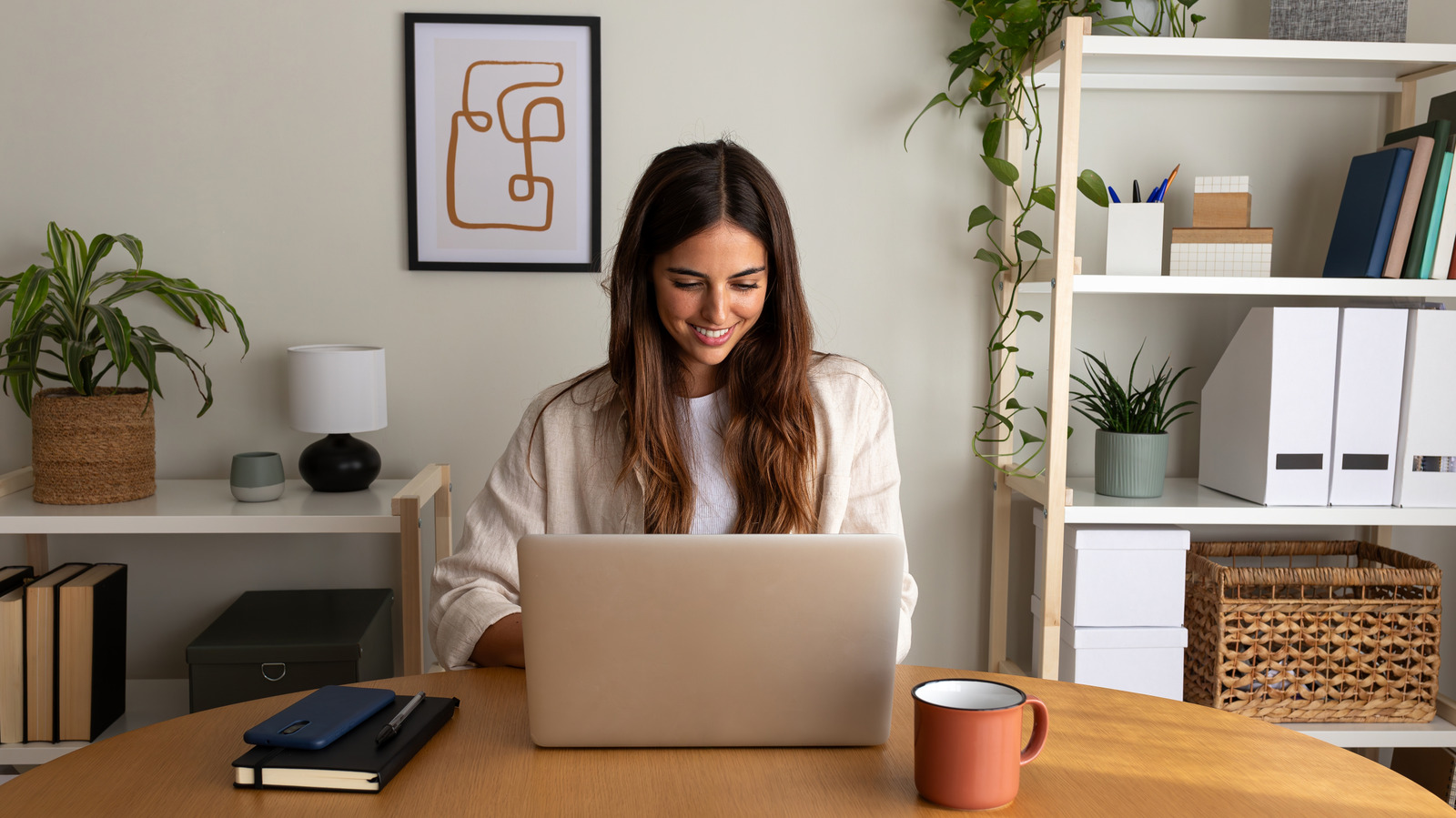
"Namely, the doors and the windows. By sealing these against sound coming in, you will automatically have a quieter office. You can go one step further, however, to help minimize extra noise. Ensuring that there is extra padding on the floor to absorb sound will keep the area quiet, as will having items like bookshelves on the walls to act as a sound buffer."
"You want to focus on areas where the most noise bleeds through and seal those first. After that, you need to take stock of the layout of your home office. If it is open and wide with very little in the way of furniture or decor, then there isn't much there to absorb sound waves and you risk getting an echo as you speak during meetings."
"The gap under the door to your home office lets in sound from the rest of your home. One simple DIY way to fix this is by installing what is known as a door sweep. It attaches to the bottom of your door and blocks that gap. They are very easy to install yourself, typically either just sliding into place under the door or being attached via an adhesive strip, depending on what specific product you purchase."
Home offices can suffer noise from family, neighbors, and household appliances, which distracts during work and can be heard during virtual meetings. Primary sound entry points are doors and windows; sealing those gaps reduces incoming noise. Adding floor padding absorbs impact and airborne sounds. Filling empty room surfaces with furniture and items like bookshelves creates sound buffers that reduce echoes. Install door sweeps to block the gap under doors; many attach with adhesive or slide into place. Evaluate room layout and increase soft or dense surfaces where possible to minimize reverberation and improve meeting audio clarity.
Read at BGR
Unable to calculate read time
Collection
[
|
...
]