Software development
fromInfoWorld
9 hours agoThe reckless temptation of AI code generation
Replacing engineers with AI can lead to inefficient code and skyrocketing cloud costs.
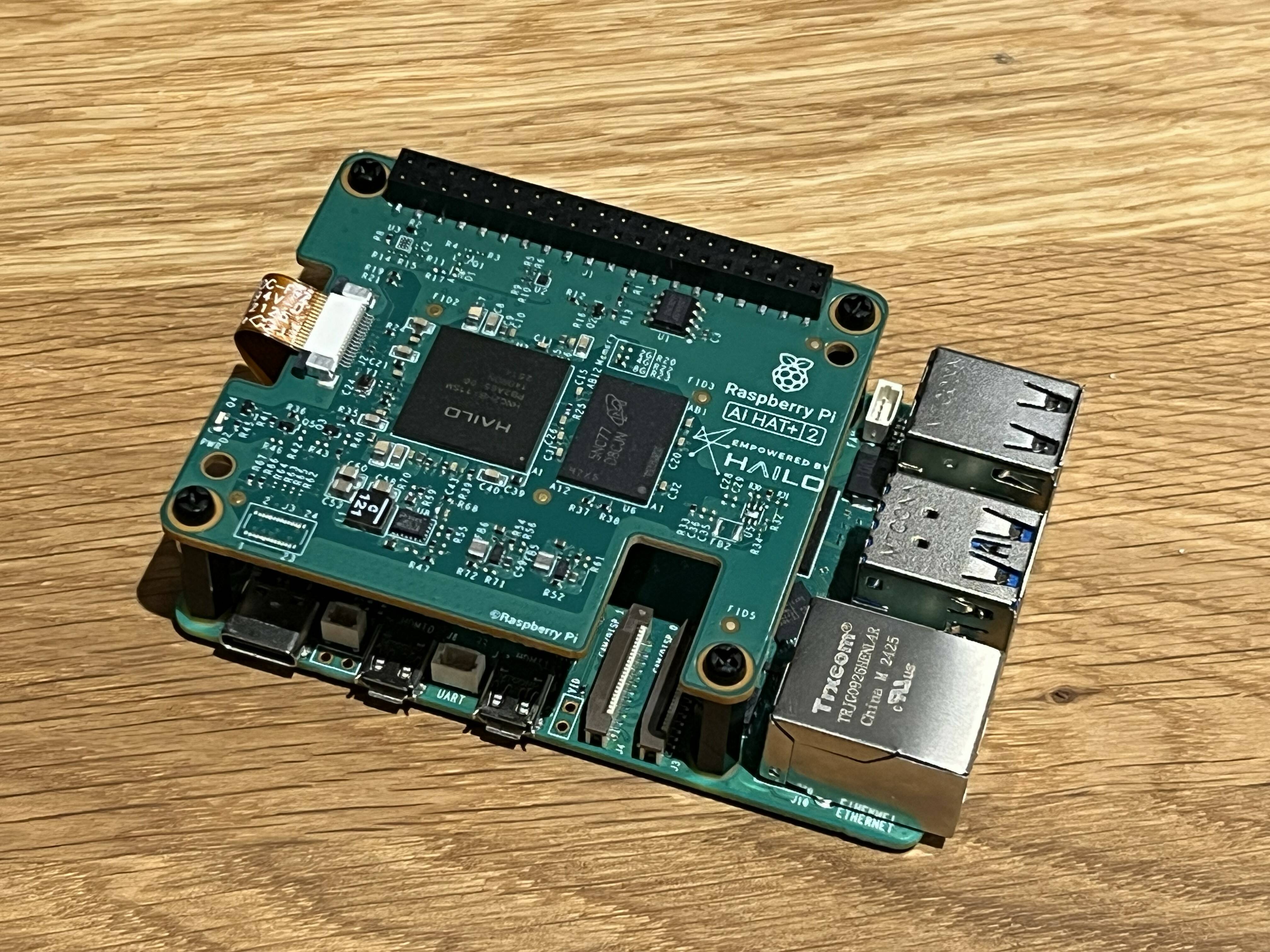
RAM prices are skyrocketing, driving up the cost of products that rely heavily on memory. The price of Raspberry Pi boards has now soared to the point where two 16GB Raspberry Pi 5 boards will cost you as much as a new laptop.
The new Arduino Ventuno Q is a very different beast. For one, it's powered by the Dragonwing IQ-8275 chipset. This contains an 8-core Kryo CPU (2x Gold Prime at 2.35GHz + 2x Gold at 2.1GHz + 4x Silver at 1.95GHz) and an Adreno 623. The Ventuno Q offers up to 16GB of RAM and up to 64GB of eMMC storage plus an M.2 NVMe Gen 4 connector for SSDs.
The TypeScript team released an early preview of TypeScript 6. This release is mainly about internal changes preparing for the future Go-based compiler planned for TypeScript 7. Large monorepos could see dramatic speed improvements once the Go compiler lands.
What separates this from a standard Raspberry Pi build is the pair of breadboards soldered directly to the GPIO pins, seated inside the case, and accessible through a removable back panel. Connecting a sensor no longer means hunting for a separate breadboard and a tangle of jumper wires. PickentCode plugged in a temperature and humidity sensor and had it reading live data within minutes.
Retail point-of-sale systems today offer a wide range of options for peripherals and hardware. Their technical specifications play a major role in selection, and big retailers often choose multiple vendors to reduce a single point of failure. This gives them an advantage to negotiate price or support as well. Technically, these peripherals also require updating with new models and may have new feature sets. This necessitates the redevelopment of point-of-sale applications, increasing development costs.
ChatGPT's release over three years ago triggered an AI frenzy. While AI models continue to become more capable, to truly be as helpful as possible to people in their everyday lives, they need to have access to everyday tasks. That's only possible by allowing them to live outside a chatbot on your laptop screen and more presently in your environment.
In an effort to probe the limits of autonomous software development Anthropic researcher Nicholas Carlini used sixteen Claude Opus 4.6 AI agents to build a Rust-based C compiler from scratch. Working in parallel on a shared repository, the agents coordinated their changes and ultimately produced a compiler capable of building the Linux 6.9 kernel across x86, ARM, and RISC-V, as well as many other open-source projects. The agents ran roughly 2,000 sessions without human intervention, incurring about $20,000 in API costs.
Software developers have spent the past two years watching AI coding tools evolve from advanced autocomplete into something that can, in some cases, build entire applications from a text prompt. Tools like Anthropic's Claude Code and OpenAI's Codex can now work on software projects for hours at a time, writing code, running tests, and, with human supervision, fixing bugs. OpenAI says it now uses Codex to build Codex itself, and the company recently published technical details about how the tool works under the hood.
Software development used to be simpler, with fewer choices about which platforms and languages to learn. You were either a Java, .NET, or LAMP developer. You focused on AWS, Azure, or Google Cloud. Full-stack developers learned the intricacies of selected JavaScript frameworks, relational databases, and CI/CD tools. In the best of times, developers advanced their technology skills with their employer's funding and time to experiment. They attended conferences, took courses, and learned the low-code development platforms their employers invested in.
Last year I first started thinking about what the future of programming languages might look like now that agentic engineering is a growing thing. Initially I felt that the enormous corpus of pre-existing code would cement existing languages in place but now I'm starting to think the opposite is true. Here I want to outline my thinking on why we are going to see more new programming languages and why there is quite a bit of space for interesting innovation.