Higher education
fromLos Angeles Times
3 hours agoDouble the vote. Students push for increased power on UC Regents board
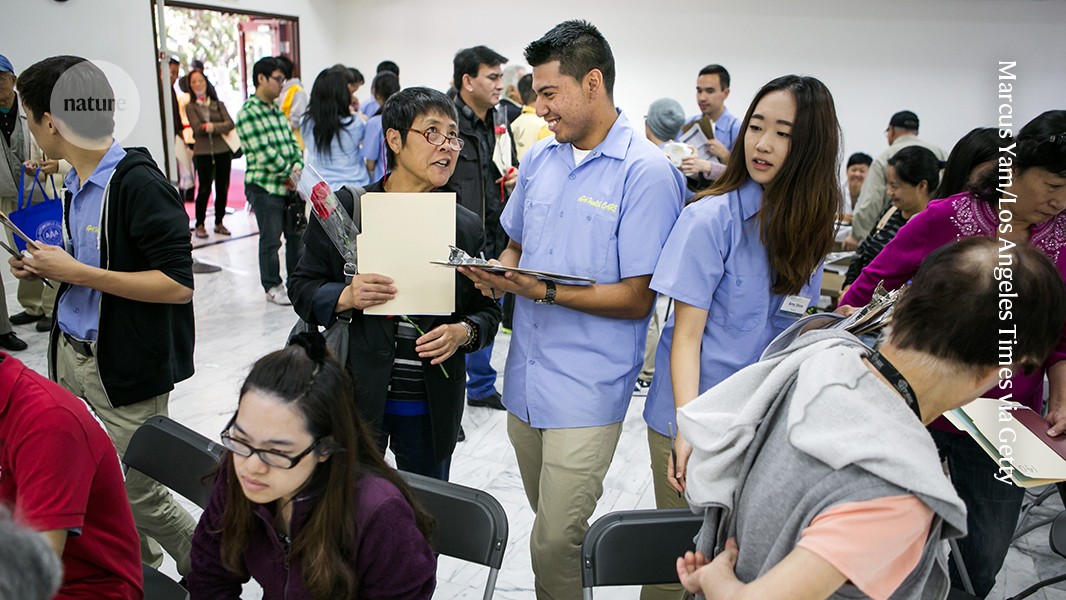
UC students seek to double their representation on the Board of Regents by adding a second voting seat.
An analysis of lobbying expenses among members of the Association of American Universities shows that at least $8.5 million flowed toward such efforts in the first quarter of 2026.
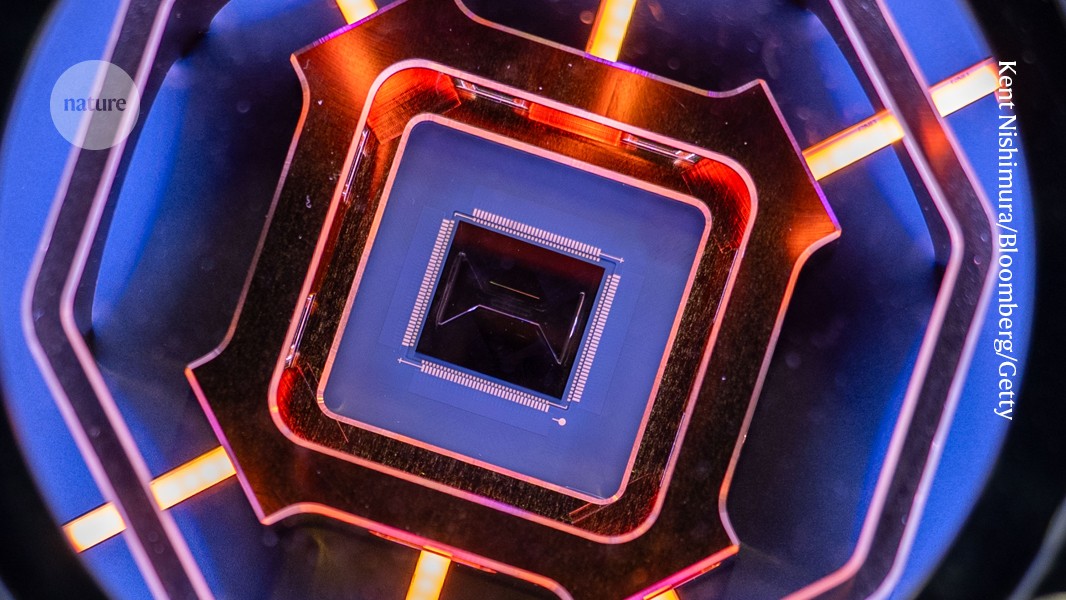
A key element of the project is discovering fundamentally new ways of working: Research that results only in incremental improvements in existing methods and models that already exist is specifically excluded from MATHBAC funding.
Known as ExStra, this is a permanent national funding programme designed to strengthen research at the nation's top universities and make them more competitive internationally. While the ExStra programme allows for up to 15 "Excellent Universities" (Exzellenzuniversitaten), only ten institutions have made the grade for the next round of funding.
One year ago this month, Howard University in Washington DC landed the coveted title of an R1 research university - the highest US research designation conferred by the Carnegie Classification of Institutions of Higher Education. The achievement - attained when a university spends at least US$50 million on research and awards at least 70 research doctoral degrees each year - is making Howard attractive to funders, faculty members and students, says its interim president, Wayne Frederick.
OHSU's National Primate Research Center may be no more, much to the delight of animal welfare advocates, who have long been pushing the university to shut the doors on its monkey research facility. Yesterday, OHSU's board voted unanimously to look into transitioning the center-which, with about 5,000 primates, is one of the largest research centers of its kind in the US-into a monkey sanctuary.
According to data from the European Research Council (ERC), applications from the United States for its starting, consolidator and advanced grants to individual researchers - each worth up to €2.5 million (US$5.3 million) over five years - rose by 120% in its most recent round of calls, compared to an overall rise in applications of 17% (see Choosing Europe below).
For nearly 100 years, the United States has been the world's leader in a wide variety of scientific fields. No other country has: invested as much in fundamental scientific research, has made more scientific breakthroughs and scientific advances, has attracted more scientific researchers to move there to conduct their research, or has conducted more projects and been home to more scientists that have won Nobel Prizes.
I spent the early years of my PhD at an Austrian non-academic research institute, where competing for grants was the only way that my colleagues and I could secure funding for our research. Everything else we did, from publishing papers to presenting at conferences, felt designed, ultimately, to help secure the next grant. The system seemed back to front: surely it should be about the science first?
Picture a scientist with a provocative hypothesis - something that defies conventional wisdom or verges on the outlandish. Supporting the pursuit of that big, bold claim is the goal of the Institute for Quantitative Social Science's new Extraordinary Claims, Extraordinary Evidence (ECEE) program. Designed for social scientists who want to explore highly controversial topics, the program helps tenure-track faculty generate the rigorous evidence necessary to assess their ideas.
In 2019, shortly after finishing her master's at Nanjing University in China, Xinyi Zhao opened an e-mail to learn that she had been offered a PhD position at the Max Planck Institute for Demographic Research in Rostock, Germany. "When I told my parents, they asked me to double-check whether the offer was real, as they weren't familiar with the institute." But Zhao knew of its glowing scientific reputation.
I have experience in my field, and was only getting bites here and there from hiring panels who were genuinely more overwhelmed than I was. I found a job in Australia within a week. I dream of scenes from my childhood: beaches, fish and chips, and the bright bloom of pohutukawa trees. But as vivid as those memories are, you can't build a life on scenery alone.
The fortunes of the city of Berkeley and the university at the foot of its hills have always been intertwined. Today, UC Berkeley owns more than 400 acres of land in Berkeley and is its largest employer, accounting for nearly one in four jobs. Its students, faculty and alumni 63 Nobel laureates among them have made UC Berkeley into a world-class research institution and bolstered the city's reputation as a bastion of free speech and progressive values.
A decades-long boom in brain science in the United States may be heading for a bust. Ongoing disruptions in federal funding are causing many young brain scientists to reconsider their career choice, according to leaders of the Society for Neuroscience (SfN), which represents more than 37,000 researchers and clinicians. If those scientists change fields or leave the country, SfN officials say, it could hobble the nation's efforts to understand and treat brain disorders including Alzheimer's, autism, Parkinson's and schizophrenia.
Here's another that aired Sunday night: correspondent Bill Whitaker reported on Trump's battles with elite universities over accusations of liberal bias and antisemitism. He has threatened to cut their federal funding for research. If Trump were to follow through on more of those threats, it could jeopardize research into potentially life-saving advances in medicine and severely limit scientific progress. Harvard scientist Don Ingber told Whitaker, "We are truly putting the brakes on scientific innovation in this country at a time when our ostensible adversary, China, is going faster and faster and faster."
The UK government has unveiled a new £75 million strategy to accelerate the phase-out of animal testing in scientific research, setting out a clear roadmap to replace existing experiments with cutting-edge alternatives such as organ-on-a-chip systems, artificial intelligence modelling, and 3D bioprinted human tissues. Science Minister Lord Vallance announced the plan on Tuesday, calling it a "roadmap for innovation and compassion" that will help the UK become a global leader in non-animal testing methods.
The Trump administration's "Compact for Academic Excellence in Higher Education" continues to make headlines. Nine selective institutions were originally asked to agree to reduce transgender and foreign students' rights and make other changes in exchange for federal funding priority and other unspecified benefits. All of these universities either rejected the compact or gave noncommittal responses, while a few relatively unknown, non-research-intensive institutions have publicly expressed interest in signing.
Around the world, budgets for fundamental research - studies that seek primarily to advance knowledge for its own sake, without an expectation of a return on investment - are coming under pressure to an extent not seen for at least a generation. In the United States, the principal funder of fundamental research, the National Science Foundation, has this year terminated some 1,600 grants worth a total of US$1 billion, a huge chunk of its $10 billion budget.