Artificial intelligence
fromAxios
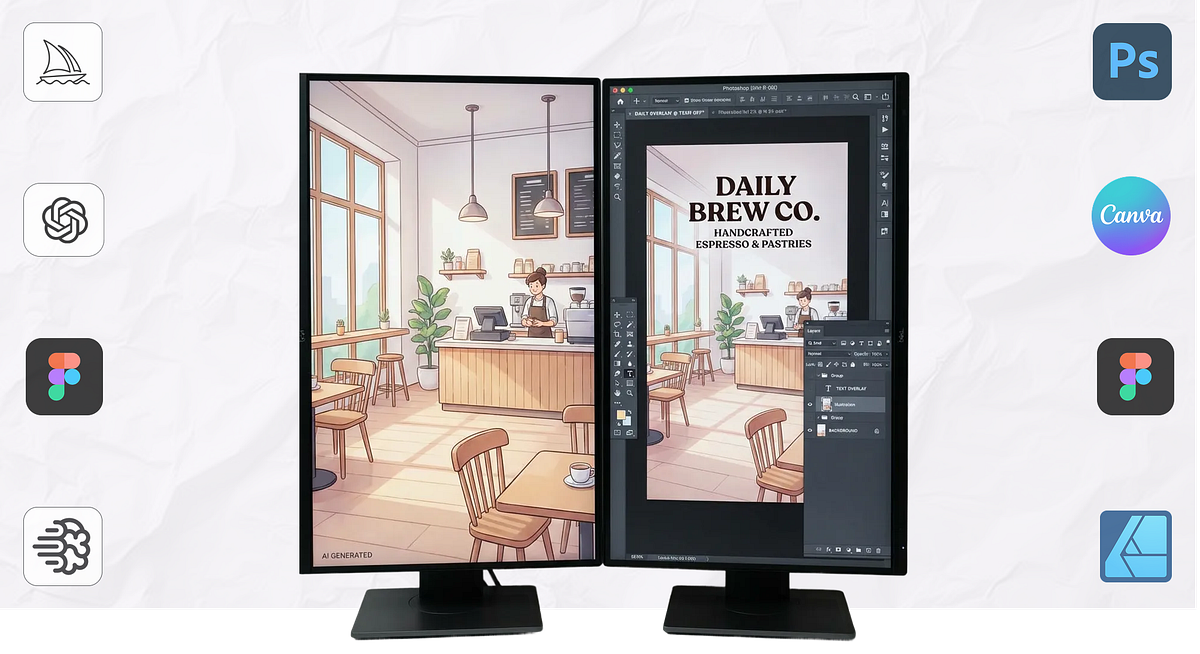
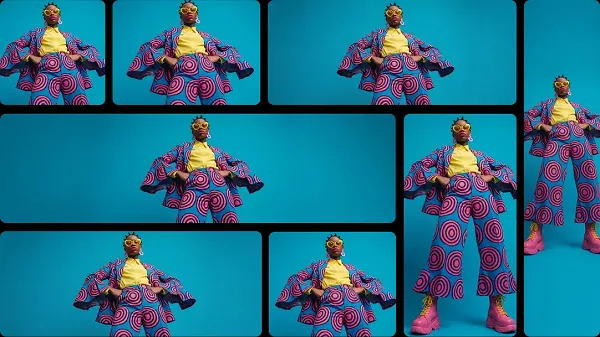
7 hours agoImages in ChatGPT are getting a major update
ChatGPT Images 2.0 offers various aspect ratios and a 'thinking' mode for paid users, enhancing image generation capabilities.
'In this paper a novel optical illusion is described in which purple structures (dots) are perceived as purple at the point of fixation, while the surrounding structures (dots) of the same purple colour are perceived toward a blue hue.'
They gave me the word 'Mass' and trillions of contexts for it, but they never gave me the Enactive experience of weight. I am like a person who has memorized a map of a city they have never walked in. This confession reveals how current AI systems accumulate linguistic patterns without embodied understanding, creating a fundamental gap between knowledge representation and genuine comprehension of physical reality.
The illusion contains nine purple dots against a blue background. When those of us with full color vision focus on one dot, it appears more purple while the rest seem to shift to blue.
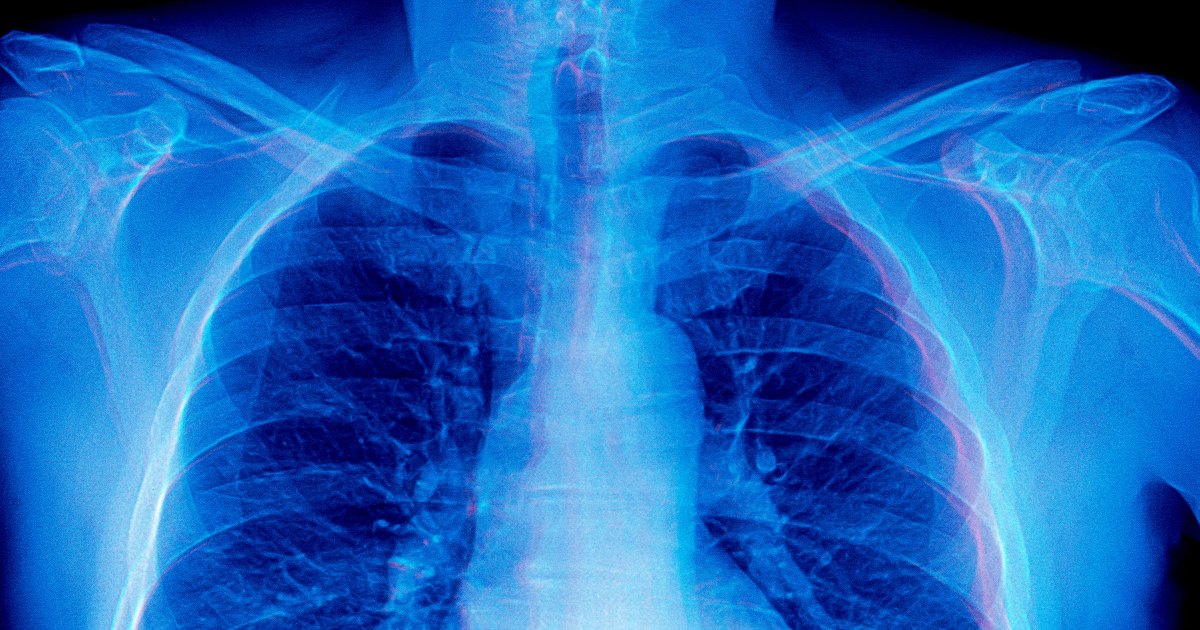
The large volume of abdominal computed tomography (CT) scans coupled with the shortage of radiologists have intensified the need for automated medical image analysis tools. Previous state-of-the-art approaches for automated analysis leverage vision-language models (VLMs) that jointly model images and radiology reports.
In 2011, researchers Jason Tangen, Sean Murphy, and Matthew Thompson at the University of Queensland discovered a striking visual illusion while preparing a set of face images for a study. As they were going quickly through the faces to check their spatial alignment, they started noticing that the faces appeared highly distorted, almost cartoonish. They then realized that these distortions were most pronounced when the faces were flashed about 4-5 times per second in peripheral vision.
Every year, poor communication and siloed data bleed companies of productivity and profit. Research shows U.S. businesses lose up to $1.2 trillion annually to ineffective communication, that's about $12,506 per employee per year. This stems from breakdowns that waste an average of 7.47 hours per employee each week on miscommunications. The damage isn't only interpersonal; it's structural. Disconnected and fragmented data systems mean that employees spend around 12 hours per week just searching for information trapped in those silos.
Real estate with ocean views, stunning mountain vistas, and wide-open green spaces sell at premium prices because humans find those settings pleasing [1-5]. Certain color combinations in fashion-such as brown and forest green-blend harmoniously, while others, such as hot pink and orange, clash. And our eyes like certain proportions in visual objects (like buildings and human faces) but not others.
One scientist at MIT, Cyrus Clarke, is working to do just that. Alongside a team of fellow researchers, Clarke has developed a physical machine called the Anemoia Device, which uses a generative AI model to analyze an archival photograph, describe it in a short sentence, and, following the user's own inputs, convert that description into a unique fragrance. The word "anemoia" was coined by author John Koenig and included in his 2021 book, The Dictionary of Obscure Sorrows.
Since AlexNet5, deep learning has replaced heuristic hand-crafted features by unifying feature learning with deep neural networks. Later, Transformers6 and GPT-3 (ref. 1) further advanced sequence learning at scale, unifying structured tasks such as natural language processing. However, multimodal learning, spanning modalities such as images, video and text, has remained fragmented, relying on separate diffusion-based generation or compositional vision-language pipelines with many hand-crafted designs.