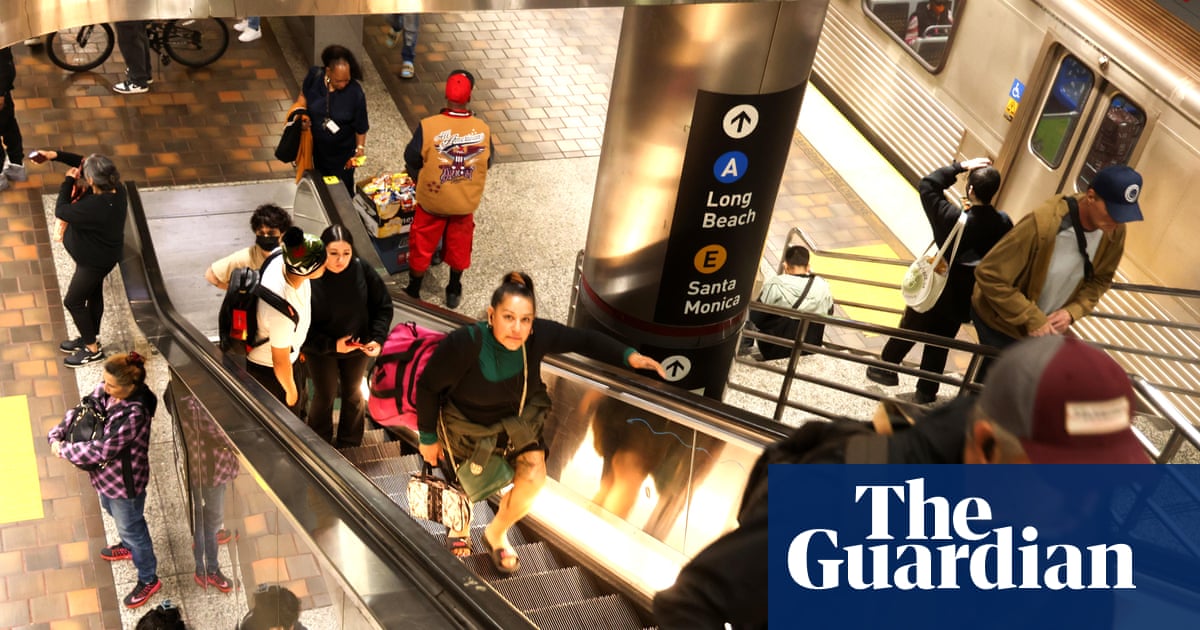
"When Ellen first moved from New York to Los Angeles, she decided not to own a car as a test, she says. I grew up without car culture in Vancouver, and I wanted to try it out for a year. Five years on, she still has no plans to buy one. It's certainly a stereotype that you can't not drive [in LA], but a lot of people do get around without them. I sometimes dream of getting one for road trips, but I think I'll just rent for now."
"However, Ellen does find getting around in LA frustrating. Public transit is all over the place, she says. I minimize travel time by using a bike and train combo most of the time. It still takes me at least 45 minutes to an hour to get to work, but without my bike, it could be as long as an hour and a half. To get to the hipper parts of town, I'll either bus through the gruesome hell of MacArthur Park, or bike up the Union bike route."
"She adds: There's a secondary aspect, which is that the fentanyl crisis that we are dealing with is kind of bleeding on to public transit. A lot of drug-addicted and sometimes psychotic people, especially late at night, will ride transit as an alternative to sleeping in a shelter. Practical concerns aside, Ellen says there is a cultural bias against driving in the city. Angelenos don't respect pedestrians."
"Ellen says she has reorganized her social habits around where she lives. I do arrange my life and schedule by trying to work within the system that exists, which is far from perfect. I often carpool with friends as well. There are also some services which go further afield, like the Metrolink, which is our version of a suburba"
Several people in Los Angeles described traveling without owning a car, using walking, biking, public transit, and carpooling. One person moved from New York to Los Angeles and tested living without a car, continuing for years without plans to buy one. Travel can still be frustrating because public transit is inconsistent and can take 45 minutes to an hour, or longer without biking. Reaching popular areas may require buses through difficult routes or biking along designated paths. Transit also faces added strain from the fentanyl crisis, with some people using transit instead of shelters. Social life and schedules often get reorganized around available transit options, and some services extend farther into surrounding areas.
Read at www.theguardian.com
Unable to calculate read time
Collection
[
|
...
]