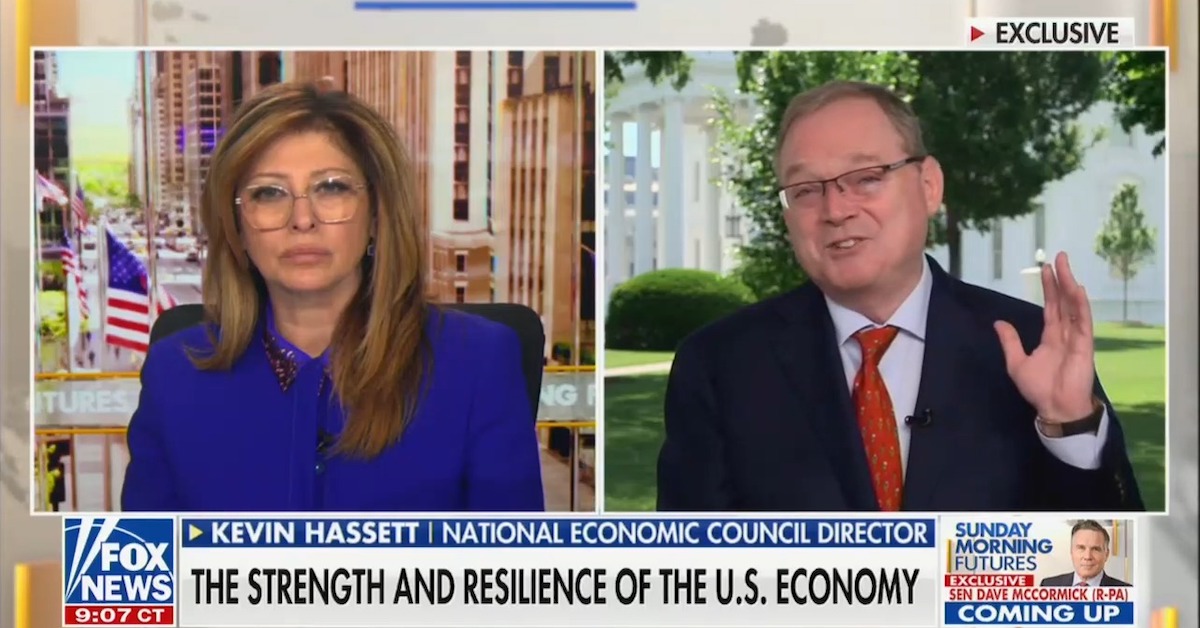
"There's a huge difference between what we're seeing in the market right now and what we saw back in the '90s during the dot.com bubble. What's happening is AI is being folded into the operations of so many companies that they're seeing their profitability and their revenues, even their employment, skyrocket. And so we've had a couple of quarters in a row where earnings surprised on the upside more than they ever have. And that's why equity markets are up. In the end, it's the earnings that describe what the price should be. And there's an earnings boom going on something unlike anything we've ever seen."
"Well, it does in the short run. And you mentioned Secretary [Scott] Bessent who follows these numbers, you know, he made a lot of money following these numbers in the past and being able to trade, and he says these future markets are saying basically once we yet the Strait [of Hormuz] open there's going to be a gusher of oil released from the Gulf, and that's g"
"National gas prices have jumped by approximately $2 a gallon since the start of the war. Both Bartiromo and Hassett pointed to a stronger-than-expected jobs report in April and upticks in Nasdaq, S&P, and Dow as signs the economy remains strong."
Americans are expected to keep facing higher prices in the short term as the Iran war affects costs, including a roughly $2 per gallon jump in national gas prices. Despite the war-related price pressure, equity markets have remained strong. A stronger-than-expected April jobs report and gains across major indexes are cited as evidence of economic resilience. The market strength is attributed to an earnings boom, with AI being integrated into company operations. Companies are seeing profitability, revenues, and employment rise, leading to repeated upside earnings surprises. Earnings are described as the factor that determines equity prices, even during wartime conditions.
Read at www.mediaite.com
Unable to calculate read time
Collection
[
|
...
]