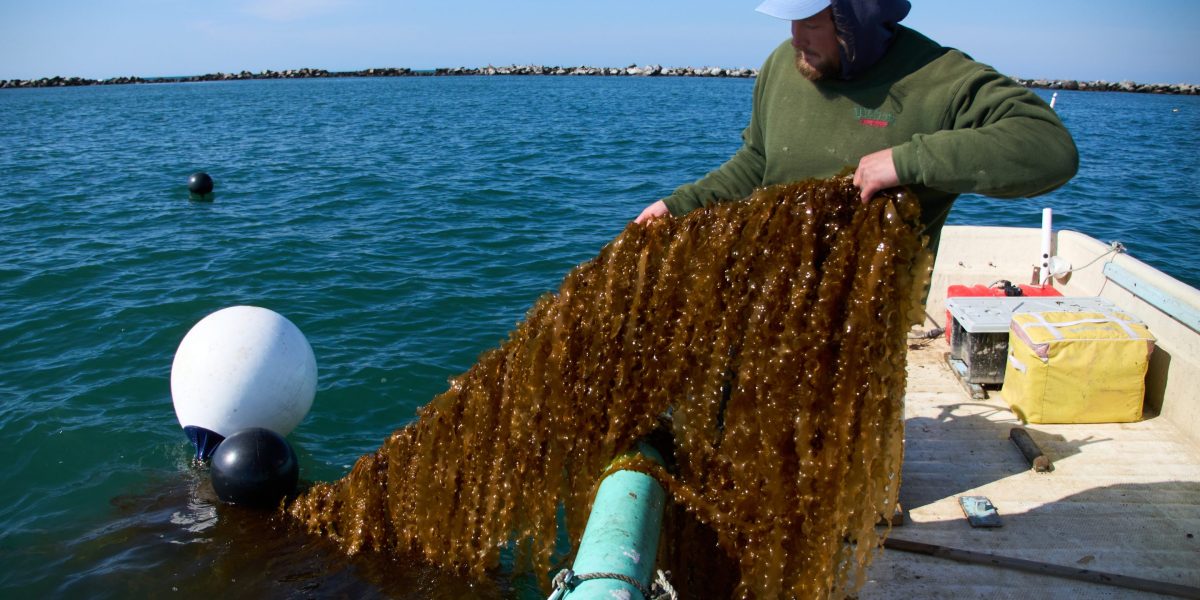
""We need other sources of energy that are sustainable, we can't just rely on petroleum," said Scott Lindell, a marine scientist at the Woods Hole Oceanographic Institution about a 90-minute drive south of Boston. "There's hardly anything simpler, or anything that grows quite as fast and as sustainably, as seaweed.""
"Existing biofuels, like corn-derived ethanol, primarily work as gasoline additives. Corn crops require agricultural land, fresh water and pesticides while kelp, by contrast, can be grown in the ocean with minimal resources."
"Although any bioethanol - whether produced from corn or kelp - releases hazardous gases when burned, such as acetaldehyde, these fuels produce fewer greenhouse gases overall compared to petroleum-based fuels."
"Researchers like Lindell have successfully bred kelp varieties that in some cases produce up to three times more biomass than conventional strains."
Kelp, a type of seaweed, is being explored as a sustainable biofuel alternative to petroleum for ships and aircraft. Unlike corn-derived ethanol, which requires significant agricultural resources, kelp can be cultivated in the ocean with minimal inputs. The hydrothermal liquefaction process can convert kelp into fuel, potentially reducing greenhouse gas emissions. Researchers have developed high-yield kelp strains, but energy companies remain cautious about investing in large-scale aquaculture projects due to uncertainties in the market.
Read at Fortune
Unable to calculate read time
Collection
[
|
...
]