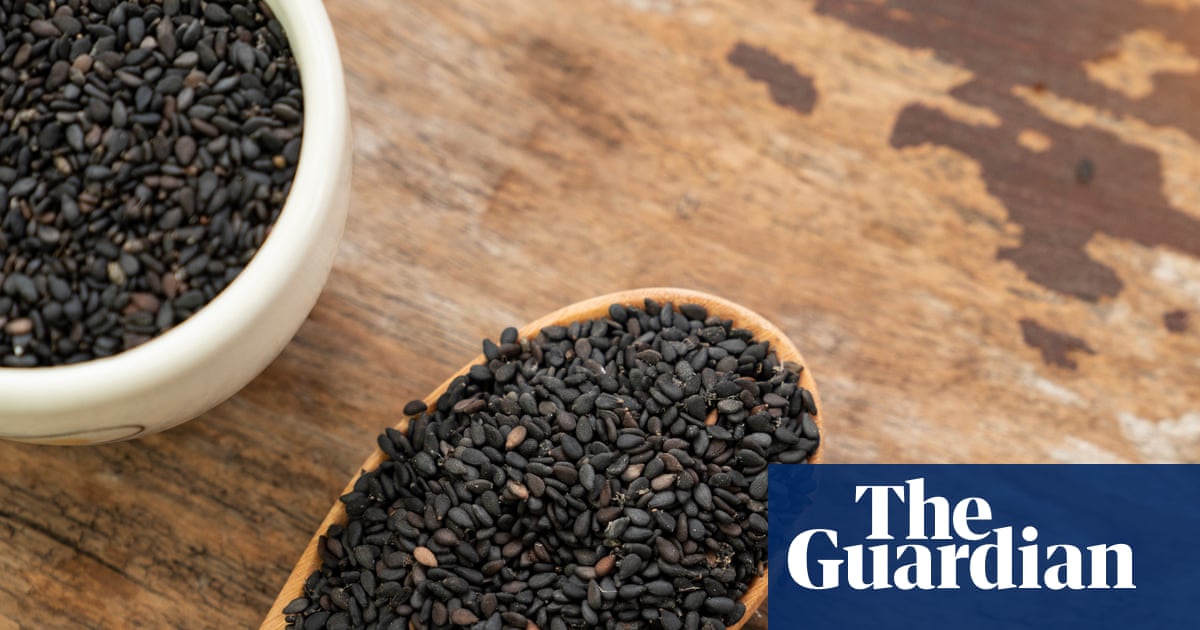
"Yet, beyond its appealing flavor and striking color, what exactly are you getting nutritionally when you add black sesame to your diet? I love sesame seeds because they pack a nice nutritional punch without a lot of volume, says New York-based registered dietitian nutritionist Robin Foroutan. Black sesame is really high in specific minerals, like calcium, magnesium, phosphorus, and potassium, says Foroutan. These are nutrients important for bone health specifically, but also for cardiovascular health and balanced blood pressure."
"A serving of sesame is roughly one tablespoon of whole seeds, with dietitians recommending between one and three servings per day. The particular nutritional profiles of sesame products differ depending on whether you're consuming whole seeds or denser sesame products such as ground sesame or blended tahini paste, which comes in black or white varieties. For instance, a tablespoon of tahini is about 90 calories, while a less dense spoonful of whole sesame seeds is about 60 calories."
Black sesame is a common dessert flavor across Asia and is growing in popularity in the United States, with searches for black sesame matcha rising almost 150% since 2023. The seeds are nutrient-dense and high in minerals such as calcium, magnesium, phosphorus, and potassium, which support bone, cardiovascular health, and blood pressure balance. A 2025 review of 521 adults found that about one tablespoon (10 g) of sesame products daily for eight weeks produced modest improvements in blood sugar and cholesterol, though those effects may not reflect clear clinical benefits. A serving is about one tablespoon; tahini is ~90 calories per tablespoon, whole seeds ~60 calories.
Read at www.theguardian.com
Unable to calculate read time
Collection
[
|
...
]