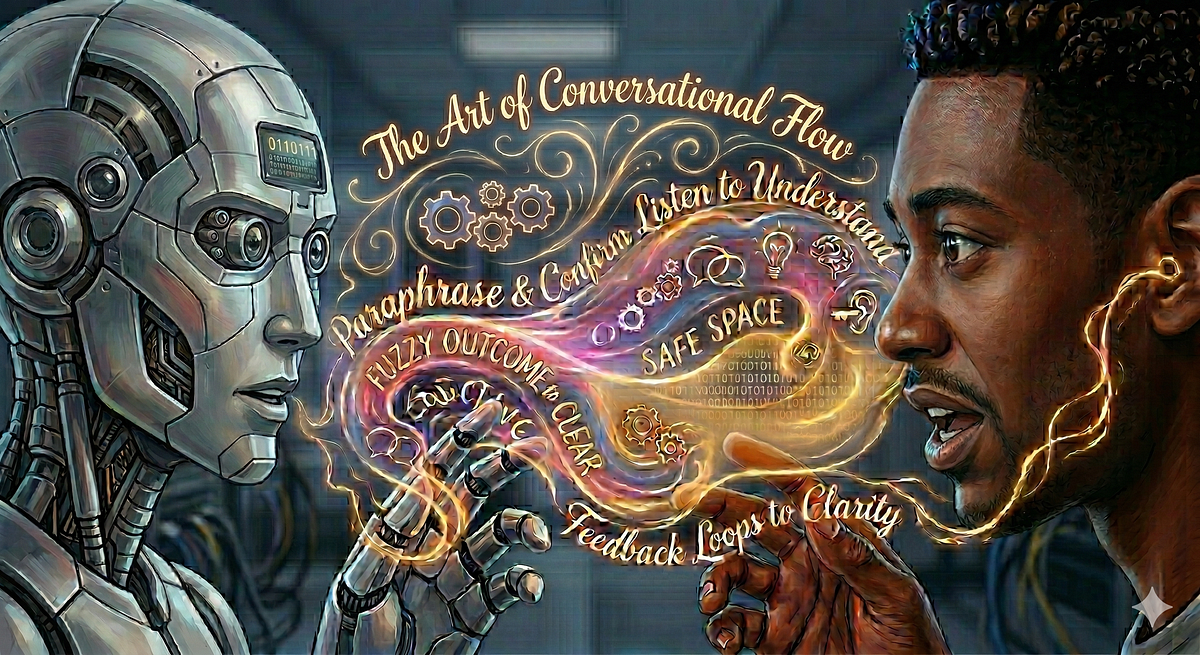
"In this new era of conversational interaction, our potential patterns of interfacing have multiplied. It can comprise of only text or voice - or it might also include some visual aids or graphical prompts. Layer in more intelligence and now we're talking about an experience that adapts, changing its response form on the fly."
"We're now strategically deciding when and where Humans-are-in-the-loop. If it's a spoken interaction, like an IVR system, we have to consider factors like tone, volume and pace. There's even more onion layers considering agentic ecosystems and relationships - When does one agent pass ownership to another?"
Product design is undergoing significant transformation due to AI advancement, expanding beyond traditional screen-based interfaces to conversational and agentic workflows across multiple channels. Designers must now consider diverse interaction mediums including text, voice, visual aids, and adaptive interfaces that change response formats dynamically. The field requires developing formal philosophies for conversational design that account for tone, volume, pace, and multi-agent system coordination. Strategic decisions determine when human involvement is necessary and how responsibility transfers between agents. This evolution presents both exciting opportunities and challenges as designers navigate orchestrating complex, intelligent experiences beyond conventional graphical user interfaces.
#conversational-design #ai-interface-design #multi-agent-systems #human-in-the-loop #adaptive-interfaces
Read at Medium
Unable to calculate read time
Collection
[
|
...
]