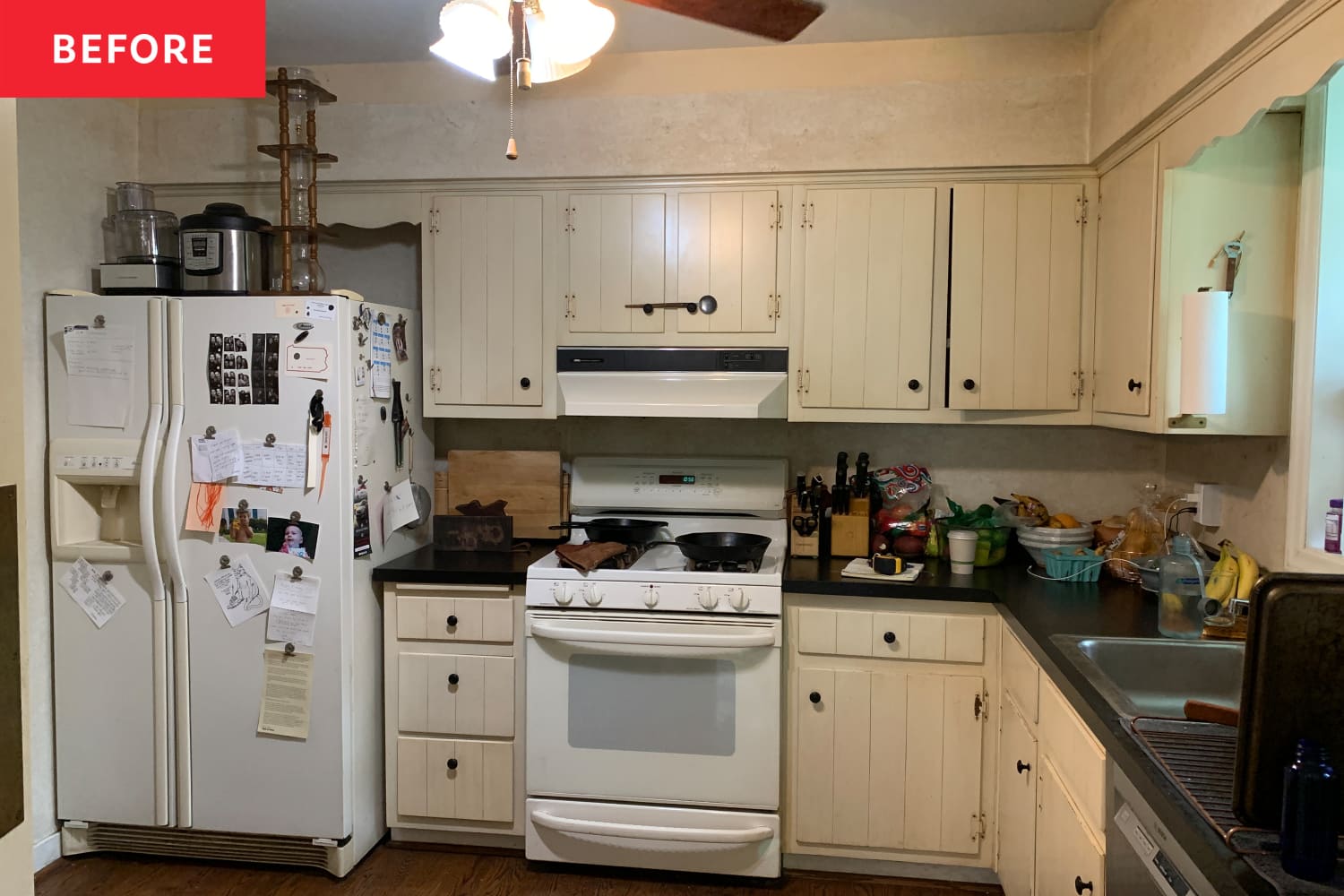
"Like many older houses, the space had been positioned into a back corner as an afterthought, and a renovation some 40 years ago only perpetuated that physical and visual disjointness."
"When they brought us on, a secondary back door took up a large portion of wall space, and there was a radiator located along another wall that couldn't have base cabinetry. The designers suggested covering the door, nixing the radiator, and installing a larger window for more natural light."
"Opening a pass-through from the kitchen to the dining room was huge, Ribar continues, which was connected by a new peninsula. Though ultimately a minor decision in the grand scheme of things, the designers did opt to save the existing basement door and baseboards."
"These small items tied the kitchen in with the rest of the house. Matching doors and trim to original styles ma"
A Craftsman home in Pittsburgh had a kitchen placed in a back corner and separated from the rest of the house. An earlier renovation did not resolve the physical and visual disconnect. The owners wanted a more connected kitchen for everyday use and entertaining while keeping as much history as possible. Designers proposed changes to address a secondary back door that consumed wall space and a radiator that prevented base cabinetry. They covered the door, removed the radiator, and installed a larger window for more natural light. They also opened a pass-through to the dining room and added a new peninsula. Original basement door and baseboards were preserved to tie the kitchen to the rest of the home.
Read at Apartment Therapy
Unable to calculate read time
Collection
[
|
...
]