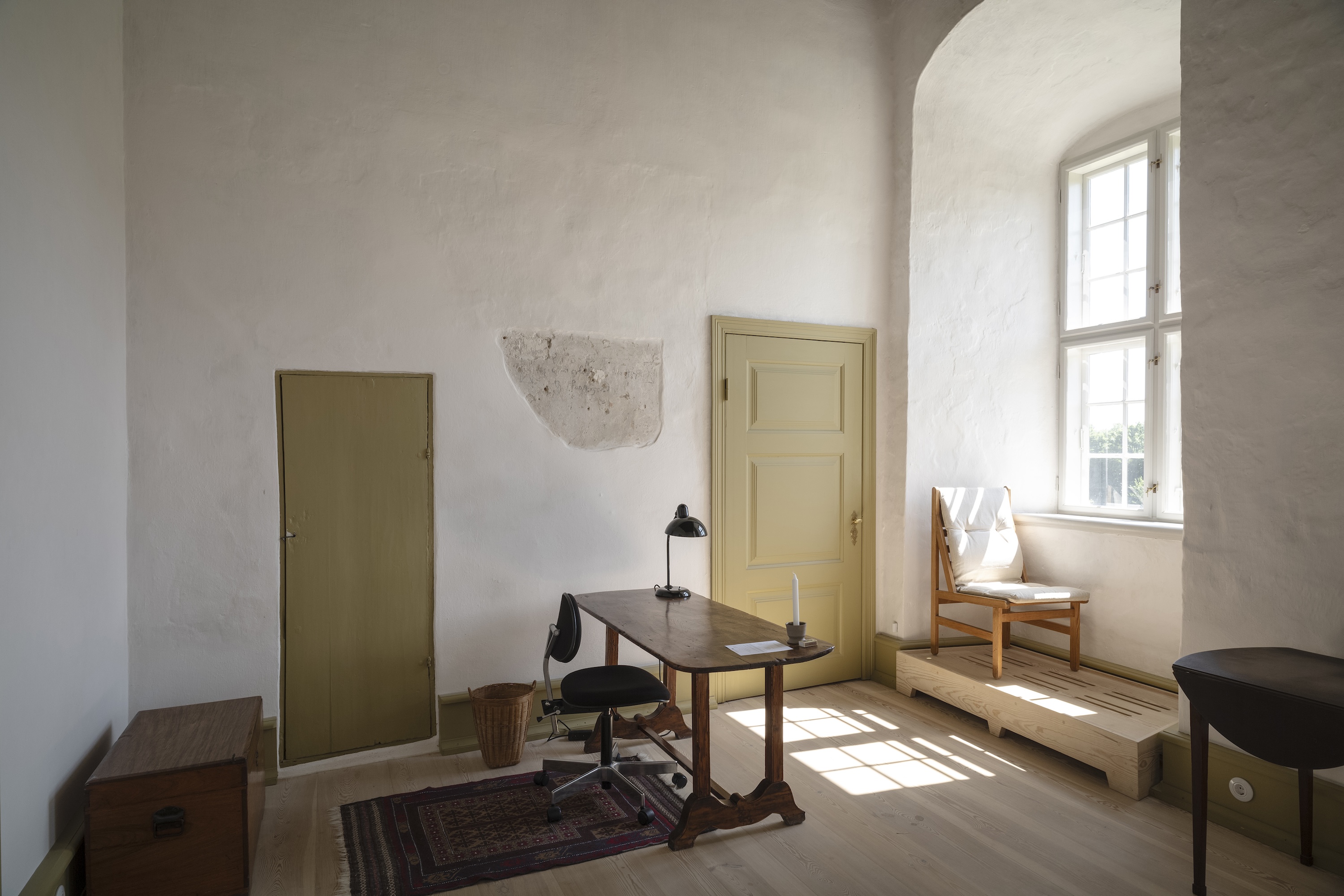
"Founded around 1200 as a Benedictine nunnery, reformed into a Baroque manor in the 18th century, and nearly lost to decay by the early 20th, the structure that stands today is the result of centuries of adaptation-and a devotion to stewardship. That stewardship began with Countess Olga Sponneck, who saved the monastery from collapse in 1934, restoring the building and, by the early 1960s, shifting its purpose into a work refuge."
"Rather than imposing a fresh surface, the work focuses on continuity: repairing what exists, revealing what has been obscured, and selecting finishes for integrity. Linseed oil paints and historical pigments were chosen for their compatibility-materials that breathe with centuries-old masonry, timber, and plaster, and that reinforce the monastery's original character. At present, Ørslev Monastery functions as a working house, inhabited by writers, artists, scholars, and musicians who come for long stretches of focused attention."
"That use feels natural to the architecture: shared spaces with monastic precedent and small rooms that encourage concentration. Bringing a historic building like this into the future requires a precise recipe: two parts respect for craftsmanship and one part innovation. Here, we walk through the halls and grounds of Ørslev Monastery for a closer look. Photography by Helene Høyer Mikkelsen for Linolie & Pigment."
Ørslev Monastery was founded around 1200 as a Benedictine nunnery, transformed into a Baroque manor in the eighteenth century, and nearly decayed by the early twentieth century. Countess Olga Sponneck saved the building from collapse in 1934, restored it, and by the early 1960s converted it into a work refuge. Janne Fruergaard Keyes, a medieval archaeologist, continues restoration focused on repair, revealing obscured fabric, and selecting finishes for integrity. Linseed oil paints and historical pigments were chosen for compatibility with masonry, timber, and plaster. The monastery now functions as a working house for writers, artists, scholars, and musicians.
Read at Remodelista
Unable to calculate read time
Collection
[
|
...
]