#circular-economy
#circular-economy
[ follow ]
fromDesign Milk
6 days agoEphemeral by Design: Carlo Ratti Associati x Mutti
Installed beneath the portico of the Università degli Studi di Milano, approximately twenty thousand cans of Mutti tomato pulp were supported by a steel substructure that allows them to be stacked and gradually removed without compromising their stability.
Design



fromresund Startups
2 weeks agoInvestor Dialogue: building circular portfolio with Nordic ecosystems
The circular economy is not just a trend-it's a necessity for sustainable industrial and economic growth. However, investors often face challenges such as 'death by pilot,' regulatory hurdles, and the gap between technical readiness and market entry.
London startup
fromTNW | Startups-Technology
3 weeks agoMaeconomy raises 1.5M to give building materials a digital identity
Construction and demolition waste is the largest single waste stream in the EU by weight, yet the vast majority of materials removed from buildings are downcycled into low-value rubble rather than recovered for reuse, because no reliable record exists of what those materials are, where they came from, or what condition they are in.
European startups
fromIrish Independent
4 weeks agoPalestinian tech student tops class at Dublin university after creating AI-powered sustainability app
"You would constantly be checking the news, making sure your parents are safe, calling your parents. There's so much uncertainty in day-to-day life in Palestine, and it often left me battling with my own thoughts here in Ireland."
Education
Arts
fromwww.amny.com
1 month agoA Living Canvas: Adrian K and the alchemy of art, appetite, and atmosphere at Pinky Swear | amNewYork
Adrian K's three-month residency at Pinky Swear merges art with social participation, using reclaimed materials to create work that balances ethereal beauty with urgent activism and circular economy principles.
fromDaily Coffee News by Roast Magazine
1 month agoCoffee Byproducts Could Reduce Plastic in 'Plastic Wrap'
Coffee byproducts offer a promising, cost-effective and environmentally sustainable alternative for improving the functional and ecological performance of bio/edible films. These agro-industrial residues exhibit a richness in biofunctional compounds such as polyphenols, caffeine and dietary fibers, which contribute significant antioxidant, antimicrobial and UV-barrier properties, making them ideal candidates for applications in active food packaging.
Coffee
fromComputerworld
1 month agoData mining? Old servers could become new source of rare earths
Korea Zinc, which it described as one of the world's largest smelters, is in talks with major US technology firms to recycle data center waste and extract rare earth. The move comes almost one year to the day after China announced immediate export controls on seven more rare earth elements critical to enterprise IT hardware manufacturing.
European startups
Design
fromYanko Design - Modern Industrial Design News
1 month agoThe Knit Chair That Rewrites Comfort by Subtracting Instead of Adding - Yanko Design
The Knit One Chair redefines comfort through material restraint and structural precision rather than excessive padding, using engineered knitted fabric as both aesthetic and functional system.
Design
fromDesign Milk
1 month agoThe Somari Collection by LightArt Is a Lesson in Flexibility
LightArt's Somari collection demonstrates thoughtful design evolution through on-demand manufacturing using plant-based PLA, balancing adaptability with environmental responsibility and production efficiency.
Renovation
fromdesignboom | architecture & design magazine
1 month ago3D printed street furniture recycles concrete and brick waste from demolished urban villages
Construction waste from demolished urban villages is converted into 3D printable composite material containing up to 85% solid waste, creating functional urban furniture through a closed-loop production system.
Design
fromdesignboom | architecture & design magazine
2 months agocompostable bicycle seat takes shape as mycelium grows around the wooden saddle
Myco Seat uses mycelium networks grown through agricultural waste to create a compostable, functional bicycle seat with a wooden saddle designed using computational mapping.
fromEarth911
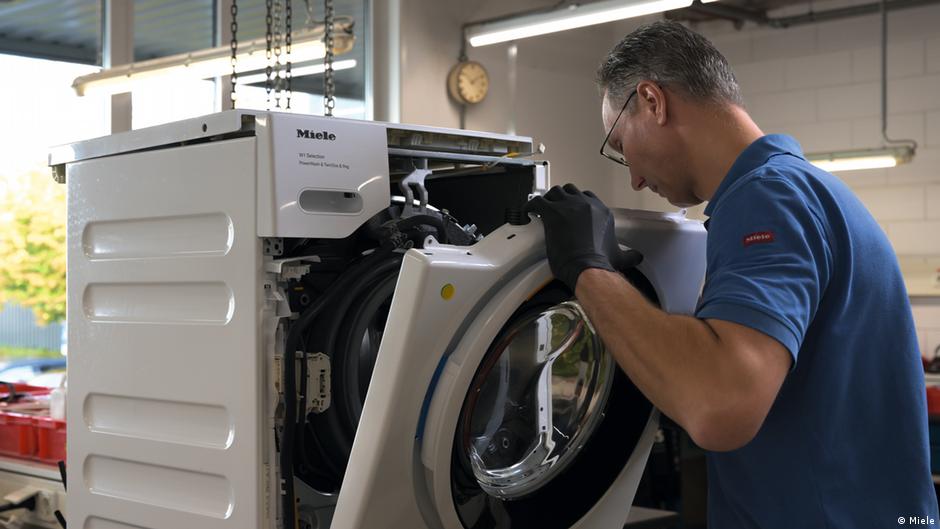
2 months agoFind Your Fix: Tech Brands Are Embracing Right to Repair
By January 2026, over a quarter of Americans will live in states with right-to-repair laws, and that number should rise to more than 35% by fall 2026 when Connecticut and Texas join in. The European Union also passed a Right to Repair Directive in 2024, which will apply to all EU countries by July 2026. These rules make manufacturers give consumers and independent repair shops the tools, parts, manuals, and software needed to fix their own products.
Environment
Miscellaneous
fromwww.theguardian.com
2 months agoA delightful day at the dump: The trick is not to leave with more stuff than I arrived with!'
A recycling centre's ReUse shop in London salvages discarded items including unusual specimens like embalmed animals, vintage furniture, and antiques to resell rather than send to landfill.
fromArchDaily
2 months agoMVRDV, Heatherwick Studio, and Mecanoo Among Five Shortlisted Teams for Shift Sustainability Landmark in Rotterdam
The project includes a hotel, a conference and meeting center, and a sustainable food court. Its objective is to set a new standard for a purpose-driven destination that turns circular living into 'something individuals, companies, and organisations can feel, experience, and act on.'
London startup
Non-profit organizations
fromCity Limits
2 months agoOpinion: New York City Needs an Office of Circularity
New York City should establish a municipal Office of Circularity to transform its linear waste system into a circular economy, reducing environmental costs while creating jobs and serving communities in need.
Environment
fromEarth911
2 months agoSustainability In Your Ear: The Forest Stewardship Councils' Path to a Circular Bio-based Future with Loa Dalgaard Worm
Forests face unsustainable depletion from rising demand for wood fiber, requiring circular economy models and new incentive systems to protect remaining forests while meeting material needs.
Startup companies
fromBusiness Matters
2 months agoKibu secures investment offer from Peter Jones and Jenna Meek after Dragons' Den pitch
Kibu secured investment from Dragons' Den entrepreneurs for modular, repairable children's headphones designed around circular economy principles to reduce electronic waste.
Environment
fromArchDaily
2 months agoThe Afterlife of Expo Osaka's Grand Ring: How the Timber Structure Is Being Reused Across Japan
Major international events are adopting circular economy principles, exemplified by Osaka Expo 2025's massive reusable timber Grand Ring designed for material efficiency and carbon storage.
fromdesignboom | architecture & design magazine
2 months agomanufactura blends corn and lime composites for robotic 3d printed construction
Mexico's construction sector faces significant environmental and social challenges. The widespread use of carbon-intensive materials has positioned the industry as a major contributor to national CO₂ emissions. At the same time, construction labor conditions remain unstable, with limited access to technical training and high occupational risk. CORNCRETL, developed by MANUFACTURA, proposes a circular material strategy that addresses both environmental impact and production models within the building industry.
Environment
Environment
fromEarth911
2 months agoSustainability In Your Ear: CurbWaste's Mike Marmo Is Building the Waste Logistics Layer of the Circular Economy
CurbWaste is building a digital operating system for independent haulers to capture per-load, chain-of-custody data and enable a circular economy through material visibility.

fromYanko Design - Modern Industrial Design News
2 months agoFour Robot Arms Just Built a Farm House That Prints Its Future - Yanko Design
Picture this: four robotic arms working in perfect harmony, tracing circular patterns like some kind of futuristic dance performance. But instead of creating art, they're printing the walls of an actual farm. Welcome to Itaca, a project that just wrapped up its construction in the hills of Northern Italy, and it's changing how we think about building homes. WASP, the Italian company behind this audacious venture, just finished printing the walls of what they're calling the first certified 3D-printed construction in Italy.
Agriculture
Environment
fromEarth911
3 months agoSustainability In Your Ear: Milwaukee's Kevin Shafer on Circular Thinking in Wastewater Management
Municipal wastewater can be transformed into energy, fertilizer, and revenue through circular, co-digestion, and renewable strategies demonstrated by MMSD's Milorganite and digester programs.
Cryptocurrency
fromBitcoin Magazine
3 months agoHow Bitcoin Is Quietly Transforming Forgotten Villages-Stories From The Bitcoin Beach Summit That Will Restore Your Hope
Concentrate Bitcoin adoption efforts in a single community to build mass, sustainable circular economies through focused brick-and-mortar integration and network effects.
fromBusiness Matters
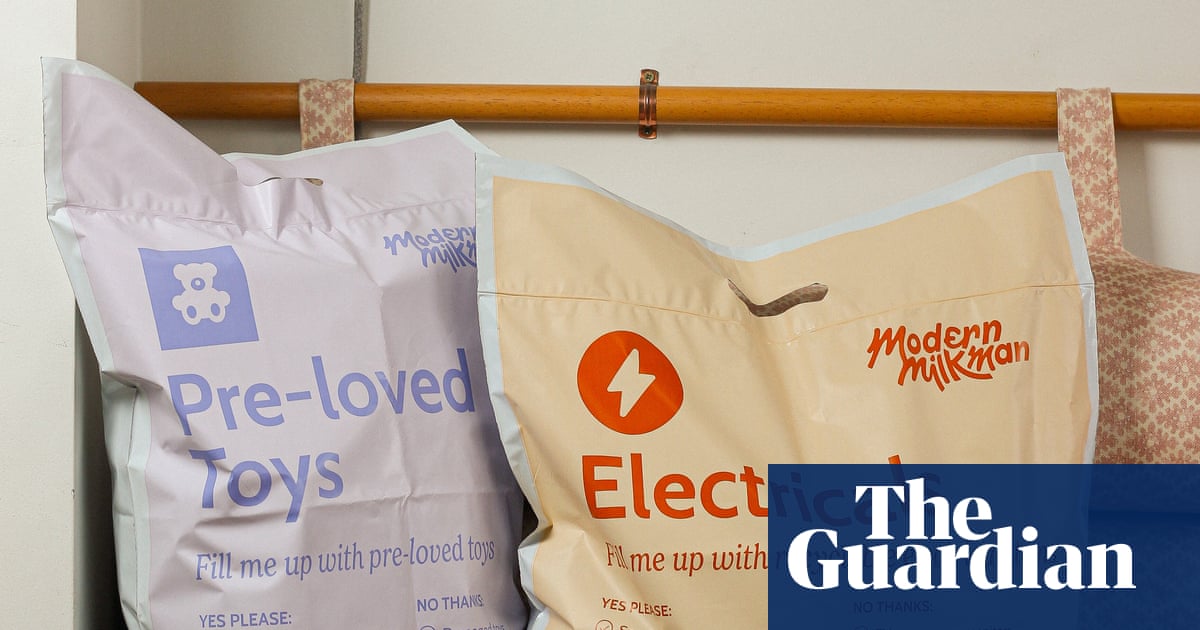
3 months agoModern Milkman raises 10m to scale sustainable doorstep delivery
Modern Milkman has secured a £10 million investment to accelerate growth across the UK, expand its US footprint and develop new sustainable doorstep services, taking its total funding to more than £60 million. The Manchester-based business said the funding will support the continued evolution of its doorstep delivery model, as it builds out a broader logistics platform designed to make sustainable grocery shopping easier and more convenient for households. The investment comes from Salica Investments, marking the first direct-to-consumer business backed by Salica's Growth Debt Fund.
Fundraising
fromIrish Independent
3 months agoDesigners to descend on Dublin as date set for Junk Kouture finals
Creative talent from Ireland, the UK, France, Italy, the USA and the UAE will present their fashion designs made entirely from recycled materials in the Helix, DCU from February 23-25, with the World Final taking place on February 24. The competition which is open to 12-19 year olds celebrates innovative and imaginative craftmanship, with a focus on promoting sustainability and the importance of a circular economy.
Fashion & style
fromArchDaily
3 months agoCircular Composites: Designing for a Sustainable Future
One of the earliest large-scale examples of composite materials can be found in the Great Wall of China, where stone, clay bricks, and organic fibers such as reeds and willow branches were blended to create a resilient and lasting structure. These early techniques reveal a timeless intuition: distinct materials, when combined thoughtfully, produce properties unattainable by any single element.
Environment
fromBikerumor
3 months agoReTyre Pairs with Vittoria to Make Sustainable Utility Tires, Fueled by Fresh 7M Investment
ReTyre's unique 'carbon-neutral' tire tech looks set to make big inroads in performance and real-world availability, thanks to a new development partnership with Vittoria and a fresh round of venture capital investment. Together, the funding and Vittoria collaboration will help ReTyre expand production of their pioneering sustainable tires. And it signals a shift from making tires for less-demanding applications like kids' bikes and strollers, stepping up to make durable, high-performance eco tires for everyday urban and commuting bikes and ebikes.
Bicycling
fromEarth911
3 months agoSustainability In Your Ear: Turning Waste Into New Products And Packaging With Overlay Capital's Elizabeth Blankenship-Singh
According to research by the World Economic Forum and United Nations Development Programme, the circular economy could unlock $4.5 trillion in new global value by 2030, and investors are racing to capture part of that opportunity. Meet Elizabeth Blankenship-Singh, Director of Innovation at Overlay Capital, an Atlanta-based alternative investment firm whose Waste and Materials Fund is backing both early-stage materials innovators and later-stage recycling operations with established infrastructure.
Environment
Environment
fromYanko Design - Modern Industrial Design News
4 months agoSweden Transforms Wind Turbine Waste Into Europe's First Blade-Built Parking Garage - Yanko Design
A five-story Lund parking garage repurposes decommissioned wind turbine blades as façade elements and integrates EV charging, solar panels, and on-site battery storage.
fromHarvard Business Review
4 months agoClimate Rising: Extending Apparel Lifespan with ThredUp
This week on the podcast, we're sharing an episode of Harvard Business School's Climate Rising podcast. In this conversation, Professor Mike Toffel speaks with James Reinhart, Co-Founder and CEO of ThredUp, one of the world's largest online resale platforms for secondhand clothing. We thought it was the perfect time with the holiday season upon us and the results of ThredUp's 2025 holiday report revealing 40% of holiday budgets will go to secondhand gifts this year.
Environment
Gadgets
fromYanko Design - Modern Industrial Design News
4 months agoGomi Phone Case Is 100% Recycled, and No Two Look Exactly the Same - Yanko Design
A handmade phone case from 100% recycled plastic offers free lifetime repairs, remolding for upgrades, unique marbled designs, and optional MagSafe compatibility.
Environment
fromHarvard Business Review
4 months agoFor Circular Economy Innovation, Look to the Global South
Corporate circular economy strategies focus on incremental product and operational improvements, overlooking transformative grassroots innovations that enable waste reduction, supply chain resilience, and social leadership.
Environment
fromSustainable Bus
4 months agoEMT Madrid integrates second-life batteries into depot energy system with Irizar e-mobility - Sustainable Bus
Electric bus batteries are being repurposed for stationary energy storage at EMT Madrid's Fuencarral, using fifteen racks (1 MWh capacity, 500 kW) from Irizar buses.
Environment
fromArchDaily
4 months agoExtending the Lifespan of Materials: Circularity and Recyclability as Part of the Design
Global recyclability remains poor—most plastics are not recycled—while architecture increasingly adopts biomaterials, recycled polymers, and circular design to reduce environmental impact.
Environment
fromresund Startups
4 months agoThree Green Startups Win Green Leap Challenge 2025 with Innovations in Bioplastics, Biopesticides, and Biofibers
Green Leap Challenge 2025 awarded three startups pioneering biodegradable PHA plastics, next-generation biopesticides, and elastic biofibers, providing funding and support for scalable circular bio-solutions.
Environment
fromYanko Design - Modern Industrial Design News
4 months agoTray210 Proves Recycled Plastic Doesn't Have to Look Grey and Boring - Yanko Design
Tray210 recycled reframes recycled plastics by treating material diversity as design, producing a refined circular tray that feels intentional and lifestyle-ready rather than utilitarian.
fromresund Startups
4 months agoBintel Acquired by REEN to Accelerate Smart Waste Management Across the Nordics
Joining forces with REEN is a defining step for both companies. Together, we can scale faster, serve customers better, and lead the transformation of how cities and companies manage resources.
Miscellaneous
Artificial intelligence
fromEarth911
4 months agoSustainability In Your Ear: Building The Circular Economy With Glacier CEO Rebecca Hu-Thrams
AI-powered robotic sorters at material recovery facilities dramatically increase recycling rates, reduce landfill losses, and provide data to improve packaging and circular economy outcomes.
Environment
fromEarth911
5 months agoClassic Podcast: Tetra Pak's Lisa Ryden Explains the Path to Carton Carbon Reduction
Carton packaging can lower environmental impacts but requires expanded recycling infrastructure, processing capacity, and supply-chain changes to meet emissions-reduction and circularity goals.


fromArchDaily
5 months agoDesigning the Reuse Economy: How Architects Can Build Supply Chains, Not Just Buildings
As rising emissions targets collide with shrinking material supplies and the growing urgency of climate commitments, the built environment is being forced into a deeper reckoning with how it consumes, circulates, and discards resources. What was once considered waste is now revealing itself as a dormant architectural archive, an urban ecosystem of materials waiting to be reclaimed, revalued, or reimagined.
Environment

Science
fromresund Startups
6 months agoBiotech Startup Cirkular Makes History: First Fish Fed on Mycoprotein Hits the Market, Paving the Way for Circular Aquaculture
Mycoprotein-based fish feed produced via fungal fermentation has reached commercial markets, enabling scalable aquaculture feed alternatives that reduce reliance on soy and fishmeal.
fromBusiness Matters
6 months agoInnovative Solutions for Sustainable Infrastructure and Financial Management
Communities transform when environmental responsibility shapes their infrastructure strategies. Roads, bridges, and urban systems define daily life, and each decision about materials affects long-term ecological stability. Engineers, contractors, and planners seek methods that preserve natural resources while maintaining structural strength. Governments and local builders benefit when infrastructure projects adopt circular practices. Recycling asphalt saves money by reducing the need for new production and transport. Reclaimed materials also perform comparably to newly manufactured options, offering durability and strength without compromising safety.
Environment
Environment
fromBusiness Matters
6 months agoPrince Albert II Foundation and Circulate Capital join forces to tackle ocean plastic in Asia
Prince Albert II Foundation and Circulate Capital partnered to mobilize private capital and scale circular-economy solutions reducing ocean plastic pollution in South and Southeast Asia.
fromYanko Design - Modern Industrial Design News
6 months agoOnly 7% of Materials Get Recycled - These 5 Products Were Designed to Fix That - Yanko Design
The circular economy is a sustainable model of production and consumption that aims to reduce waste and extend the life of resources. Unlike the traditional linear system of "take-make-dispose," it promotes a closed-loop approach where materials are reused, repaired, refurbished, and recycled. This model helps conserve natural resources, lowers environmental impact, and supports long-term economic resilience. A recent report indicates that only 6.9% of the 106 billion tonnes of materials used globally each year are recycled.
Environment
Environment
fromBusiness Matters
6 months agoHow Alkagesta UK Drives London's Biofuel Revolution: From Waste to Global Capital
Alkagesta UK links green finance with global biofuel feedstock supply, enabling traceable renewable fuel supply chains and structured investment to support the UK's RTFO-driven growth.
Environment
fromArchDaily
6 months agoCreating Cities for Tomorrow: The Future of Sustainable Construction
Holcim leads collaborative sustainable construction with circular, low‑carbon cements and concrete, recycling centers, and energy‑efficient refurbishment to build durable, resource‑efficient cities.
fromresund Startups
6 months agoAI & Sustainability: E-commerce Park of Sweden and IKEA Host Industry Event
Attendees will dive into the latest trends shaping e-commerce, with a focus on how AI and sustainability are transforming customer engagement, operations, and business growth. The event will feature a mix of keynote speeches, interactive discussions, and hands-on breakout sessions, offering both inspiration and practical tools for industry professionals. The break-outs are made with industry experts, such as Contentor and Mimir.
E-Commerce
Environment
fromYanko Design - Modern Industrial Design News
6 months ago5 Things Made From Rice That Are Stronger Than Wood (Seriously) - Yanko Design
Abundant rice husk byproducts can be repurposed into sustainable materials—biochar, nanomaterials, biodegradable packaging, and durable furniture—reducing pollution and carbon footprint.
fromwww.theguardian.com
6 months agoWhen I pass piles of fishing nets, I see piles of money': a one man recycling revolution on the Cornish coast
Ian Falconer kept thinking about the heaps of discarded plastic fishing nets he saw at Newlyn harbour near his home in Cornwall. I thought it's such a waste', he says. There has to be a better solution than it all going into landfill. Falconer, 52, who studied environmental and mining geology at university, came up with a plan: shredding and cleaning the worn out nets, melting the plastic down and converting it into filament to be used in 3D printing. He then built a micro-factory so that the filament could be made into useful stuff.
Environment
[ Load more ]