Left-wing politics
fromTruthout
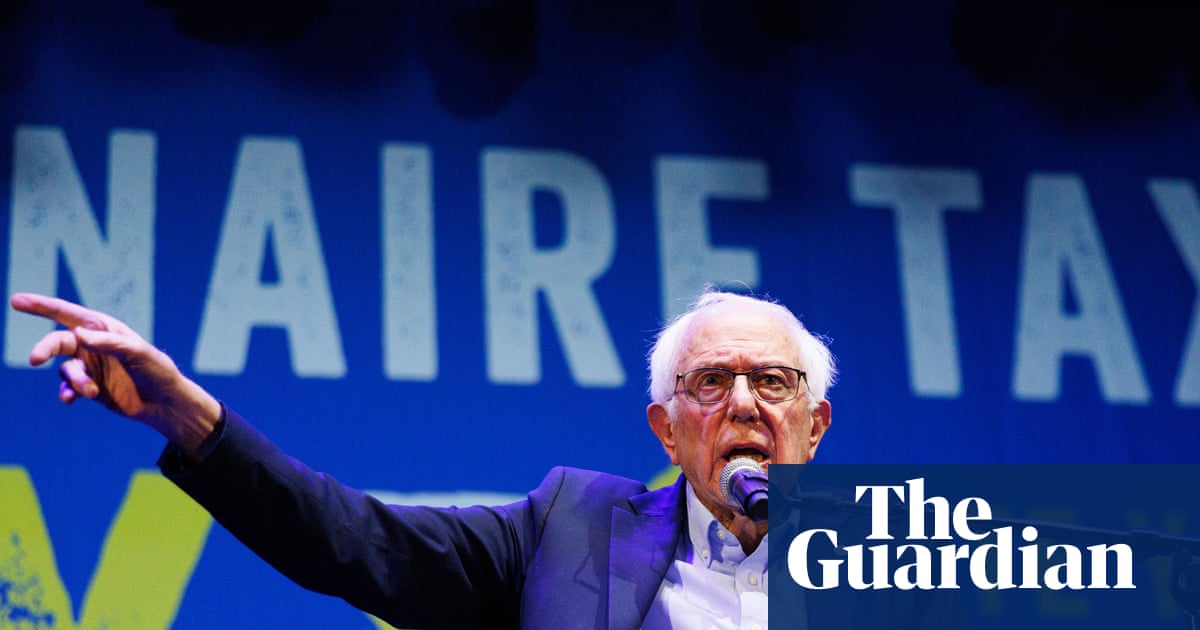
6 hours agoSanders Joins Minnesota Rally as "No Kings" Protests Grow Nationwide
Senator Bernie Sanders will headline the 'No Kings' rally to challenge oligarchy and economic inequality on March 28, 2025.
This is hardly the first season in which the wealthy have made themselves more and more powerful in collusion with the powerful, making themselves more and more wealthy all at the expense of political equality and economic opportunity. Today we use words like unprecedented, but the truth is our times are more precedent than we would care to admit.
Oil shocks are especially painful because of the commodity's wider uses, not least in fertiliser, and the knock-on effects for manufacturing and transport. And the poor are hit hardest. Recent research published by economists at the University of Massachusetts Amherst identified energy, along with food and agriculture, as among the commodities that have a disproportionate capacity to increase inequality when their prices rise.
Back in the post-WWII era, being middle class meant something clear and attainable- a steady job, a home you could afford on one income, being able to buy a new car, and the ability to raise a family without constant money stress. Pew Research defines the middle class as households earning about two-thirds to double the national median income, with the exact dollar figure depending on where you live.
Politicians must stop prioritising socially and ecologically destructive growth that only increases the profits and serves the consumption demands of the world's richest individuals and corporations. Instead, to tackle the interwoven crises of rising inequality, ecological collapse and a resurgent far-right politics, a new economic agenda is needed.
The ratio of workers to beneficiaries has plummeted from 10 or more in the mid-20th century to merely two or three today. As a result, the timeline for the depletion of the program's surplus trust funds has accelerated, shifting from 2035 to the end of 2032. After 2032, incoming payroll tax revenue, income from taxation of benefits, and interest on the trust funds will not cover 100% of promised benefits.
Cash transforms health when four particular conditions are met. Most U.S. cash-transfer pilots have lacked them. But one major American policy does come close: the federal food-assistance program SNAP. Its success offers a road map for what effective cash assistance can look like in this country, if we choose to build on it.
This is true all over the country, there's a lot of good food in grocery stores that goes to waste. Most of the cheap cuts of meat are very inexpensive. If you buy a porterhouse steak, or a steak, it is going to set you back. But you can buy liver or the cheaper cuts of steak that are very affordable.
I can honestly say that if I was 18 now, there is no way I would go to university only to leave with huge debts and poor job prospects. Instead, I would become an electrician or similar trade.
With childcare costs and the rent, we're living paycheck to paycheck. As Silicon Valley generates unprecedented wealth, a new report finds that economic gains are increasingly tied to investments owned disproportionately by the region's more affluent residents, contributing to widening gaps in who shares in the growing prosperity.
Trump is a president with an approval rating below 40 percent. There is little evidence to suggest it will ever rebound much. There may now be a lower floor than in the first term. The Trump administration's savagery in Minneapolis destroyed the popularity he had enjoyed on the issue of immigration. His advantages on the economy are gone, too, as Americans confront a K-shaped recovery that has thrilled the rich while leaving much of the rest of the country with higher costs and a meager job market.
Most critics of President Donald Trump view him as the ultimate threat to American democracy. But to Nobel prize-winning economist Daron Acemoglu, Trump's merely a fever, the result of an infection that's been brewing for years before he rode down the golden escalator to announce his presidency. The MIT economist has spent decades studying the origins of economic and political decay, specializing in how institutions foster inclusive growth-or succumb to extractive systems.
The California Democratic Party will hold its midterm convention at Moscone Center in San Francisco this weekend, and while there's not a whole lot of suspense, it's always an opportunity to see which way the party is leaning in a crucial election year. The message so far: Don't talk about economic inequality-and don't mention the billionaire tax. All the candidates for governor, and all the candidates for the other statewide offices, will be there. Mayor Daniel Lurie will address the crowd. The party issues endorsements in contested primaries, and the San Francisco Congressional race was wired from the start for state Sen. Scott Wiener.
Fifteen years ago, Egyptians from all walks of life took to the street to demand "bread, freedom, social justice." They were protesting the oppressive 30-year rule of Hosni Mubarak. Egypt had been under martial law for 31 years. This meant that political opposition was silenced, and opponents were often imprisoned and tortured. Police brutality was the norm. Egypt's economy was also weak and relied heavily on foreign aid and loans from the World Bank and International Monetary Fund.
When past generations imagined the best version of the future, it was one of leisure. Advertisements, cartoonists, and pulp novelists dared us to dream of a world where the spoils of industrial development were shared with all: robot butlers, transit by pneumatic tube, and more familiar tropes. These developments, it seemed, would make our lives more convenient, more secure, and - dare we say - more abundant.
The road was intended as a solution to the gridlocked roads of India's commercial capital. But Mumbai is a densely populated peninsula, 25 miles (40km) long and 6 miles wide, where land is as scarce as snow. The new coastal road had to be built on land reclaimed from the Arabian Sea. An engineering marvel, it connects north and south, and is a dream for car owners, who used to average about 5mph through Mumbai's congestion.
San Francisco is one of the cities the authors use as a case study, and their mathematical simulation suggests that is could take up to 100 years of increasing housing supply at levels that are unrealistic at best to see rents fall to the level where a worker without an advanced degree could afford. "The simulation makes clear it is unrealistic to think that we can deregulate and build our way out of the affordability crisis with market-rate housing, even with large positive supply shocks, in any reasonable time frame," the study states.
A global contest is escalating between democratic institutions governed by the rule of law and lawless dictators who seek to enrich themselves and their cronies. Here at home, President Trump's tariffs are driving up costs for families. Millions of Americans have lost their health insurance so that Republicans could fund tax breaks for rich people. ICE is sowing chaos and terror in our communities, resulting in the tragic killing of Renee Good in Minnesota.
Rudi Batzell offers a material account of how racial hierarchies formed in the United States, framing the history of racism in the labor movement as a question not of biases and prejudice but of access to property and land. Racism is often considered a question of thoughts, feelings, and beliefs. The accused racist will sometimes deploy the tired old defense that he or she "has black friends,"
Taxing the rich to fund social services is, indeed, not a new idea: It's been around since the Civil War, when President Lincoln signed a bill taxing the better-off to pay the Northern efforts in the war. The bill exempted all income of less than what would be $16,000 today, and had a graduated scale: The highest rate, 5 percent, was on incomes of more than $10,000 ( equivalent in purchasing power to about $250,000 today).
The Gregorian Calendar is a scientific advance, although it was established by a pope. But the idea of January 1 as the start of a "new year" goes back much further, and is probably related to the winter solstice. In some older traditions, the new year started in March, when spring arrived. People in the Chinese and Jewish traditions celebrate the new year in the early fall or in February.
Walmart's chief executive, Doug McMillon, will step down on Jan. 31," The New York Times bullishly observed, "completing a 12-year run that moved the company from a staid brick-and-mortar retailer to a formidable challenger to Amazon, making the big-box store the envy of many in the retail industry." McMillon "leaves Walmart in a strong position after years of work repositioning it as a formidable digital player and more competitive employer." "I can't overstate how difficult it is to take a company with such a strong legacy and make it competitive in today's environment, given the pace of change," Joanna Starek, an adviser to chief executives, told the Times.
2025 was an extremely difficult year for corporate sustainability, especially in the U.S. Core priorities - from cutting carbon emissions and investing in clean tech to building inclusive workforces - were under constant attack, much of it from the government. At one point, the administration even tried to stop the construction of a giant offshore wind farm that was 80% done.
During his opening monologue on Jimmy Kimmel Live! the host branded the scheme the Get Into America Express Card, mocking its explicit transactional logic and its break from decades of immigration rhetoric. This is a card that will allow wealthy foreigners to live here, Kimmel said. For a million bucks, you get legal visitor status. You get a pathway to citizenship and a presidential pardon for one major crime of your choosing.
I see a lot of people who get passionate about change in our world to care about people but I don't see a lot of day to day action. Daily interactions are filled with people rushing, becoming easily frustrated and harshly judging others without consideration. Claiming to care about people while judging those who struggle, lack resources, or don't meet socially approved standards is a contradiction.
He is also known, as he admitted during the New York Times Dealbook conference on Wednesday, for being "an arrogant prick." And he thinks more leaders should be. "The critique I get on Wall Street is I'm an arrogant prick," Karp said, gripping both sides of his chair and leaning precariously forward in his usual animated style. "Okay, great. Well, you know, judge me by the accomplishment."
Despite recent wins by individual Democratic candidates in elections that focused on the issue of affordability, the Democratic Party is still in trouble. And it's not just the current state of Republican control of the White House and Congress, but also a supermajority of conservatives on the Supreme Court, seemingly hellbent on overturning hard-fought liberties and the Constitution itself. While the Republicans, led by President Trump, are outright denying that prices from food to healthcare continue to rise,
Mamdani and Lurie have a tremendous amount in common. Both are scions of privilege who bring little political experience to their jobs. The 34-year-old Mamdani, the progeny of a noted academic and an accomplished filmmaker, has been a state lawmaker for all of four years. Lurie, 48, grew up wealthy after his mother married Peter Haas, an heir to the Levi Strauss blue jeans dynasty. Before becoming mayor in January, Lurie had founded an anti-poverty nonprofit but had never held elected office.
That is a distraction. All of it is designed to distract you from the fact that your situation, your life, has not gotten better, Obama said. He continued, saying the Trump Administration was too worried about helping the wealthiest, most powerful people in the country while the average citizen's bills are still going up and while the program that helps your kid with special needs just got gutted.
Ireland's new president, Catherine Connolly, is a proud leftist who has served for almost a decade as an independent socialist member of the Irish parliament (Dáil Éireann), a blunt critic of the failures of neoliberalism and corporate globalization, and a visionary advocate for the sort of dramatic interventions that are needed to address the economic inequality that has made life increasingly unaffordable for working-class families.
We need to give teens supervised access to financial tools earlier in their lives. Let them learn financial responsibility through real experience. Help them build smart money habits in a controlled environment. By the time they hit 18, every teen should have the financial knowledge-and the confidence-to manage their money independently.
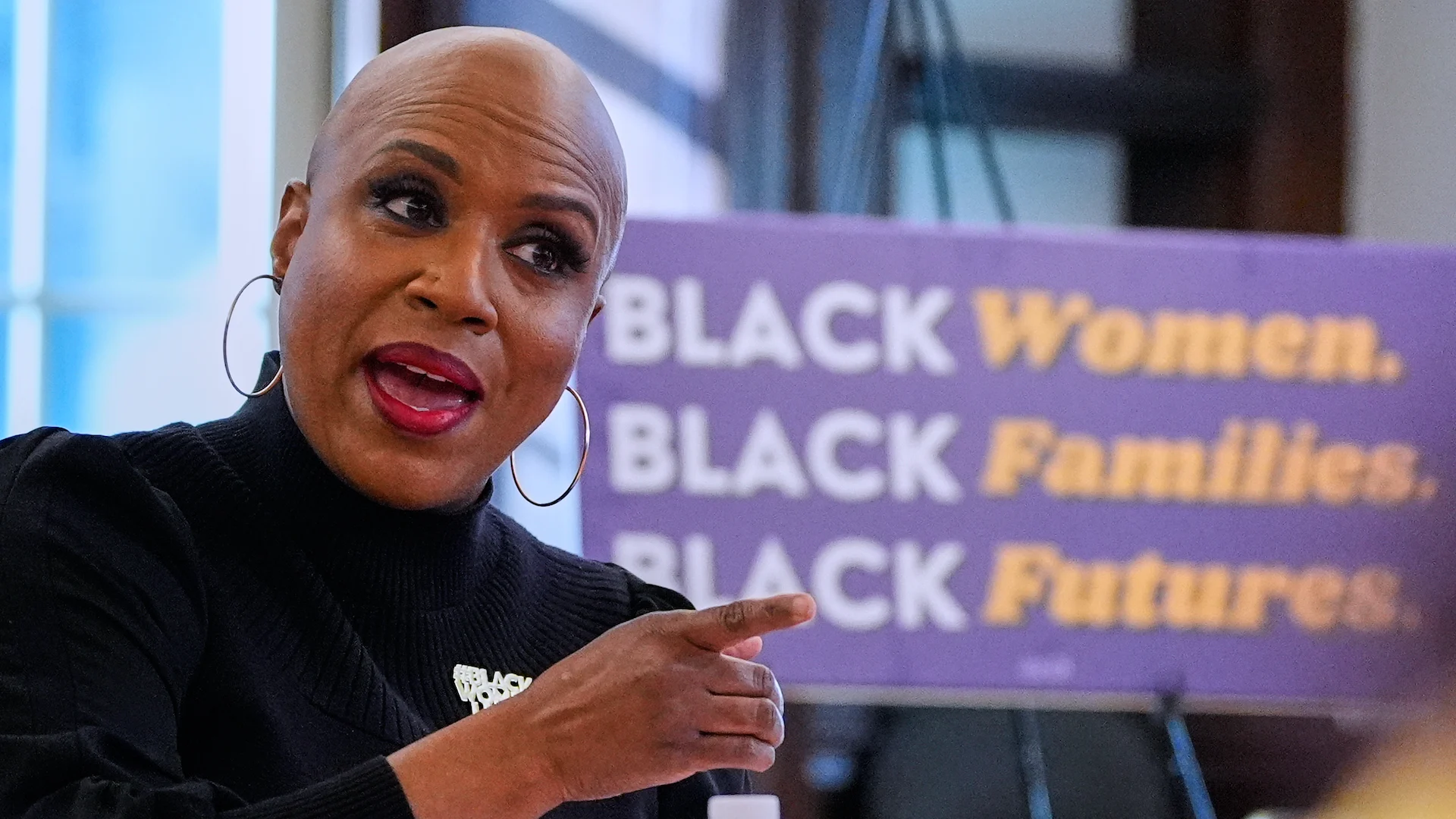
Nearly two million Black families in the US South have zero or negative net worth. More than half of the nation's Black population ( about 56 percent) lives in the South, including those nearly two million families with no monetary wealth. To compound the issue, this summer saw Black women nationally lose 300,000 jobs even as the US economy continues to grow.