Real estate
fromwww.housingwire.com
3 hours agoThe GPS for equity: Building the industry's first true navigation infrastructure
The mortgage industry must shift focus from speed to helping borrowers navigate complex financial decisions.
The delivery follows an initial batch of 10 buses introduced in August 2025, bringing the total number of vehicles supplied under the programme to 100. The buses have been integrated into the NTC fleet, which has historically operated an ageing vehicle base.
The Silverlode Express Lift, built in 1996, is known for having long lines, servicing many popular runs and being the closest lift to the Quicksilver Gondola. The new proposal aims to upgrade it from a six-chair to an express eight-chair lift, increasing uphill capacity from 3,000 to 3,600 skiers per hour.
"We're looking at quite large new numbers of residents that will be in this part of town. And the decision was made that we need to connect those parts of town across the water to downtown, but that we need to do it in a way that won't increase congestion."
Campaigner Aysha Hawcutt stated that residents were 'not anti-homes', but believed the Adlington plan was 'the wrong proposal in the wrong place'. She expressed pride in the community's resilience against the development threats.
Missouri is the most populous state without a statewide active transportation plan, despite nearly one-third of its residents lacking a driver's license and alarming fatality rates among vulnerable road users.
In the 1950s, the Air Force designed cockpits for the average pilot by measuring thousands of pilots and calculating the average for ten key physical dimensions-height, arm length, torso size, etc. They assumed most pilots would be close to average in most dimensions. When researchers actually checked, they found that out of 4,063 pilots, exactly zero were average on all ten dimensions.
My family had Slide Show Night when I was growing up. Not every Saturday, but a whole bunch of Saturdays. Either my sister or I would be in charge of setting up the projector, the screen, and loading the carousel. During the show, there'd be a few landscapes or skylines taken during vacations, but almost all the shots were up close. Like most dads, mine wasn't a professional photographer, but he did a good job of capturing memory triggers: faces, gestures, and decorations.
Though they're individually tiny, parking spots quietly play a dominant role in shaping urban landscapes. Most US cities dedicate at least 25% of their developable land to them. Some, even more. That land usage doesn't only determine the way a city looks. It also means covering large swathes of urban areas in heat-absorbing asphalt, which contributes to making summers hotter and heightens the risk of flooding since it prevents drainage during storms and heavy rainfall.
Every city contains two transportation systems. One is the visible network of roads, rail lines, sidewalks, and bus routes mapped in planning documents. The other is the invisible geography of privilege and exclusion embedded within it: the neighborhoods that received highways instead of parks, the communities whose bus routes were cut, the sidewalks that abruptly end at the edge of a district.
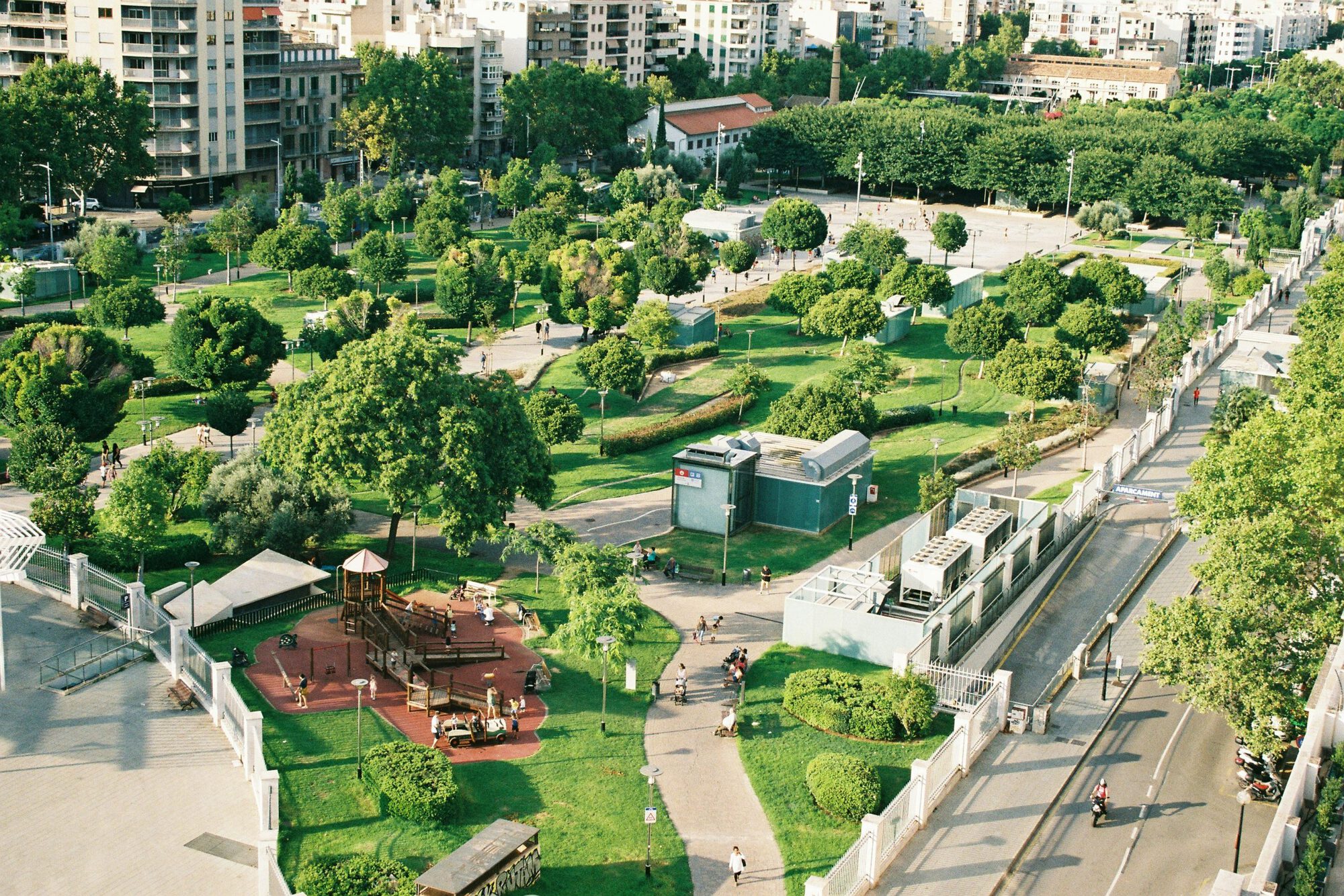
While the data shows 80% of people live within walking distance of green or blue spaces such as a river, park or woodland, it also reveals a disparity between rural and poorer urban areas. In some areas of local authorities, fewer than 20% of residents live close to these spaces, according to data released by the Department for Environment, Food and Rural Affairs on Wednesday.