Annual revenue will gain 61% to about $7.19 billion, the Denver-based company said Monday in a statement. Analysts, on average, estimated $6.27 billion. Palantir forecast sales in the current quarter of about $1.53 billion, which also beat expectations. The shares increased 4.8% at 10:01 a.m. in New York on Tuesday. The stock had dropped 29% from its November peak, reached right before Palantir last reported results, and was down 17% to start 2026 through the close.
He was her political adviser when she was South Dakota's governor. "Kristi is the face of DHS. Corey is the brains. He gets things done," one senior administration official told Axios. Driving the news: Lewandowski's continued involvement in DHS became clear last week, when an Axios reporter saw him standing at a gate at Ronald Reagan Washington National Airport, speaking loudly into his phone as he appeared to discuss DHS vendors' contracts.
"With any person, company, or concept, the general public really only has space in their head for one characteristic of it," says Palantir alum Marc Frankel, cofounder, board member, and former CEO of Manifest, which creates software and AI "bill of materials"-think ingredient labels for critical software. "Biden: old. AI: scary. Palantir: secretive." Frankel worked at Palantir from 2013 to 2018,
Former City Comptroller and current congressional candidate Brad Lander oversaw a major expansion of New York City public pension fund investments in Palantir Technologies, a data analytics firm whose software has long been used by Immigration and Customs Enforcement (ICE) to identify and deport undocumented immigrants. During Lander's tenure as the city's chief financial officer, the city's five public pension funds significantly increased their exposure to Palantir, according to an amNewYork review of pension fund disclosures.
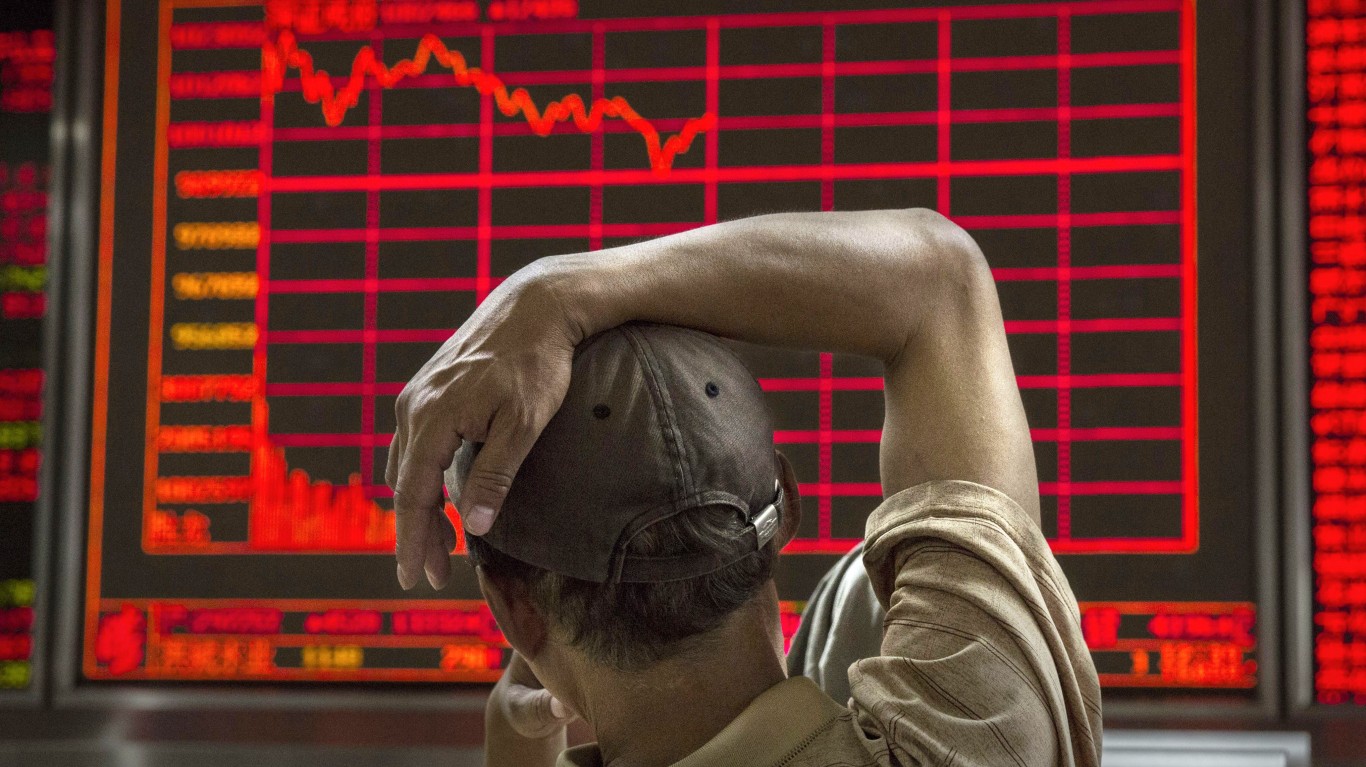
Due to growing concerns over Palantir Technologies 's ( ) valuation, its stock fell 13% last week. However, following the U.S. military operation in Venezuela over the weekend, which captured President Nicolas Maduro, shares are rising over 4% in morning trading on speculation that Palantir's AI and data platforms contributed to the operation's intelligence and planning success. While unconfirmed by officials, such involvement could reinforce Palantir's critical role in national security, potentially supporting its elevated valuation if it leads to expanded contracts or demonstrates real-world efficacy.
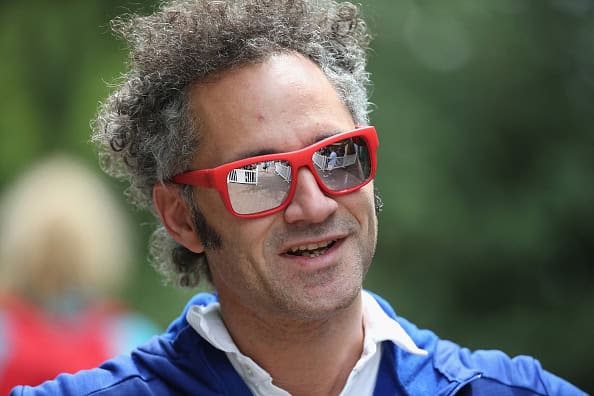
One of the most impressive growth stocks in recent years, Palantir ( NASDAQ:PLTR) has also become among the most discussed names in the market. With a market capitalization that's now approaching $500 billion, and some expectations that this stock could be another entrant into the $1 trillion club, growth investors everywhere are cheering CEO Alex Karp and its team on. Well, most investors.
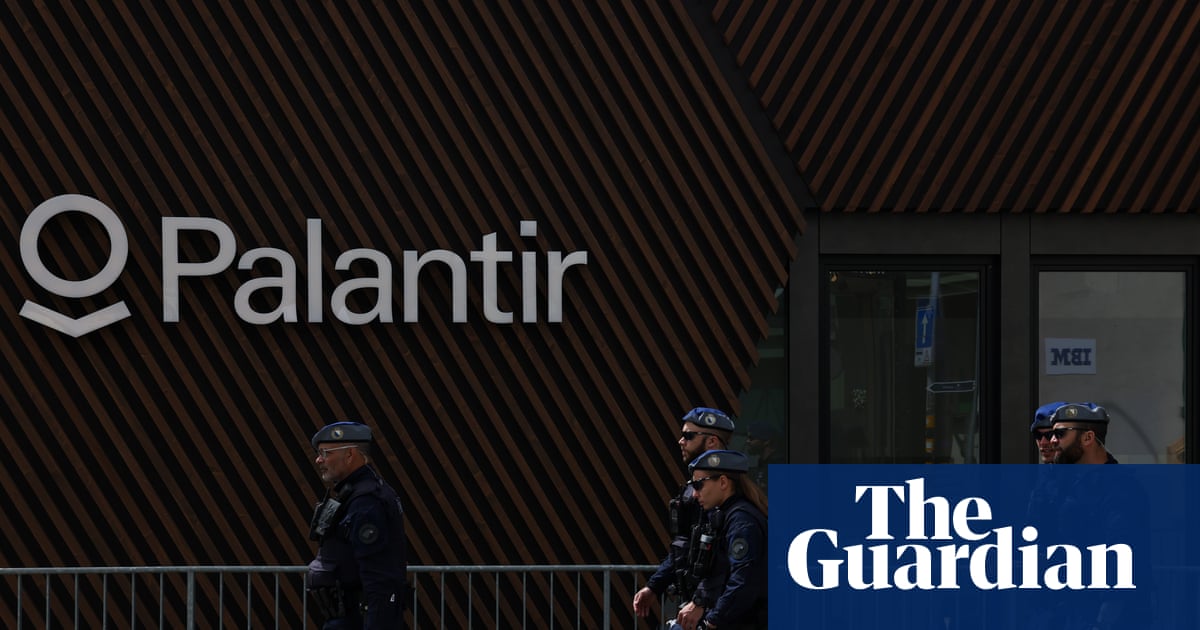
Palantir is a US company that provides software to integrate and analyse data scattered across different systems, such as in the health service. It also provides artificial intelligence-enabled military targeting systems. The investigation cites an expert report, internal to the Swiss army, that assessed Palantir's status as a US company meant there was a possibility sensitive data shared with it could be accessed by the US government and intelligence services.
The AAUP says it learned of the partnership when FedScoop reported that it noticed a message referencing Palantir on the website foreignfundinghighered.gov Dec. 4. An hour later, the website showed "a login page with the Palantir logo," and, a couple of hours after that, "the Palantir logo was replaced with an Education Department logo," the outlet wrote. Foreignfundinghighered.gov tracks foreign gifts and contracts data for higher ed institutions.
The U.S. Citizenship and Immigration Services agency-which handles services including citizenship applications, family immigration, adoptions, and work permits for non-citizens-started the contract with Palantir at the end of October, and is paying the data analytics company to implement "Phase 0" of a "vetting of wedding-based schemes," or "VOWS" platform, according to the federal contract, which was posted to the U.S. government website and reviewed by Fortune.
Ark Invest's Cathie Wood, who's a big investor in disruptive innovators, has been reducing her stake in AI data analytics firm Palantir ( NASDAQ:PLTR) in recent weeks. And a bit of profit-taking at quite a volatile and anxious time certainly does seem wise, especially as Dr. Michael Burry looks to keep those subscribed to his newsletter informed on his views of big tech and his bearish put positions.
"If you are massively dyslexic, you cannot play a playbook," Karp said at the New York Times DealBook Summit. "There is no playbook a dyslexic can master. And therefore we learn to think freely."
is down 17% in the past month as of this writing. The stock is trading at prices last seen back in August of this year. For most stocks, this would be normal, but for PLTR stock, it may be a sign that it may be plateauing. From December 2023 to late October 2025, Palantir has delivered over 1,000% in gains. The number of headlines about this one stock rivaled , but there has been a lull ever since Palantir was rejected at $200.
Palantir's Alex Karp is not the typical tech CEO. It makes sense then that one of the big data company's foundational principles is rooted in the lessons of a 1970s Toyota executive. Karp is a firm believer in the Five Whys, a simple system that aims to uncover the root cause of an issue that may not be immediately apparent. The process is straightforward. When an issue arises, someone asks, "Why?" Whatever the answer may be, they ask "why?" again and again until they have done so five times.
Greater Manchester Integrated Care Board (ICB) has again put off its adoption of an NHS data platform prescribed by the UK government and run by Palantir until there is more evidence that it will be in the "best interests" of the city's population. The national Federated Data Platform (FDP) was created by the US spy-tech firm under a much-criticized £330 million ($445 million) seven-year contract awarded in November 2023. NHS England, the health quango set to be merged into the central government health department, signed the deal with the controversial US vendor after a series of non-competitive deals totaled £60 million ($81 million).
In a recent interview, Alex Karp said that his company Palantir was the most important software company in America and therefore in the world. He may well be right. To some, Palantir is also the scariest company in the world, what with its involvement in the Trump administration's authoritarian agenda. The potential end point of Palantir's tech is an all-powerful government system amalgamating citizens' tax records, biometric data and other personal information the ultimate state surveillance tool.
In a statement, the companies said their agreement would help NHS staff use the FDP to support operations, improve care, drive up efficiency, and drive down waiting lists. They said the apprenticeship program would launch in February 2026 with a curriculum tailored to NHS roles including analysts, administrators, managers, and clinical staff. Louis Mosley, Palantir executive vice president for UK and Europe, stated:
A meme worthy interview wtih CEO Alex Karp wielding a sword during captured the attention of retail investors already primed by Palantir's blowout Q3 earnings. In that Q3 release the company reported an impressive $1.2B in revenue. That not only beat estimates, it delivered on an enviable 'Rule of 40' score of 114%. More on that in a moment. U.S. commercial revenue surged 121% year-over-year, and total contract value jumped 151% to $2.76B, signaling accelerating enterprise adoption.
Step aside, Elon Musk vs. Sam Altman. There's a new beef in the business world, and it centers on the stock market's biggest question: Is the AI boom a bubble? Michael Burry of "The Big Short" fame and Palantir CEO Alex Karp have been trading barbs after the investor revealed he bet on Palantir's stock to plunge last quarter. The pair's clash boils down to a fundamental difference in views that's a microcosm of the market's big divide.