#research-fellowship
#research-fellowship
[ follow ]
#higher-education #research-funding #artificial-intelligence #research-methodology #brain-drain #education


fromwww.businessinsider.com
18 hours agoAfter a disappointing college experience, I was determined to make postgrad life better. Now I'm thriving.
Social anxiety and depression had other plans, leaving me in an ugly cycle of self-isolation and rumination. Terrified of rejection, I'd meet someone interesting during one of my English lectures and invite them out for frozen yogurt in my head.
Higher education
Online Community Development
fromInside Higher Ed | Higher Education News, Events and Jobs
1 day agoA Town-Gown Partnership Focused on Climate Resilience
Agnes Scott College collaborates with Decatur to address climate change through a joint Climate Resilience Plan, focusing on sustainability and community engagement.
fromNature
1 week agoNow is the time for scientific societies to guide global research
Modern scientific societies are increasingly vulnerable due to their dependence on membership fees and journal subscriptions, which are being challenged by the rise of virtual networking and open-access publishing.
Science
Fundraising
fromNonprofit Quarterly | Civic News. Empowering Nonprofits. Advancing Justice.
5 days agoUsing AI for Fundraising Still Requires Human Strategy | Nonprofit Quarterly | Civic News. Empowering Nonprofits. Advancing Justice.
AI should support strategy in nonprofit fundraising, not replace the essential human elements of trust and relationship building.
European startups
fromenglish.elpais.com
2 weeks agoWelcome, American scientists: Europe, a haven for researchers struggling under Trump
Safe Place for Science initiative successfully attracted U.S. researchers to Europe amid restrictive policies, receiving over 900 applications shortly after its launch.
Education
fromwww.berkeleyside.org
3 weeks agoBayer funding available to education programs serving Berkeley students
Bayer is offering $100,000 to $400,000 in five-year grants to six organizations supporting STEAM education for Berkeley students from grade school through community college, with funding beginning August 2027.
Education
fromInside Higher Ed | Higher Education News, Events and Jobs
3 weeks agoStudents Build Belonging Through Service
Neumann University mobilized nearly 1,000 students, alumni, and faculty to complete 60,000 volunteer hours during its 60th anniversary, addressing community needs while strengthening institutional belonging.
Philosophy
fromWarpweftandway
3 weeks agoTwo Collaborative Learning () Events This Week
The 四海为学 Collaborative Learning Project hosts two free public events: Louise Edwards discussing childhood and gender in China on March 19, and Peter Hershock exploring AI and agency from a Buddhist perspective on March 20.


fromNature
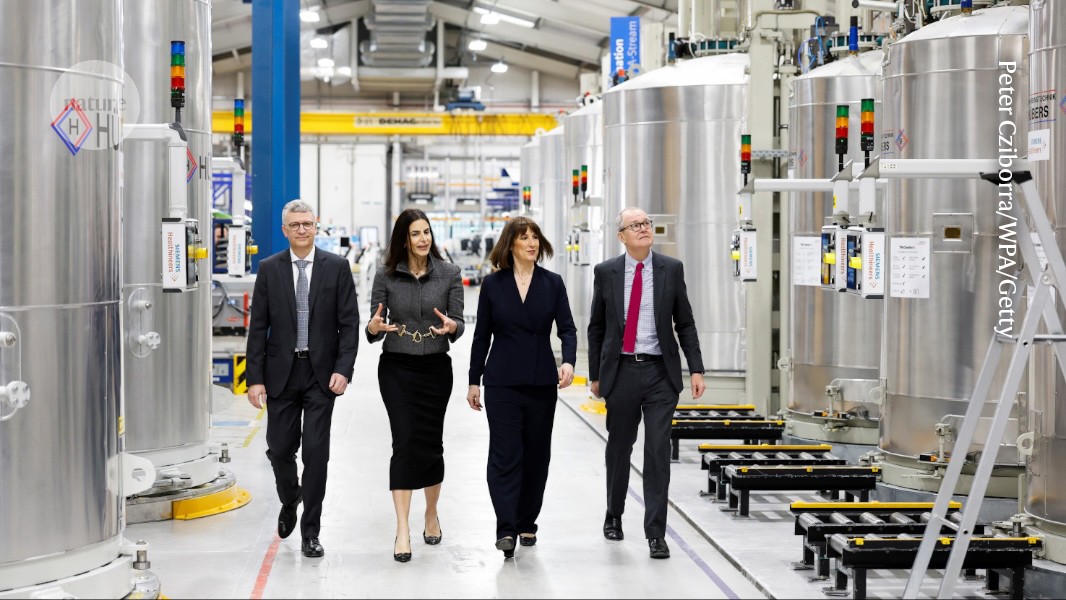
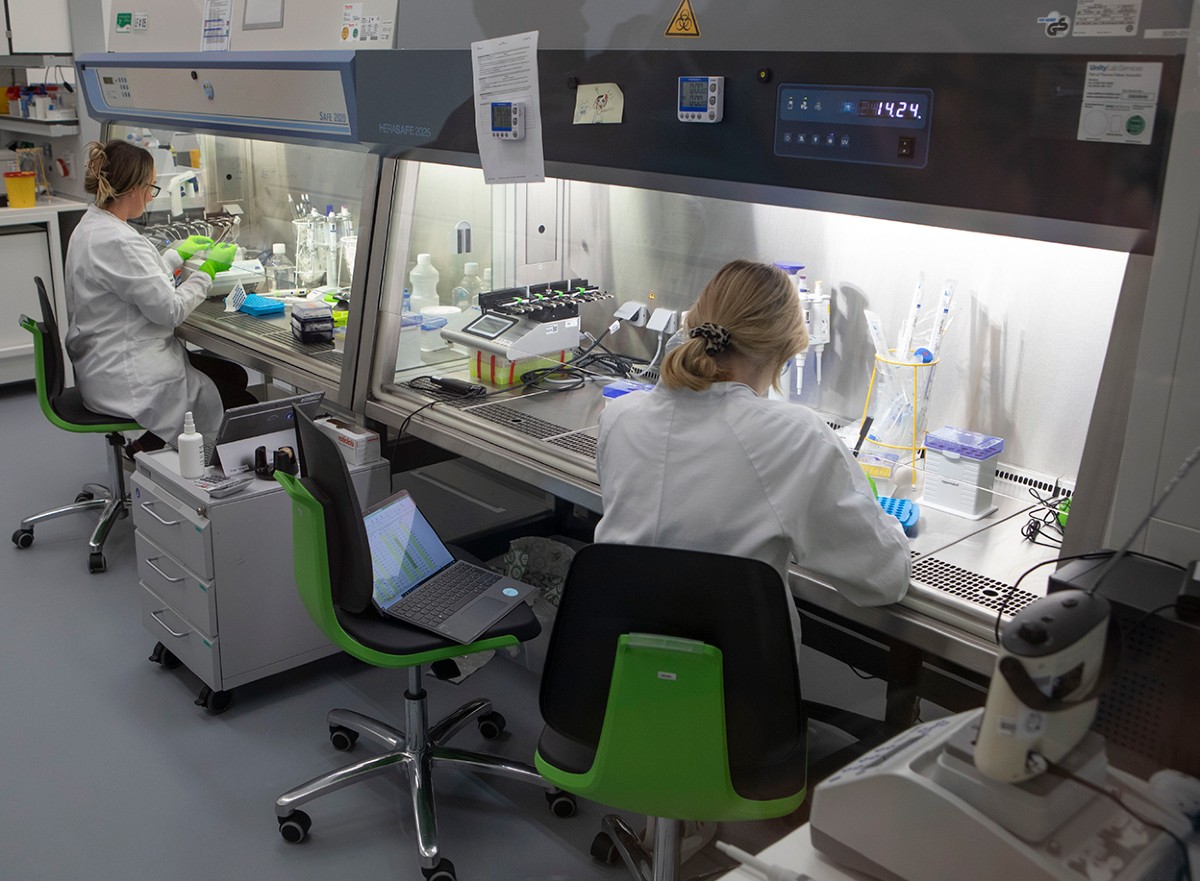
1 month ago'No one quite like her': meet the female colleagues who inspire these award-winning women in science
To celebrate International Women's Day, held each year on 8 March, Nature asked six previous winners of awards given in partnership with Nature to name a woman who has had a positive impact on their career and well-being. This year, Nature has focused on winners of the Estée Lauder Companies' annual Inspiring Women in Science award, the inaugural Sony Women in Technology award - given to women who are using technology to drive positive change for society and the planet - and the annual John Maddox Prize.
Women in technology
OMG science
fromArs Technica
1 month agoResearch roundup: Six cool science stories we almost missed
Scientists revived Edison's nickel-iron battery design using protein scaffolding and graphene oxide, creating an aerogel structure for improved renewable energy storage with extended range and longevity.
Science
fromNature
4 weeks agoPhysics at risk: UK science leader on what's wrong with the latest funding cuts
UK Research and Innovation suspended grant reviews and cut funding in particle physics, astronomy, and nuclear physics to prioritize economically-focused research, prompting concerns from the physics community about inadequate government planning.
fromNature
3 weeks agoPhDs are turning to side hustles to make ends meet, finds Nature poll
The quality of life [provided by] my current stipend (same amount as for 10 years ago) definitely has not been maintained with the rising cost of living. Within a few years I think most people would struggle and need to begin a side hustle or second job.
Higher education
UK news
fromComputerWeekly.com
2 months agoAlan Turing Institute fellowship programme boosted by $1m from Meta | Computer Weekly
Meta is investing $1m through the Alan Turing Institute to build public sector AI expertise and apply CustomerFirst-led private-sector practices to transform government services.
fromNature
2 months agoI know science can't fix the world - here's why I do it anyway
His message is clear: our world is built on abundant energy, around 80% of which has come from fossil fuels over the past 50 years. Because supplies are limited, energy consumption will peak in decades - sooner if humans attempt to limit climate change. To keep global warming below 1.5 °C by 2100, the use of fossil fuels must fall by 5-8% each year - a pace that is too fast for low-carbon energy to keep up with.
Environment
fromwww.thelocal.de
3 weeks agoREVEALED: Germany's 'Universities of Excellence' for science and research
Known as ExStra, this is a permanent national funding programme designed to strengthen research at the nation's top universities and make them more competitive internationally. While the ExStra programme allows for up to 15 "Excellent Universities" (Exzellenzuniversitaten), only ten institutions have made the grade for the next round of funding.
Higher education
fromInside Higher Ed | Higher Education News, Events and Jobs
1 month agoNSF Plans to Boost Staffing, Halve Grant Solicitations
The fewer solicitations you have, the less time grant applicants have to figure out which of our pigeonholes they fit into. In the past, a solicitation might have been for an individual program, which means it's attached to an individual program officer and a specific dollar amount. Now, instead of going to one program officer's area, the NSF will use technology to better route applications to wherever within the agency they can best be reviewed.
Science
Higher education
fromInside Higher Ed | Higher Education News, Events and Jobs
1 month agoExtraordinary Scholar to Lead Largest Education Research Assn.
Sylvia Hurtado, a distinguished higher education researcher, was elected the 112th president of the American Educational Research Association, becoming the second Latina and third higher education scholar in this leadership role.
fromNature
1 month agoPop-up journals for policy research: can temporary titles deliver answers?
I'm less interested in topics than in questions, and I'm less interested in publishing than I am in curation. When I've testified before Congress or dealt with an appropriations bill or a budget negotiation, this question, of what is the return on investments when you're doing R&D, comes up quite often. It's been asked by economists in very formal ways since at least the 1950s, but the data and the methods that were available were really not very strong.
Science
Higher education
fromInside Higher Ed | Higher Education News, Events and Jobs
1 month agoJoint Review Boosts Faculty Diversity, Study Finds
Joint review of multiple faculty members for tenure and promotion increases promotion chances for Black and Hispanic professors by 16.2 percent compared to separate individual reviews.
fromNature
1 month agoAI help in grant proposals tied to higher funding odds at NIH
Scientists are increasingly turning to artificial-intelligence systems for help drafting the grant proposals that fund their careers, but preliminary data indicate that these tools might be pulling the focus of research towards safe, less-innovative ideas. These data provide evidence that AI-assisted proposals submitted to the US National Institutes of Health (NIH) are consistently less distinct from previous research than ones written without the use of AI - and are also slightly more likely to be funded.
Artificial intelligence
Higher education
fromInside Higher Ed | Higher Education News, Events and Jobs
1 month agoWriting Accountability Groups Bring Many Benefits (opinion)
Writing accountability groups are low-cost, high-impact interventions that address structural barriers to faculty scholarly writing through protected time, peer accountability, and mentorship.
fromInside Higher Ed | Higher Education News, Events and Jobs
1 month agoThe Case for Centers for Teaching and Learning (opinion)
This is a striking decision at a moment when public confidence in higher education is eroding. It is also puzzling because rigorous research and evaluation have demonstrated, over and over, the value of the work of centers for teaching and learning, including positive impacts on student learning outcomes, institutional effectiveness and faculty development.
Higher education
fromBig Think
2 months agoThe four paths forward for US scientists in 2026
For nearly 100 years, the United States has been the world's leader in a wide variety of scientific fields. No other country has: invested as much in fundamental scientific research, has made more scientific breakthroughs and scientific advances, has attracted more scientific researchers to move there to conduct their research, or has conducted more projects and been home to more scientists that have won Nobel Prizes.
Science
Science
fromInside Higher Ed | Higher Education News, Events and Jobs
1 month agoNSF Returns Fellowship Applications With Minimal Reasoning
NSF returned numerous Graduate Research Fellowship Program applications without review, citing eligibility issues, leaving uncertain how many students were affected.
Higher education
fromInside Higher Ed | Higher Education News, Events and Jobs
2 months agoHelping faculty build channels to audiences that matter
Higher-education communicators should enable faculty to publish directly via platforms like Substack and LinkedIn newsletters to expand reach, engagement, and institutional narratives.
fromCornell Chronicle
2 months ago$1.5M grant boosts postdoctoral research across 4 colleges | Cornell Chronicle
Postdoctoral researchers are an essential part of academic science and the knowledge Cornell brings into the world. They often mentor students and lead projects, helping advance discoveries in areas like quantum materials, genomics and biomedicine - work that will fundamentally transform technologies, medicine and public health," said Gary Koretzky '78, vice provost for research, who will administer the grant to researchers in the College of Arts and Sciences, the College of Agriculture and Life Sciences, the College of Veterinary Medicine and Cornell Engineering.
Higher education
fromNature
2 months agoAI could transform research assessment - and some academics are worried
In 2023, Australia abandoned its expensive and bureaucratic scholar-led research-assessment programme. New Zealand followed suit soon after. The hope, according to a transition plan unveiled by the Australian federal government's Department of Education and the research sector, was to find a "more modern, data-driven approach". In the United Kingdom, where financial pressures on universities are especially acute, there are similar calls to reform the Research Excellence Framework (REF), the country's performance-based research-funding system.
Higher education
Higher education
fromInside Higher Ed | Higher Education News, Events and Jobs
2 months agoGreat Grants Need Far Away Deadlines
Unreasonably tight grant timelines and limited grant-writing capacity disadvantage community colleges, reducing their ability to compete for Workforce Pell and civil discourse funding.
[ Load more ]