#roman-villas
#roman-villas
[ follow ]
#archaeology #travel #pompeii #italy #roman-archaeology #rome #roman-villa #roman-history #colosseum #tourism


:max_bytes(150000):strip_icc()/TAL-header-aventine-hill-terrace-rome-ROMEHIDDENGEMS0126-642afc06aef6450098a63077ff43df8f.jpg)

fromTravel + Leisure
5 days agoThese Are the 10 Best Beaches in Europe-and No. 1 Is in a Hidden Gem Italian Village With Clean Waters
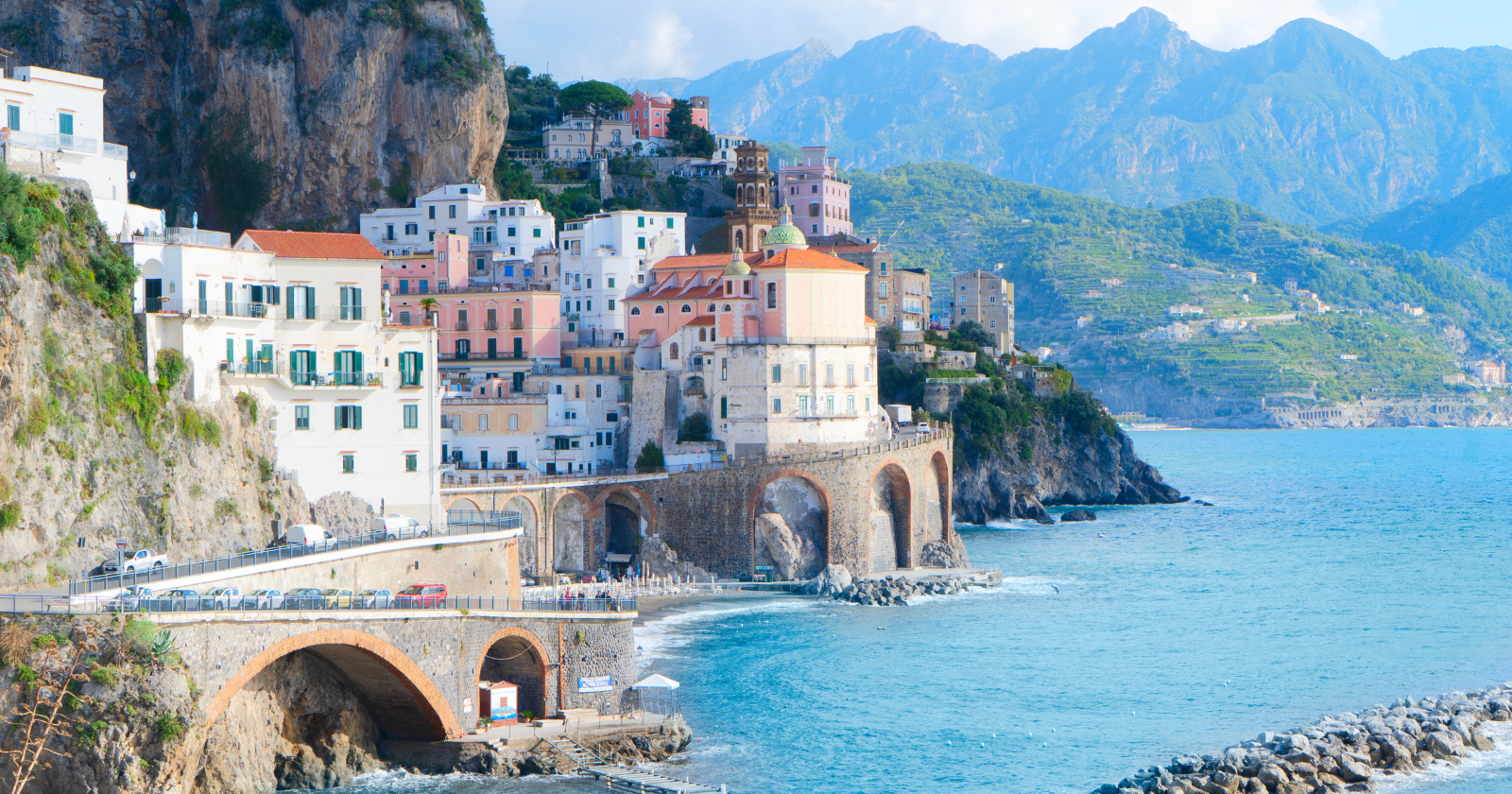
Sperlonga, Italy, is home to fewer than 4,000 full-time residents, making it a prime place to go for some peace and solitude. Its shoreline is also a Blue Flag certified beach, meaning its water quality, sustainability, and environmental management practices are among the best in the world.
Europe news
fromArtnet News
2 days agoColosseum Facelift Restores Ancient Southern Entrance to Its Former Glory
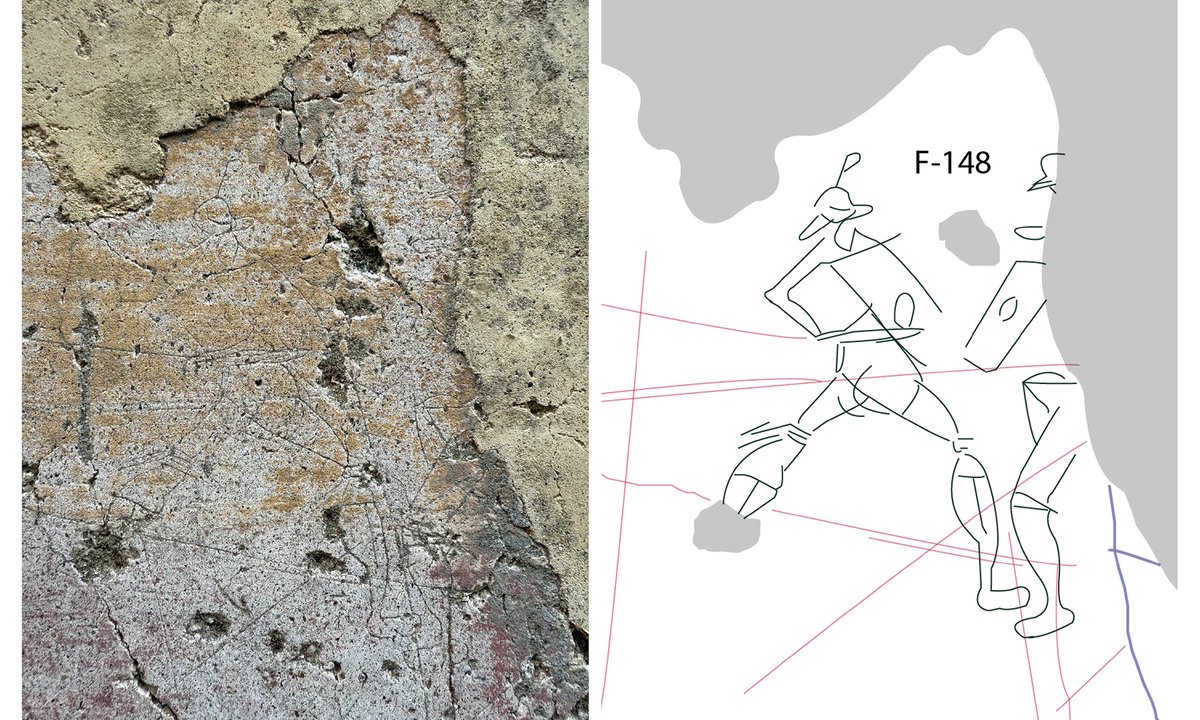
"[The project] has finally restored the perception of the monument's original size and floor level," architect Stefano Boeri said in a statement. "It also offers the public the opportunity to approach its walls and imagine the rhythm and sequence of the ambulatories and arches, now lost. It's a respectful and useful project that completes research carried out by the archaeologists of the Colosseum Archaeological Park."
Arts


fromArchitectural Digest
2 weeks agoIn an Ancient Italian Town, This 592-Square-Foot Home is Spread Across Six Levels
"It was in really bad shape, but I sensed its potential," he says. When his future client, a Swiss teacher who fell in love with the Italian Riviera, walked into his office, even she was skeptical. "Many people were," he continues. "It was an abandoned and damp property, but I convinced her. Now she's happy."
Renovation
Film
fromwww.theguardian.com
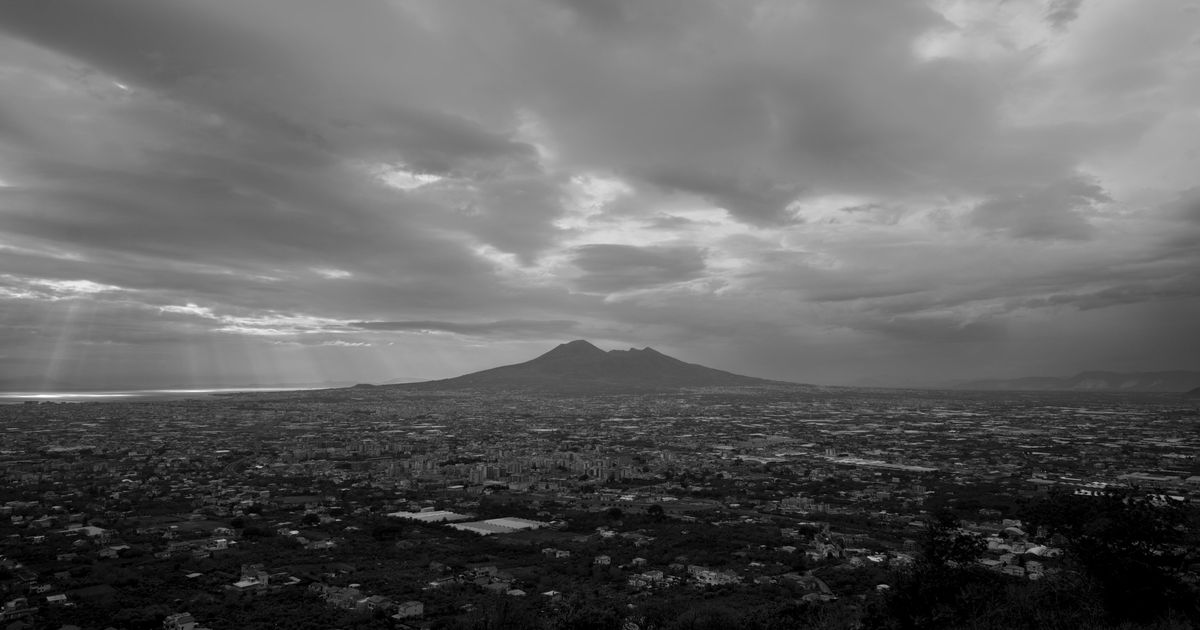
2 weeks agoWas that an earthquake?' Italy's great psycho-geographer tackles the Vesuvius-haunted Naples tourists seldom see
Gianfranco Rosi's latest film, Pompeii: Below the Clouds, offers a unique perspective on Naples, contrasting its beauty with its underlying complexities.
fromCN Traveller
2 weeks ago7 wonders of Greece for 2026
The Rio-Antirrio Bridge, with its triangular sections resembling giant sails, is the world's longest multi-span cable-stayed bridge, spanning 2,880 meters across the Rion Strait. Completed in 2004, it transformed travel between the Peloponnese and mainland Greece, reducing ferry crossing times significantly. The views from the bridge are breathtaking, offering glimpses of the indigo waters and majestic mountain ranges.
Europe news
fromConde Nast Traveler
8 years agoThe 24 Best Bars in Rome to Drink Like a Local
The drinks scene here has undergone something of a Renaissance, with the number and variety of options across the city blossoming. Of course, there are still the old school stalwarts that adhere to the traditional Italian idea of a bar-envision the quintessential all-day café-bar where you might stand at the counter for a cappuccino in the morning, grab a quick panino at lunchtime, or linger over an aperitivo after work.
Cocktails
fromMail Online
2 weeks agoRoman mosaic proves topless FEMALE gladiators fought animals
'Women fighting beasts in arena games are attested by the written sources, but no visual source is known to show their image,' author Alfonso Mañas wrote in the International Journal of the History of Sport.
History
Washington Nationals
fromDefector
3 weeks agoNobody's Having More Fun Than The Italians | Defector
The World Baseball Classic uses flexible nationality rules allowing players to represent countries through lineage and citizenship, creating amusing rosters like Team Italy's Italian-Americans defeating Team USA.
fromArchDaily
3 weeks agoStefano Boeri Interiors Restores Southern Ambulatory Areas of the Colosseum in Rome
The intervention 'restored the perception of the monument's original scale and pavement level,' while enabling visitors to approach the structure more directly and understand the sequence of the ambulatory and its arches. This recalibration of levels, based on archaeological findings and geometric studies, also enabled the reorganization of the stormwater drainage system, integrating surface slopes and transitions into the paving design while maintaining coherence with the monument's historical configuration.
Renovation


Higher education
fromHarvard Gazette
1 month agoLike seeing art of Roman chapels in technicolor for first time - Harvard Gazette
Students learned centuries-old stucco sculpting techniques through hands-on practice, gaining deeper understanding of Renaissance and Baroque artists' material choices and creative processes.


Berlin food
fromBusiness Insider
1 month agoI've traveled to all 20 regions in Italy - but I'll always return to this one in the south
Basilicata, a sparsely populated southern Italian region between Puglia and Calabria, offers beautiful beaches, dramatic landscapes, and authentic local cuisine with significantly fewer crowds than other Italian destinations.
#family-travel


Berlin
fromCN Traveller
1 month ago11 Family-Friendly Hotels in Rome Offering Gladiator Schools, Free Gelato, Teen Spas, and More
Rome offers world-class family-friendly hotels and abundant child-centered activities, making it an ideal destination where children are prioritized rather than accommodated as an afterthought.
Travel
fromBusiness Insider
1 month agoI've traveled to Italy annually for the past 15 years. I always skip Capri for this neighboring island instead.
Ischia offers comparable attractions to Capri—beaches, castles, shopping, and gardens—with significantly fewer tourists and lower prices, making it a superior alternative for Italian island travel.
fromwww.thehistoryblog.com
1 month agoSamnite burials of children with bronze warrior belts found
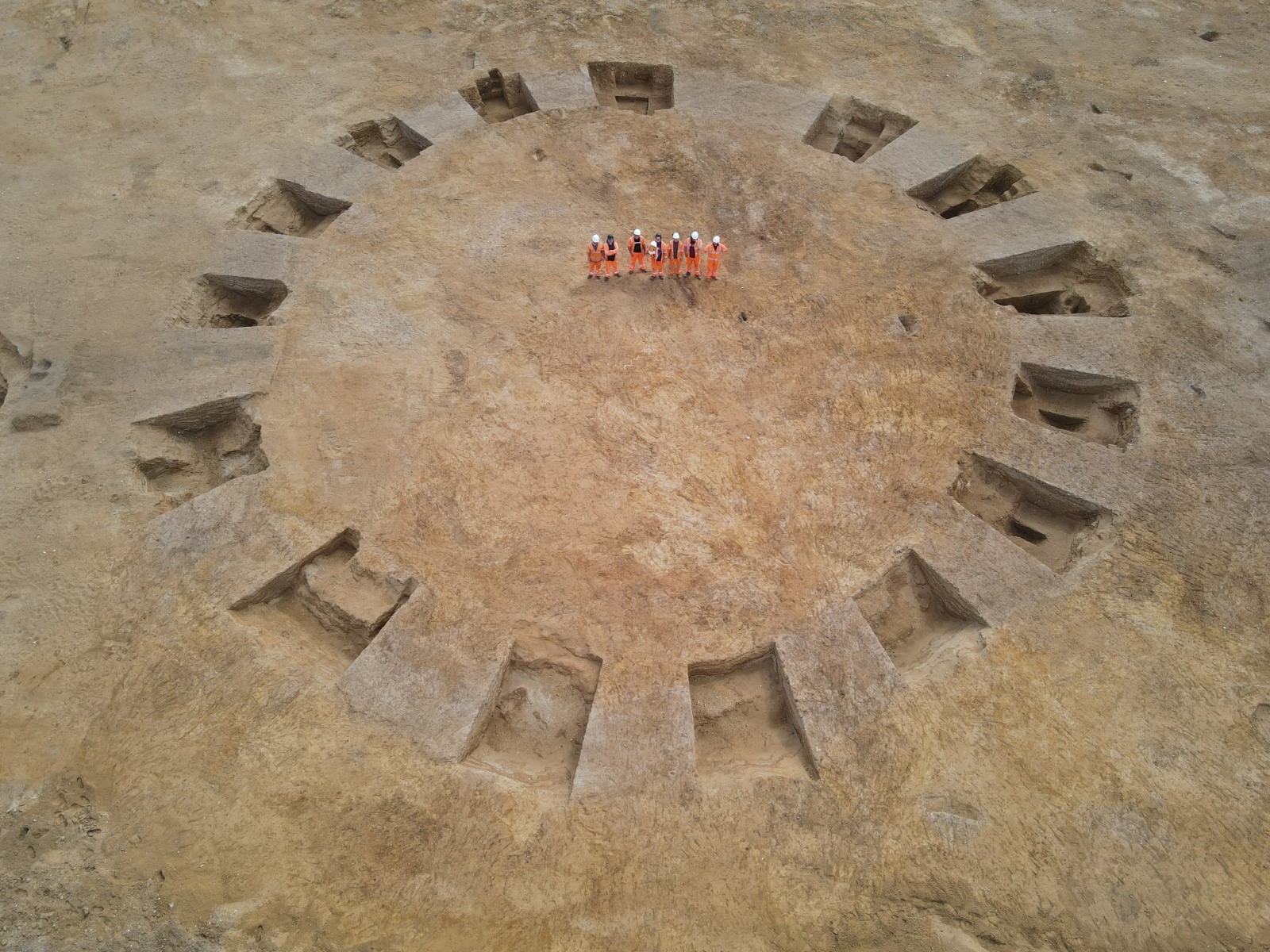
The excavation ultimately unearthed 34 burials, 15 of them belonging to children between two and ten years old when they died. The graves are clustered in groups, probably reflecting family nuclei. Most the grave types are earthen pits covered with roof tiles angled against each other.
History
fromwww.independent.co.uk
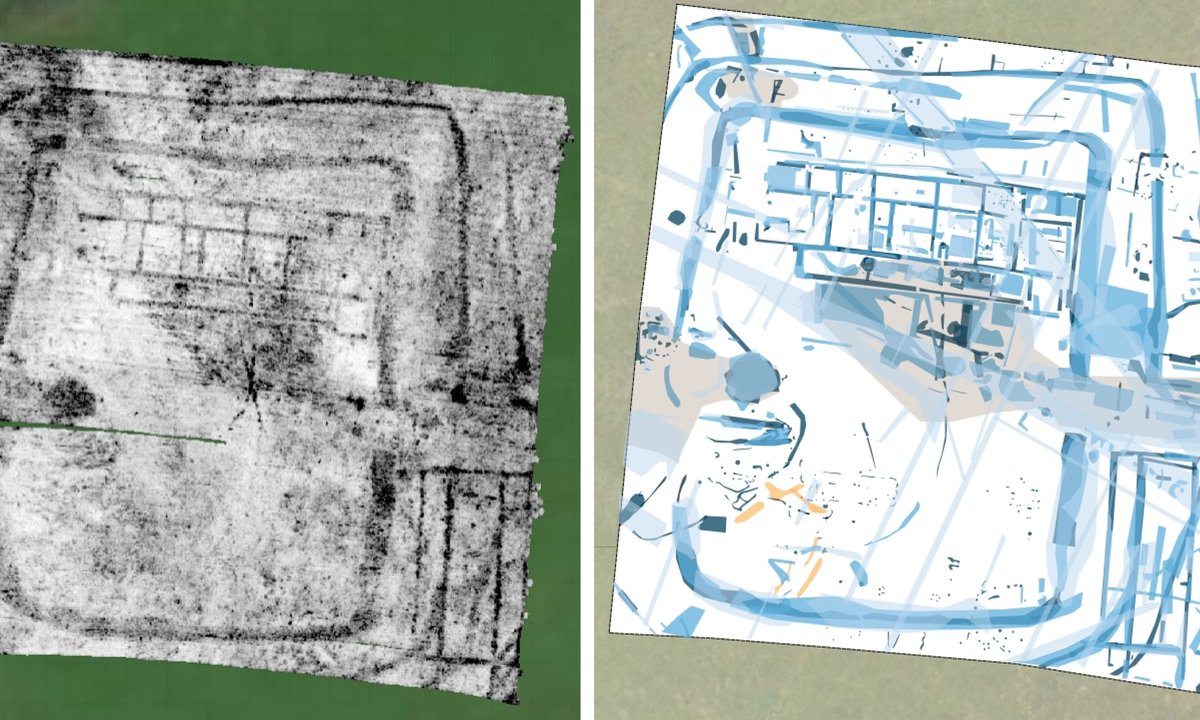
2 months agoHuge Roman villa found in Wales dubbed Port Talbot's Pompeii'
From reproductive rights to climate change to Big Tech, The Independent is on the ground when the story is developing. Whether it's investigating the financials of Elon Musk's pro-Trump PAC or producing our latest documentary, 'The A Word', which shines a light on the American women fighting for reproductive rights, we know how important it is to parse out the facts from the messaging.
UK news
fromOpen Culture
1 month agoWho Would Be Emperor If the Roman Empire Still Existed Today?
Very rare to see this level of tailoring nowadays, even on the wealthy. Even when not attending major sporting events, the king's collars always hug his neck, his lapels are always well-proportioned, the lines of his coat always flow into his trousers, and his four-in-hand always has just the right asymmetry.
History
fromArchitectural Digest
1 month agoPalmarola Island Is the Secret Italian Paradise You've Never Heard Of
Among the Pontine Islands, Palmarola emerges as an unspoiled, scenically unique land. You'll find no big luxury resorts, loud clubs, or lines of restaurants. There aren't even any paved roads, or an established electrical grid-and there's certainly limited telephone coverage, so forget working from home. However, the lack of modern amenities means less traffic and crowds.
Travel
fromdesignboom | architecture & design magazine
1 month agolava stone and old fisherman's house merge into contemporary villa on sicilian coast
Villa Lava is a private residence located in Santa Tecla, in the province of Acireale, on the eastern coast of Sicily. The project is a unique architectural blend of two houses in one single villa. On one side stands an old fisherman's house dating from around 1900, completely restored by Nábito Architects, maintaining its essential character and carefully uncovering and preserving the original lava stone vaults.
Remodel
fromApartment Therapy
1 month agoThis Soothing Italian Philosophy Transforms the Way I Do Everything
"Piano piano" is an old Italian saying that sounds nonsensical, but is actually full of wisdom, especially if you, like me, are finding yourself wishing away these frigid winter days and hoping spring and summer gets here fast. These days, I've found myself rushing from one thing to the next, frustrated at the smallest things, from post office lines to just missing my train. And I'm ready to make a change.
Mindfulness

fromOpen Culture
1 month agoRoman Statues Weren't White; They Were Once Painted in Vivid, Bright Colors
One tenet of classical idealism is the idea that Roman and Greek statuary embodied an ideal of pure whiteness-a misconception modern sculptors perpetuated for hundreds of years by making busts and statues in polished white marble. But the truth is that both Greek statues and their Roman counterparts were originally brightly painted in riotous color.
History
fromArchitectural Digest
2 months agoRamdane Touhami's Curated Roman Palazzo Spans Centuries-But Doesn't Take Itself Too Seriously
Designed by the celebrated mannerist architect Giacomo Barozzi da Vignola, construction of the first sections of the late Renaissance Palazzo Borghese began in the 1560s. The Palazzo was among Vignola's many other important projects (he became the principal architect for St. Peter's Basilica following Michelangelo's death). It was later expanded by Cardinal Camillo Borghese, who bought it in 1596 (in 1605, he was named Pope Paul V).
History
fromOpen Culture
1 month agoRome in 1890 Captured in Color Photographs: The Colosseum, Forum, Trevi Fountain & More
English gentlemen completed their education through the Grand Tour of Europe, primarily Italy, which profoundly influenced Romantic poets like Byron and shaped their artistic vision of classical civilization in ruins.
fromWorld History Encyclopedia
1 month agoVespasian: How A Commoner Became Roman Emperor
Titus Flavius Vespasianus was born in Falacrinae, a rural town northeast of Rome, on 17 November 9 CE. There was nothing in his lineage to suggest that he would one day rule as emperor. Indeed, his ancestors were commoners who did not achieve any kind of prominence until the era of the late Roman Republic, when they came into modest wealth.
History
fromArchDaily
1 month agoNaples Architecture City Guide: 15 Projects of History, Density, and Continuity
Set on the edge of the Mediterranean and shaped by centuries of continuous occupation, Naples is a city where architecture is inseparable from time. Layers of Greek foundations, Roman infrastructures, medieval churches, Baroque palaces, and Modern interventions coexist within a dense and compact urban fabric. Naples reveals itself as an accumulation of structures, adaptations, and reuse, where buildings are rarely isolated objects and more often part of a larger spatial, social, and historical system.
Miscellaneous
fromCN Traveller
2 months agoForget Capri: this under-the-radar Italian island has the most stylish hotels to book for summer
What sets this isolated rock apart from the competition? It's a question of substance and that ghastly overused word, "authenticity." Capri will always be the pretty one - the view from the Via Krupp and the Faraglioni as seen from La Fontalina are starlet gold - and the island of Procida took recent fame as Europe's 2022 culture capital. Still,
Travel
fromwww.thehistoryblog.com
1 month agoCenturion's tombstone reused in someone else's grave
Both of the cyst graves feature funerary markers reused as building material. One of them contains the partially preserved tombstone of Legio I Italica centurion Gaius Valerius Verecundus was engraved with a wreath of which only traces remain and an inscription that describes him as having been heavily pressed by fate.
History
History
fromMedievalists.net
1 month agoEast Roman Archaeology: Goals and Challenges, with Marica Cassis - Medievalists.net
Archaeology reveals material evidence of daily life, settlement patterns, and economic systems in the East Roman world that textual sources cannot provide, while facing challenges in establishing itself as a distinct field separate from classical and Islamic archaeology.
fromwww.thehistoryblog.com
2 months agoMonumental Republican tombs found in Rome suburb
An monumental early Republican-era funerary complex has been discovered in a suburb of Rome. The excavation of the Via di Pietralata east of Rome also uncovered a stretch of an ancient road, a small cult building and two monumental basins dating back to the 3rd and 2nd centuries B.C. Remains from this early in the Republican era are scarce in the Eternal City, which make these finds very archaeologically significant.
History
History
fromIndependent
1 month agoBill Linnane: My son visited Pompeii on a school trip - but the only thing he learned about the ancient world was how to use a landline
Pliny the Younger witnessed the 79 AD eruption of Mount Vesuvius at age 17 and wrote detailed eyewitness letters that define Plinian eruptions.
fromwww.thehistoryblog.com
1 month agoGreat hall from 4th c. bishop's palace complex found in Ostia
The remains of a monumental hall belonging to a 4th-century episcopal palace have been discovered at Ostia Antica, Rome's ancient port town. The base of the structure is eight by 20 meters (ca. 26 by 65 feet) and the walls were an estimated eight meters high. This is an extraordinarily large space, and it was richly decorated with mosaic floors and marble panels.
History
fromMail Online
2 months agoThe bone that proves Hannibal really DID cross the Alps with elephants
While the bone was worn and poorly preserved, archaeologists managed to identify its origin by comparing it with modern elephant and mammoth bones. Despite there not being enough DNA to confirm the exact species, the researchers were able to carbon date a tiny sample of the bone. This places the elephant's death between the late fourth and early third centuries BC - right in the middle of the Second Punic War.
History
[ Load more ]