#scanning-tunneling-microscopy-artifacts

[ follow ]
OMG science
fromFuturism
4 days ago

Scientists Say They've Found "Dark Points" That Move Faster Than the Speed of Light

Faster-than-light 'dark points' in light waves have been observed, moving without mass and not violating relativity.
Science
fromNature
1 week ago

Entanglement and electronic coherence in attosecond molecular photoionization - Nature

Attosecond pulses from high-harmonic generation create entangled ion-photoelectron systems, enabling observation of coherent dynamics in quantum states.
#quantum-computing
Science
fromNature
1 week ago

Quantum simulations verified by experiments for the first time

Quantum computers can potentially solve complex tasks, but high error rates hinder their current capabilities.
Science
fromArs Technica
4 weeks ago

Quantum computing meets the Mobius molecule

IBM used a quantum computer algorithm to help create a molecule with half-Möbius topology, demonstrating quantum computation's growing practical utility in chemistry.
OMG science
fromNature
1 month ago

Why 'quantum proteins' could be the next big thing in biology

Fluorescent proteins from crystal jellyfish are being transformed into quantum bits to create highly sensitive quantum sensors for biological applications.
fromNature
4 weeks ago

A large-scale coherent 4D imaging sensor - Nature

Across various fields, from spatial mapping for reconnaissance and construction to facial recognition, virtual and augmented reality and autonomous driving, accurate 3D representation of dynamically evolving environments is paramount for safe human-machine interaction. Therefore, substantial research efforts are directed towards developing a cost-effective, high-performance and scalable 3D imaging sensor comparable with a CMOS camera.
Photography
Science
fromwww.nature.com
3 weeks ago

Bistable superlattice switching in a quantum spin Hall insulator

Monolayer TaIrTe4 exhibits bistable superlattice switching between two lattice configurations with dramatically different periodicities, controllable through electrostatic tuning of electronic states.
Science
fromMail Online
3 weeks ago

Scientists create a clock so precise it could REDEFINE the second

Scientists created a strontium optical lattice clock accurate to 19 decimal places, meeting requirements to redefine the second within the next decade.
fromwww.theguardian.com
3 weeks ago

Please drive carefully: scientists plan to transport volatile antimatter for first time

A core question we want to understand is where did matter come from. And then, if you know about antimatter, it's natural to ask, why is that not here? The process is not understood and we are hunting for clues as to why it happened, says Dr Christian Smorra, a physicist on the Baryon Antibaryon Symmetry Experiment (Base) at Cern.
OMG science
Science
fromNature
4 weeks ago

Multimodal electron microscopy of halide perovskite interfacial dynamics - Nature

Halide perovskite LEDs suffer rapid operational degradation due to ion migration and interfacial electrochemical reactions, requiring atomic-scale in situ imaging to understand degradation mechanisms and improve device stability.
Science
fromwww.scientificamerican.com
1 month ago

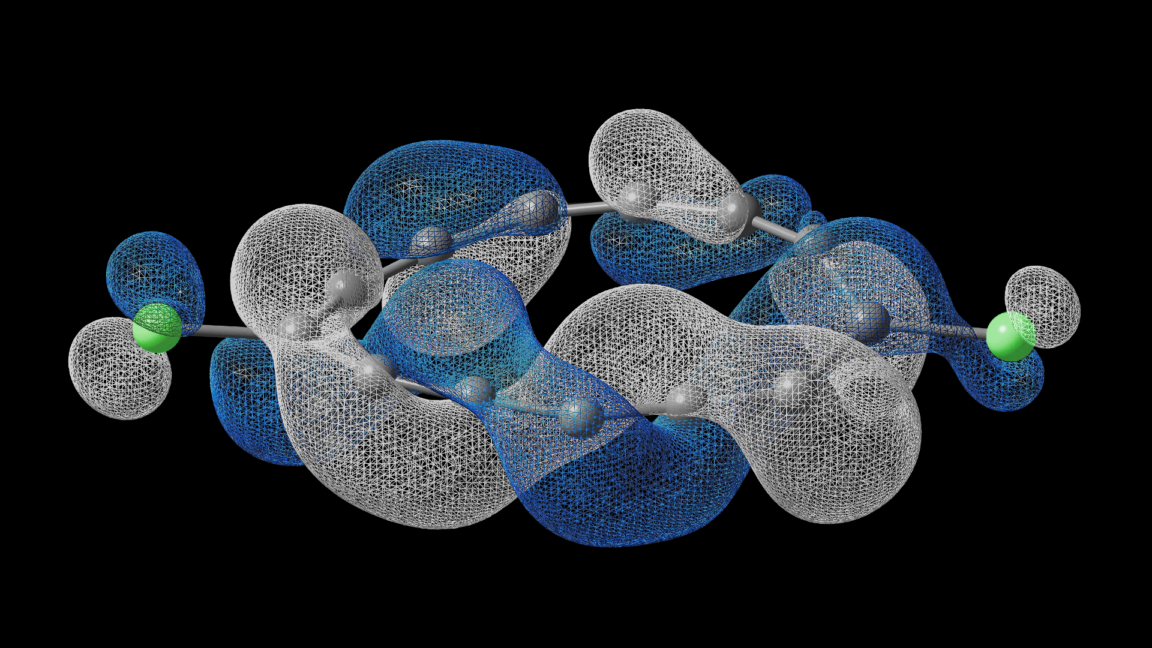
IBM scientists unveil the first ever half-Mobius molecule, with the help of quantum computing

IBM researchers created a novel ring-shaped molecule with twisted electron motion resembling a complex Möbius strip, confirmed through quantum computers and advanced microscopy.
fromSecurityWeek
1 month ago

NIST's Quantum Breakthrough: Single Photons Produced on a Chip

NIST has developed a chip that reliably emits a single photon on demand. This ability will improve the efficiency of QKD (quantum key distribution) as we prepare for the arrival of quantum computers. Quantum computers will upend current cryptology by using Shor's algorithm to rapidly negate the current public/private key secure encryption methods. This has largely been solved by NIST's post quantum cryptology (PQC) algorithms.
Information security
fromwww.nature.com
1 month ago

Limitations of probing field-induced response with STM

We demonstrate how the apparent magnetic field induced lattice and CDW intensity change can be explained as a consequence of two independent experimental artifacts: a reconfiguration of atoms at the STM tip apex that alters the amplitudes of CDW modulations, and piezo creep, hysteresis and thermal drift, which artificially distort STM topographs.
Science
Philosophy
fromAeon
2 months ago

Anyons: the two-dimensional particles that reframe reality | Aeon Essays

Anyons form a third class of particle with braiding-based information storage, offering intrinsic protection useful for fault-tolerant quantum computing.
Science
fromArs Technica
1 month ago

Photons that aren't actually there influence superconductivity

Virtual photons from quantum fields can degrade superconductor performance, providing insights into quantum mechanics and superconductivity behavior.
fromNature
1 month ago

Cavity-altered superconductivity - Nature

A grand aspiration of cavity quantum materials research is to uncover fundamentally new routes for controlling properties of matter by judiciously tailoring the quantum electromagnetic environment. Experiments with dark cavities revealed modified transport properties in the integer and fractional quantum Hall states of a 2D electron gas, as well as cavity-assisted thermal control of the metal-to-insulator transition in charge-density-wave systems.
Science
Science
fromenglish.elpais.com
2 months ago

The technology that reveals what happens in 0.00000000000000000000001 second

Attosecond-scale light pulses reveal ultrafast electron dynamics, enabling new studies of materials, quantum processes, and biological structures, and have earned major scientific awards.
fromNature
1 month ago

Nanoscience is latest discipline to embrace large-scale replication efforts

Calling nanoscientists: your field needs you to try to replicate a landmark finding that quantum dots can act as biosensors inside living cells. As part of the first large-scale effort in the physical sciences to tackle the reproducibility crisis, researchers in France and the Netherlands are offering funds and resources in exchange for a few months of work. "We are trying to use
Science
Science
fromNature
2 months ago

'Remote controlled' proteins illuminate living cells

Engineered magnetically sensitive fluorescent proteins enable remote modulation of brightness in cells and animals, offering quantum-based control for biosensors and potential therapies.
fromNature
2 months ago

Large-scale analogue quantum simulation using atom dot arrays - Nature

Analogue quantum simulations are a useful tool for investigating these systems, particularly in regimes in which the applicability of numerical techniques is limited. For different simulator platforms, figures of merit include the electron bandwidth and interaction strength, temperature and the number of simulated lattice sites. Their use is further underscored by the ability to realize distinct lattice geometries, on-site degrees of freedom and by the physical observables that are accessible to experimental measurement.
Science
fromNature
2 months ago

Not just a chip off the old block: nanoparticles reveal odd traits

A new way of probing nanometre-scale particles of a single chemical element has revealed that they have markedly different properties from larger chunks of the same element.
Science
Science
fromArs Technica
2 months ago

Meet the mysterious electrides

Electrides in Earth's high-pressure inner core may trap hydrogen, carbon, nitrogen, sulfur, and noble gases, explaining surface deficiencies and lower core density.
Science
fromianVisits
2 months ago

Tickets Alert: Visit the UK's largest particle accelerator - the Diamond Light Source

A synchrotron near Didcot offers occasional free public tours of its ring-shaped particle accelerator that produces powerful X-ray‑like light to probe materials.
Science
fromTheregister
2 months ago

MIT scientists move structural color beyond the lab

A handheld laser system called MorphoChrome paints programmable iridescent structural colors onto holographic photopolymer film for integration into flexible and rigid objects.
Science
fromNature
2 months ago

Direct observation of the Migdal effect induced by neutron bombardment - Nature

The Migdal effect enables detection of MeV–GeV light dark matter by producing detectable electronic recoils from nuclear recoils, overcoming current detector threshold limits.
fromNature
2 months ago

Quantum spinning effect observed in a levitating magnet

A supercooled microscopic ferromagnet proves the existence of gyroscopic magnetic behaviour that has been long sought by physicists.
Science
Science
fromBig Think
2 months ago

The most important quantum advance of the 21st century

The Pusey-Barrett-Rudolph theorem supports an ontic interpretation of the quantum state and constrains hidden-variable and epistemic models of quantum reality.
Science
fromTheregister
2 months ago

DARPA asks labs to outsmart physics with photonic circuits

DARPA is funding efforts to scale photonic integrated circuits to perform larger-scale computing with light using existing photonic components to overcome current physical limitations.
fromNature
2 months ago

Constraints on axion dark matter by distributed intercity quantum sensors - Nature

Y.W. designed the experimental protocols, performed experiments, analysed the data and wrote the manuscript. Y.H., X.K., D.C., J.X.X. and W.Z. performed experiments and edited the manuscript. Y.C. and S.P. edited the manuscript. M.J., X.P. and J.D. proposed the experimental concept, designed experimental protocols and proofread and edited the manuscript. All authors contributed with discussions and checking the manuscript. Corresponding authors Correspondence to Min Jiang or Xinhua Peng.
Science
fromNextgov.com
2 months ago

Quantum cameras could remake space-based intelligence

Can quantum physics enable better, cheaper, faster satellite photos? In a month or two, a startup will test a "quantum camera" for space-based imaging. If it works, it could slash the cost of missile defenses and give smaller NATO allies and partners spy-satellite capabilities that were once exclusive to major powers.
Science
Science
fromNature
2 months ago

Daily briefing: Largest ever 'superposition' pushes quantum boundary

Quantum superposition observed in sodium clusters of ~7,000 atoms suggests macroscopic quantum behavior, while magnetically controllable proteins and 67,800-year-old cave art reveal diverse scientific advances.
fromArs Technica
2 months ago

Did Edison accidentally make graphene in 1879?

Graphene is the thinnest material yet known, composed of a single layer of carbon atoms arranged in a hexagonal lattice. That structure gives it many unusual properties that hold great promise for real-world applications: batteries, super capacitors, antennas, water filters, transistors, solar cells, and touchscreens, just to name a few. The physicists who first synthesized graphene in the lab won the 2010 Nobel Prize in Physics.
Science
fromNature
2 months ago

Long-lived remote ion-ion entanglement for scalable quantum repeaters - Nature

Hefei National Research Center for Physical Sciences at the Microscale and School of Physical Sciences, University of Science and Technology of China, Hefei, Anhui, China Wen-Zhao Liu, Ya-Bin Zhou, Jiu-Peng Chen, Ao Teng, Xiao-Wen Han, Guang-Cheng Liu, Zhi-Jiong Zhang, Yi Yang, Feng-Guang Liu, Chao-Hui Xue, Bo-Wen Yang, Jin Yang, Chao Zeng, Yi-Zheng Zhen, Feihu Xu, Ye Wang, Yong Wan, Qiang Zhang & Jian-Wei Pan

[ Load more ]