As a result, the town has been deemed noncompliant by the state and was sued last week by Attorney General Andrea Campbell, alongside eight other municipalities. The grant was awarded in October 2024 through the Healey-Driscoll administration's Community One Stop for Growth program and administered by the Executive Office of Economic Development. In its award letter, the EOED warned that no contract would be executed if the town remained noncompliant with Section 3A of Chapter 40A, the MBTA Communities Act. The EOED declined to comment.
The Hunter College study examined 155 intersections during a three week period in Dec. 2025, when a team of 56 researchers observed individuals using anything that's not a car to get around: bikes, e-bikes, mopeds and scooters. The researchers looked at the type of vehicles they used and how street design affected their behavior. "Our results indicated that any implication that delivery workers are less safe than non-commercial riders is misplaced," the study authors concluded. Fifty-eight percent of recreational riders disobeyed a red light.
"Ninety-five percent of the people in Berkeley disregard the signs, which we have placed to regulate traffic," Fisher continued. "There is no excuse for this when it is considered that the ordinance is the work of the people themselves. From July (1925) to January (1926), there were 522 accidents in this city. In these five persons were killed and 178 injured".
If the citizens of Berkeley would observe the traffic ordinance, half of the problem facing the police department today would be solved, declares J. Fisher, traffic officer the Berkeley Daily Gazette reported a century ago on Jan. 22, 1926. Ninety-five percent of the people in Berkeley disregard the signs, which we have placed to regulate traffic, Fisher continued. There is no excuse for this when it is considered that the ordinance is the work of the people themselves.
I'd say that a lot of times people think that they are safe drivers, and so they think that the weather conditions don't affect them, Sparks said. But I would just say that you can't control what other drivers are doing, first of all, and when you have limited visibility coupled with limited stopping distance because of snowy or icy roads, there's nothing you can do sometimes to prevent a crash.
If a dense fog advisory is issued for your area, it means that widespread dense fog has developed and visibility often drops to just a quarter-mile or less. These conditions can make driving challenging, so exercise extreme caution on the road, and if possible, consider delaying your trip. If you must drive in foggy conditions, keep the following safety tips in mind:
In her decision, Brooklyn Supreme Court Justice Inga M. O'Neale said that a "rational basis" for installing the lane and that its opponents failed to provide factual evidence to back up their arguments against it. The Department of Transportation installed the parking-protected bike lane and removed a vehicle traffic lane on a 1.3-mile stretch of Court Street, from Schermerhorn Street to Hamilton Avenue, last fall.
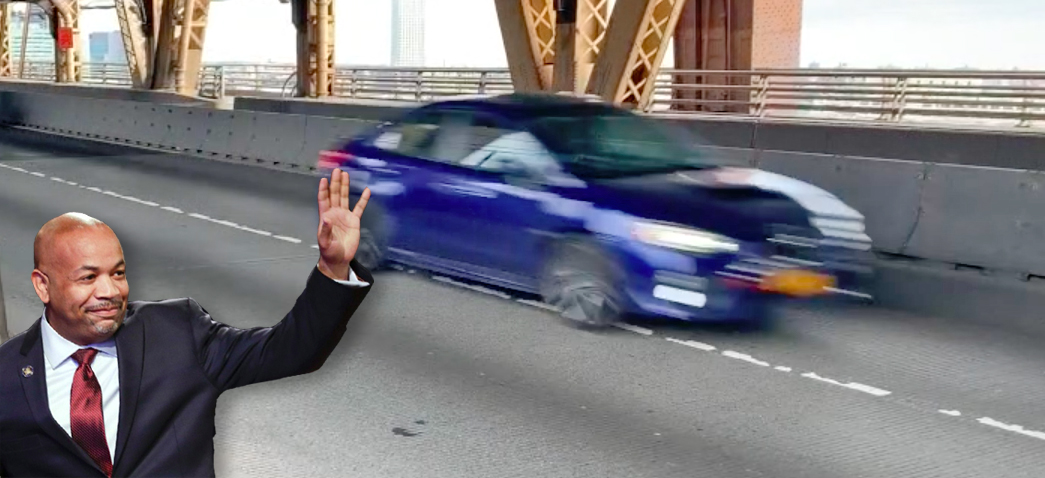
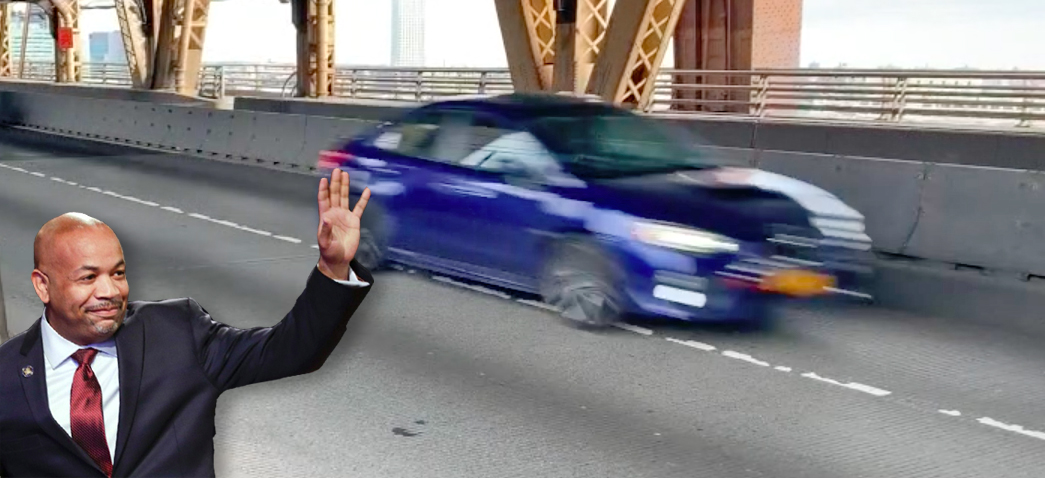
New York City motorists with a documented pattern of excessive speeding would be required to install speed-limiting devices inside their cars under a proposed pilot that Gov. Hochul will include in her state budget - a move that takes passage of the long-sought initiative out of the legislative process where it has consistently been thwarted by pro-car lawmakers. If it's successful, the program could be expanded to municipalities across New York to keep recidivist reckless drivers at the speed limit.
Did the Upper Great Highway closure make Sunset neighborhood streets less safe? Supervisor Alan Wong claimed it did at a January 8 press conference, citing a simple year-over-year map comparison of crash data. But my analysis, using the same DataSF crash data with rigorous statistical controls, finds no evidence to support that claim, and if anything, the data suggest the opposite.
Safe streets advocates renewed their call on Monday for installing a two-way protected bike lane along Brooklyn's Lafayette Avenue following an early morning crash that, police say, left an e-bike rider in critical condition. The group Transportation Alternatives says the intersection of Lafayette and Bedford Avenues in Bedford-Stuyvesant, where a 40-year-old e-bike rider was struck by a 27-year-old driver behind the wheel of an Acura SUV on the morning of Dec. 8, is deadly.
Stoneham is mourning the death of a teenage boy who died following a crash into a car on an electric dirt bike on Friday, a tragedy that has pushed lawmakers to reconsider safety rules and regulations for the increasingly popular vehicles. A preliminary investigation by the Middlesex District Attorney's Office and Stoneham police shows that around 4:30 p.m. on Friday, Nov. 21, a 73-year-old Toyota Corolla driver began making a left turn from Oak Street onto Royal Street when an electric dirt bike crashed into the car.
The amended bill is such a no-brainer that it should even pass a brainless legislature; all it requires is for repeatedly and excessively reckless drivers to have their cars rendered unable to be driven recklessly. It doesn't take away the car; it doesn't suspend a license; it doesn't raise insurance fees. It just makes the car itself less able to a death machine.
Oakland Critical Mass is a monthly group bike ride that takes place every first Friday of the month, which starts at 8 pm at the BikeLink bike lockers at 14th and Broadway, and ends at 23rd and Telegraph where Oakland Art Murmur is underway. Critical Mass is argued to be a political-protest for bikers' rights, but it's also a fun social ride that takes over the streets.
It's no secret that the United States has a fatal love affair with speed. And our overly permissive relationship directly leads to over 11,000 deadly crashes on our roads every year. Hit by a vehicle going 20 mph, a pedestrian has an 18% chance of death or serious injury. Yet, hit at 40 mph, that same pedestrian suffers a 77% likelihood of death or serious injury. Every mile per hour counts when it comes to saving lives.
If you've ever lingered by a bus lane in your car thinking "just one second," that second might now cost you up to $250. The MTA has quietly expanded its Automated Camera Enforcement (ACE) program -those bus-mounted cameras that catch drivers blocking bus stops, double parking or cruising in bus-only lanes-and the buses themselves are now acting as ticketing agents.
"I'm not anti-car, I'm anti-speed," explained Oakland DOT director Josh Rowan, at a SPUR talk Tuesday in Rockridge. The key, he said, to making a city inviting all comes down to how it feels to walk around, and it's a big deterrent when people don't feel safe crossing the street. "We have challenges in Oakland with reckless drivers, speeding... how do we scrub some of that speed off?"