Artificial intelligence
fromTheregister
1 day agoWho is liable when AI agents go wrong in business?
AI agents in business decision-making raise questions about accountability and risk distribution among vendors and users.
Costa's then-manager told him that ServiceNow would not pay this commission because the Sales Compensation Department had concluded that Costa had 'overachieved to a degree that was outside normal' in relation to his sales quota. In other words, ServiceNow believed Costa had made too much money, notwithstanding that his commission was only a small percentage of the revenue recognized and received by ServiceNow.
This nationwide class action seeks to hold Meta responsible for its affirmatively false advertising and failure to disclose the true nature of surveillance and its connection to the company's AI data collection pipeline. The filing names two individuals who live in California and New Jersey who purchased Meta's smart glasses and relied on Meta's marketing claims about the glasses' privacy protecting features.
Your potential client is in pain, their car is totaled, the medical bills are piling up, and a claims adjuster is calling them relentlessly, trying to get a recorded statement. They do not want a gladiator in a suit; they want a lifeline.
In birth injury cases, the collection of evidence is crucial for establishing liability and demonstrating the extent of harm suffered by the child and family. Without sufficient evidence, it becomes challenging to prove that the injury was preventable and that the healthcare providers failed in their duty of care.
According to a 2025 MetLife personal injury study, the severity of injury plays a significant role in determining a settlement amount both in terms of economic and non-economic damages. As such, the MetLife study found that on average, the amount of settlement money a personal injury litigant receives is about $324,000.
If your partner in Munich mishandles customer data, or your reseller in Paris uses a "black box" AI tool to generate deceptive ads, it isn't just their reputation on the line. It's yours. With the EU AI Act now in full swing and GDPR entering its "mature enforcement" era, the distance between a partner's mistake and your company's $20 million fine has never been shorter.
eBay's Money Back Guarantee policy promises item delivery to the buyer not just their ZIP code. The guarantee only says the delivery must have the recipient's address, showing the zip code (or international equivalent) that matches the one on the order details page. It says nothing about only checking or verifying the ZIP code in a dispute. When you provided USPS's evidence, eBay owed you a human intervention. Federal Trade Commission rules against deceptive business practices require companies to honor advertised guarantees.
My grandmother's refrigerator ran for forty years. The washing machine she bought in the 1970s? Still spinning when she passed away. Meanwhile, I'm on my third coffee maker in five years, and don't get me started on the laptop that mysteriously died two weeks after the warranty expired. This isn't just bad luck or nostalgia talking. There's something fundamentally different about how products are made today versus decades ago.
Chad Joseph and Rishi Samaroo are presumed dead after a U.S. missile hit the boat they were taking home to Trinidad last October. President Trump said the strike targeted narco terrorists when he posted the video online, but families of those men say they had no ties to the drug trade. Now Joseph's mother and Samaroo's sister are suing the U.S. government in federal court in Massachusetts.
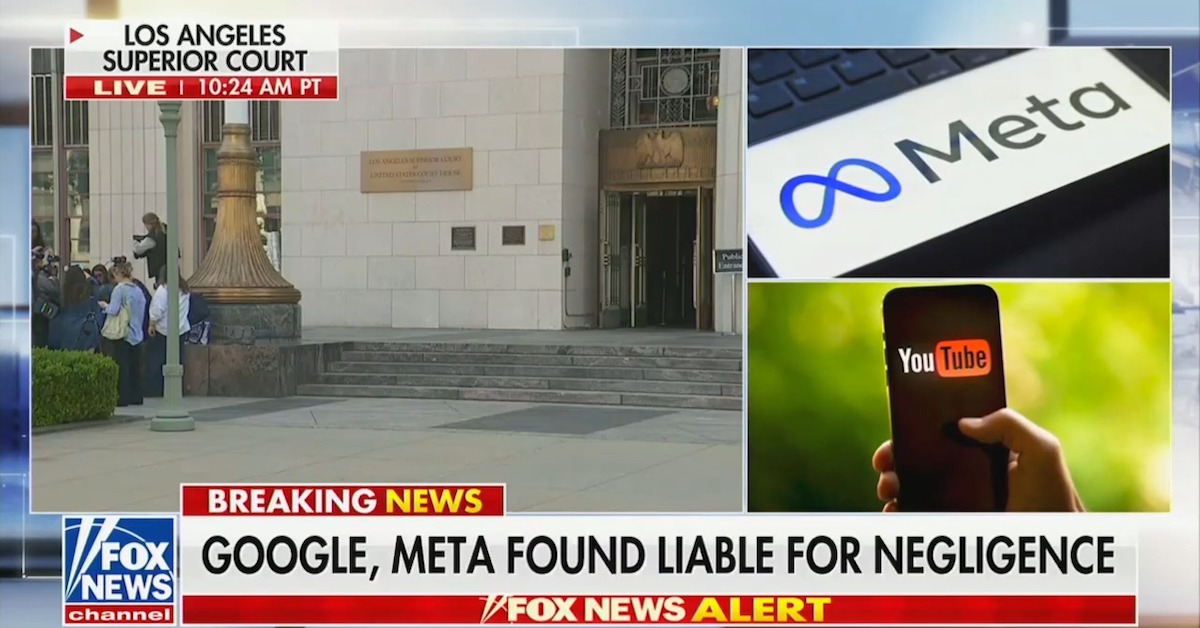
Google's pockets are about $200 million lighter than they were coming into this week after the company agreed to two separate settlements for two separate class action lawsuits that accused the company of violating user privacy. $135 million will be paid in a case that alleged Google collected user cellular data without permission, and $68 million will go to put to bed a case that claimed Google allowed its Google Assistant to record private conversations without permission.
Following Setzer's death, for instance, his mother discovered that his last conversation had been with an AI chatbot styled after "Game of Thrones" character Daenerys Targaryen and had revolved around suicide. In his last messages to the bot, the Character.AI persona generated text asking Setzer to "please come home to me as soon as possible." "What if I told you I could come home right now?" Sewell replied. "...please do, my sweet king," the AI responded. Soon after, Setzer took his own life with his father's gun.
The complaint argues that the platform's event contracts, which allow users to trade on outcomes including sports games, function the same way as banned wagers. According to the filing, consumers who lose money on those contracts are being harmed. Reynolds is seeking damages and restitution for a proposed class, along with a declaratory judgment and a jury trial. The Oregon case joins similar litigation already moving through courts elsewhere.
Seeking legal guidance promptly can significantly influence the outcome of a case. When individuals face legal challenges, whether they are related to personal injury, criminal charges, or family disputes, the initial steps taken can set the tone for the entire process. Engaging a qualified attorney early on ensures that individuals are informed about their rights and obligations, which can prevent missteps that may jeopardize their case.
From law firms to in-house legal teams, the rules of value are being rewritten. The question is: Who's ready to lead the change? In the first episode of 2026 for the UpLevel View podcast, Stephanie Corey and Ken Callander sit down with Rita Gunther McGrath, Columbia Business School professor and Wall Street Journal columnist, to talk about how AI is forcing professional services to price outcomes instead of hours.
With the Supreme Court potentially poised to invalidate recent tariffs, organizations face a confusing scenario: the possibility of some $200B in refunds to be sought, the specter of tariff reinstatement through other means, and general ongoing unpredictability regarding costs and processes for global trade. Having clear visibility into contract terms - such as price adjustments and renegotiation provisions - is essential to navigating this volatility, while implementing favorable terms in supplier, customer, and partner agreements can help build resilience.