#wartime-leadership-transition
#wartime-leadership-transition
[ follow ]
#leadership #constitutional-authority #crisis-management #trump-administration #iran-conflict #decision-making

fromwww.aljazeera.com
2 days agoDoes the world need new leaders? Varsha Gandikota & Naledi Pandor
Naledi Pandor emphasizes that the Global South has the potential to unite and provide a counterbalance to the US, which currently holds significant power in the international order. She believes that solidarity among nations in the Global South is crucial for achieving this goal.
World politics
#military-service
UK politics
fromLondon Business News | Londonlovesbusiness.com
5 days agoEx-Army chief calls for military service for unemployed young Brits amid manpower fears - London Business News | Londonlovesbusiness.com
Young people in the UK not in work or education should have the option of military service to address manpower pressures.

UK politics
fromLondon Business News | Londonlovesbusiness.com
5 days agoEx-Army chief calls for military service for unemployed young Brits amid manpower fears - London Business News | Londonlovesbusiness.com
Young people in the UK not in work or education should have the option of military service to address manpower pressures.
fromBusiness Matters
3 weeks agoFrom Tactical Units to Boardrooms: Frank Elsner's Evolving Career
I've always been interested in structure and teamwork. Growing up, I was very active in sport. I wrestled competitively and was ranked in the province. That taught me discipline and the importance of working together towards a common goal.
Canada news


Left-wing politics
fromwww.aljazeera.com
1 month agoPresident or Congress? Who in the US has the power to declare war?
Trump launched military strikes against Iran citing self-defense, bypassing Congress, while Democrats challenged his constitutional authority and Republicans blocked a war powers resolution to halt further action.
World politics
fromwww.theguardian.com
3 weeks agoTrump is flailing in Iran. Every word he says adds to the muddle | Ted Widmer
Kennedy's effective communication contrasts sharply with Trump's divisive rhetoric during wartime, highlighting the importance of presidential words in uniting or dividing nations.
fromemptywheel
1 month agoGreat Tactics Mean Nothing if You Have No Strategy - emptywheel
The conduct of War is, therefore, the formation and conduct of the fighting. If this fighting was a single act, there would be no necessity for any further subdivision, but the fight is composed of a greater or less number of single acts, complete in themselves, which we call combats, as we have shown in the first chapter of the first book, and which form new units.
US politics
fromThe Atlantic
1 month agoJust Don't Say the W-Word
Four days into this situation in the skies over Tehran, Speaker of the House Mike Johnson said, 'We're not at war right now.' This was, rather, a 'very specific, clear mission-an operation.' Operation does seem to be the preferred word in government talking points, even as it encompasses assassinating an ayatollah, torpedoing an Iranian naval ship, blowing up fuel depots and a desalination plant, and losing the lives of (so far) eight American service members along the way.
US politics
Right-wing politics
fromThe American Conservative
1 month agoIs It Still the Department of 'War' or Not?
The Trump administration renamed the Department of Defense to Department of War and subsequently engaged in military conflict with Iran while Republican Congress members avoided formally acknowledging it as war.
US politics
fromSlate Magazine
1 month agoThis Presidential Pitfall Ensnared Wilson, Bush, and Biden. Now Trump's Falling Into It Too.
Trump's extensive focus on foreign policy—including wars, summits, and military operations—mirrors a historically costly pattern where American presidents neglect domestic economic concerns that voters prioritize.
Miscellaneous
fromPsychology Today
1 month agoWar as a Psychological State
Authoritarian and narcissistic leaders share a fragile ego unable to tolerate challenge, causing them to experience political opposition as personal threat and deploy military as an extension of their distorted ego rather than as a policy tool.
History
fromSmithsonian Magazine
2 months agoOne Was a Teenage Diplomat. Another Was a Nuclear Engineer. Here's How Eight Presidents Made Their Mark Outside of the White House
Several 19th- and 20th-century U.S. presidents achieved notable intellectual, academic, and technical accomplishments beyond politics, including inventions, mathematical proofs, languages, and diverse professional backgrounds.
fromHarvard Business Review
1 month agoWhat Authentic Leadership Looks Like Under Pressure
Leadership has always involved making difficult choices. Today, those choices are increasingly shaped by pressures that overlap and collide- economic uncertainty, technological change, and public scrutiny, to name a few.
Philosophy
UK politics
fromwww.independent.co.uk
1 month agoHow Winston Churchill would have dealt with Iran War after Trump's Starmer comments
Churchill's approach to international conflict combined hawkish rhetoric with strategic caution and prioritized Anglo-American unity, contrasting with simplistic interpretations of his willingness for confrontation.
fromFast Company
1 month agoWhy strong leaders lose credibility in high-stakes moments
What most leaders label as a content problem is actually a presence problem. Leaders often assume credibility rises and falls based on wording alone. In reality, credibility is shaped by executive presence, which reflects the signals leaders send about confidence, clarity, and authority before their ideas are fully heard.
Psychology
UK politics
fromLondon Business News | Londonlovesbusiness.com
2 months agoMilitary leaders warn Starmer the UK is 'unprepared' and is facing its '1936 moment' - London Business News | Londonlovesbusiness.com
Britain's armed forces are currently unprepared for major conflict and require an urgent doubling of defence spending to five per cent of GDP to restore readiness.
fromBusiness Insider
1 month agoPentagon official details the 'holy cow' moments that sparked rift with Anthropic
I was giving these scenarios, these Golden Dome scenarios, and so on. And he's like, 'Just call me if you need another exception.' And I'm like, 'But what if the balloon's going up at that moment and it's like a decisive action we have to take? I'm not going to call you to do something. It's not rational.'
US politics
fromEntrepreneur
2 months agoHow to Stop Reacting and Start Leading
Too many founders get stuck in reactive mode, buried in meetings and fire drills. But if you're always reacting, you're not really leading. You must move from reactive operator to strategic leader, which requires a mindset shift. Understand that you're not the firefighter - you're the architect. Ask yourself: If you disappeared for two weeks, what would break? That's where your real work begins.
Startup companies
fromThe American Conservative
2 months agoCommander-in-Tired
Though the 83-year-old (who will turn 84 in two weeks) is rarely spotted in the Capitol these days, his vocal opposition to President Donald Trump on a myriad of issues is louder and more present than ever when deemed useful for the motivated liberal press. For instance, McConnell was quoted far and wide last month after he criticized Trump's desire to acquire Greenland, a move the Kentuckian suggested would "incinerate" the threadbare alliance that remains between the United States and NATO.
Right-wing politics
US politics
fromwww.mediaite.com
1 month agoTop Trump Pentagon Official Says He's Not The Right Person' to Ask If the US Is At War
The Trump administration uses inconsistent terminology regarding military action against Iran, with officials avoiding formal war declarations while the president and Defense Secretary describe operations as war.

UK politics
fromwww.independent.co.uk
1 month agoTrump says Keir Starmer is no Winston Churchill'. Here's what he meant
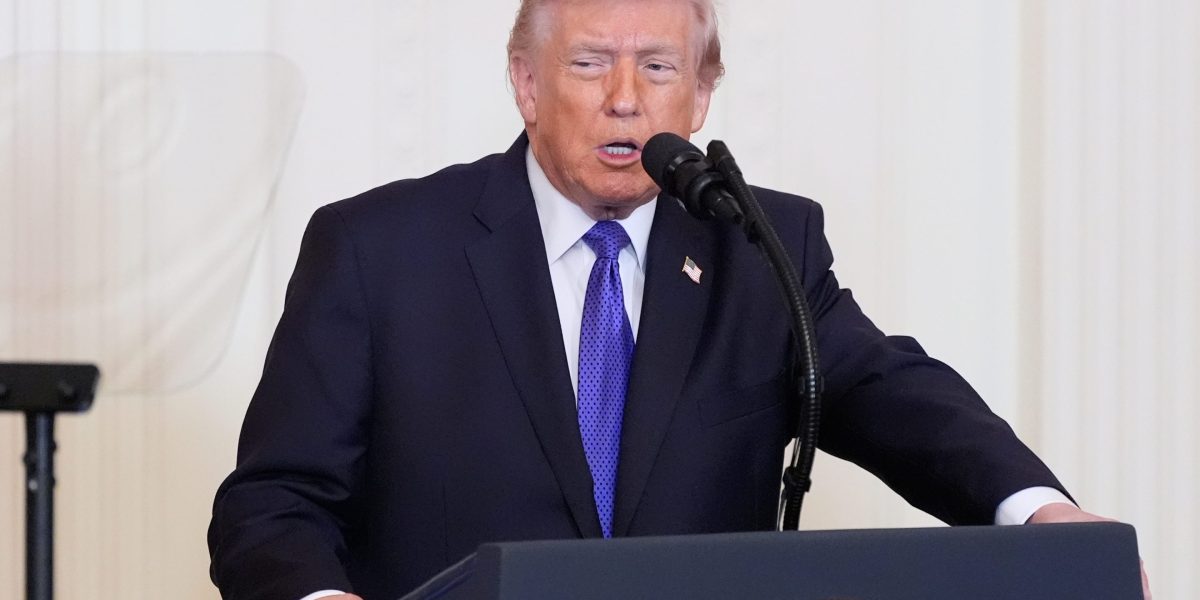
Donald Trump criticized the UK government's initial reluctance to allow US military bases for strikes on Iran and insulted Prime Minister Keir Starmer by comparing him unfavorably to Winston Churchill.
fromMail Online
1 month agoHistorian reveals the three signs that a world war has already begun
Anthony Glees, Emeritus Professor at the University of Buckingham, called the US and Israeli decision to attack Iran a 'war of choice' and the first red flag which previously led to the last two world wars. He claimed that the conflict in the Middle East did not start out of necessity or self-defense, but as a deliberate decision by two leaders focused on gaining power and keeping it.
World politics
fromFast Company
1 month agoHow leaders can make ethical choices when the rules fall short
Research finds that relying on regulations to determine your policies and procedures can result in ethical blindspots, or situations where people might think if there is not a rule for something, that it's permissible. After years of shifting towards values and culture-based compliance, leadership might be heading the opposite direction.
Philosophy
fromPsychology Today
2 months agoRespect Is Not Fear
A revealing example is the concept of " grudging respect."What is typically meant by the term is not respect at all but fear-based compliance. From a psychological perspective, behavior driven by fear is externally regulated; people comply to avoid negative consequences rather than because they feel heard, valued, or internally motivated. When someone obeys out of intimidation or pressure, the foundation for meaningful negotiation is absent (even if one party appears to win).
Psychology
fromPsychology Today
2 months agoPresidential Words for Presidents Day
From George Washington's first presidential "administration" to Donald Trump's promises to cut taxes "bigly," U.S. presidents have played a big role in shaping the direction of the country, including the words we use to talk about everything from national politics to everyday objects and actions.
US politics
World politics
fromLondon Business News | Londonlovesbusiness.com
1 month agoFormer NATO commander fears the world is living through the outbreak of WWIII - London Business News | Londonlovesbusiness.com
Former NATO deputy commander warns current geopolitics represents the most perilous moment in his lifetime, with escalating Middle East tensions risking uncontrolled conflict involving nuclear-armed powers.
World politics
fromFortune
2 months agoTrump's erratic, chaotic shifts in strategy follow a long tradition. Here's what to know about the 'Madman Theory' of politics | Fortune
Madman diplomacy relied on information scarcity, stable adversaries, and credibility through restraint; those conditions no longer exist, reducing its effectiveness today.
US politics
fromThe Cipher Brief
2 months agoConfidence, Interoperability, and the Limits of U.S. Decision Systems
The United States lacks decision-shaping architecture to reliably produce calibrated strategic judgment, causing institutional overconfidence and vulnerability in cognitive and Gray Zone conflicts.
[ Load more ]