"Speaking at the Milken Institute, Wirth warned that parts of Europe, Asia, and Australia are beginning to face potential "supply outages" tied to the Iran conflict. He noted the U.S. likely won't experience physical shortages because domestic production remains strong, but he also stressed an uncomfortable reality: oil is a global market. That means Americans don't get insulated from higher prices just because the U.S. pumps a lot of crude."
"That means Americans don't get insulated from higher prices just because the U.S. pumps a lot of crude. If refiners in Asia or Europe scramble for replacement supply, global benchmark prices rise for everyone. U.S. gasoline, diesel, jet fuel, and petrochemical costs usually follow. And those increases can ripple through the entire economy in weeks."
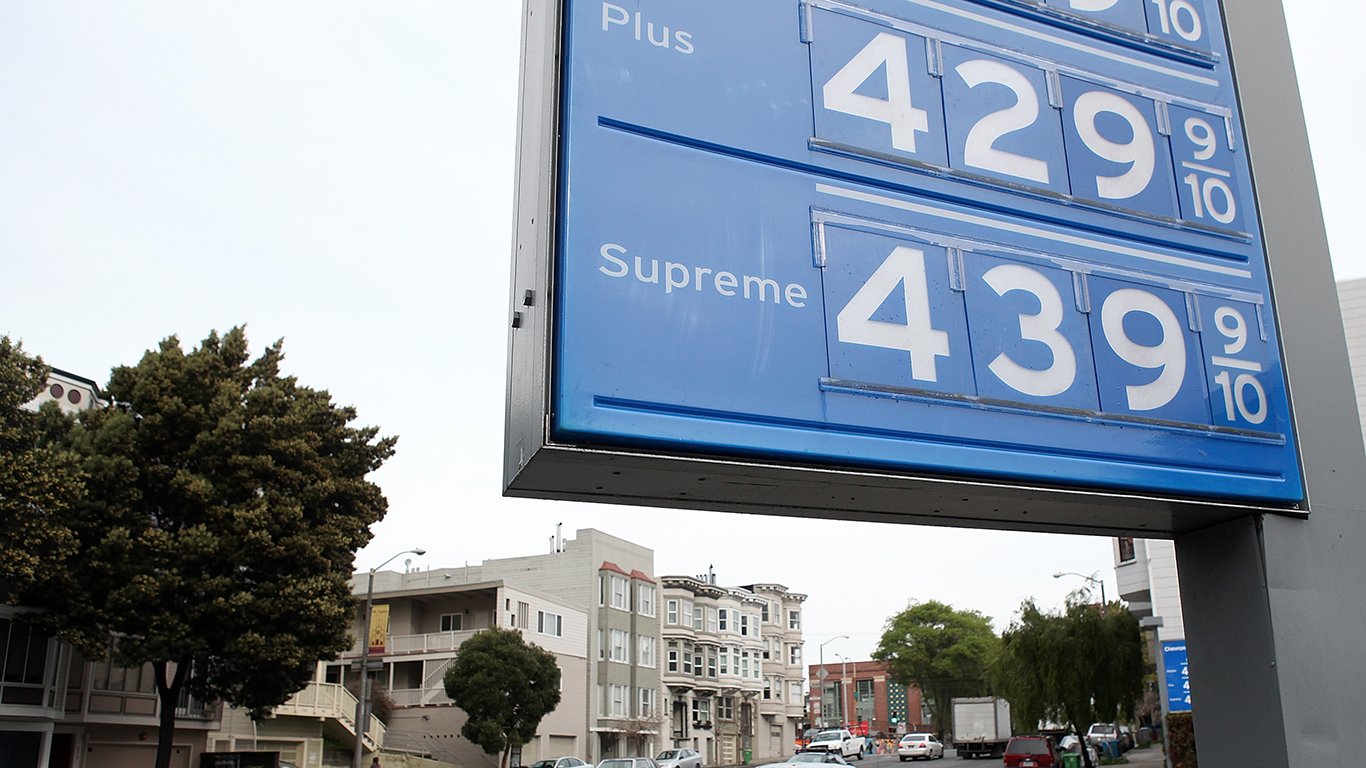
"According to AAA, the national average gasoline price hit $4.55 per gallon on May 7 after climbing $0.25 per gallon for two straight weeks. A $0.50 per gallon increase over 14 days may not sound catastrophic, but it adds up quickly for households already stretched by food inflation, rent, and higher borrowing costs."
"That combination matters because consumer spending accounts for roughly 68% of U.S. GDP, according to the U.S. Bureau of Economic Analysis. Higher Oil Prices: Economic Sneak Attack Most investors think higher oil prices mainly benefit en"
The S&P 500 reached new highs while unemployment stayed at 4.3%, and strong jobs data supported claims that the country is doing well. A key risk is energy costs. Chevron CEO Mike Wirth warned that parts of Europe, Asia, and Australia could face supply outages linked to the Iran conflict. The United States may avoid physical shortages due to strong domestic production, but oil is traded globally, so disruptions elsewhere can lift benchmark prices worldwide. Higher benchmarks typically raise gasoline, diesel, jet fuel, and petrochemical costs in the U.S. AAA reported gasoline at $4.55 per gallon on May 7, up $0.25 per gallon for two weeks. Even moderate increases can strain households already facing food inflation, rent, and higher borrowing costs, and consumer spending drives about 68% of U.S. GDP.
Read at 24/7 Wall St.
Unable to calculate read time
Collection
[
|
...
]