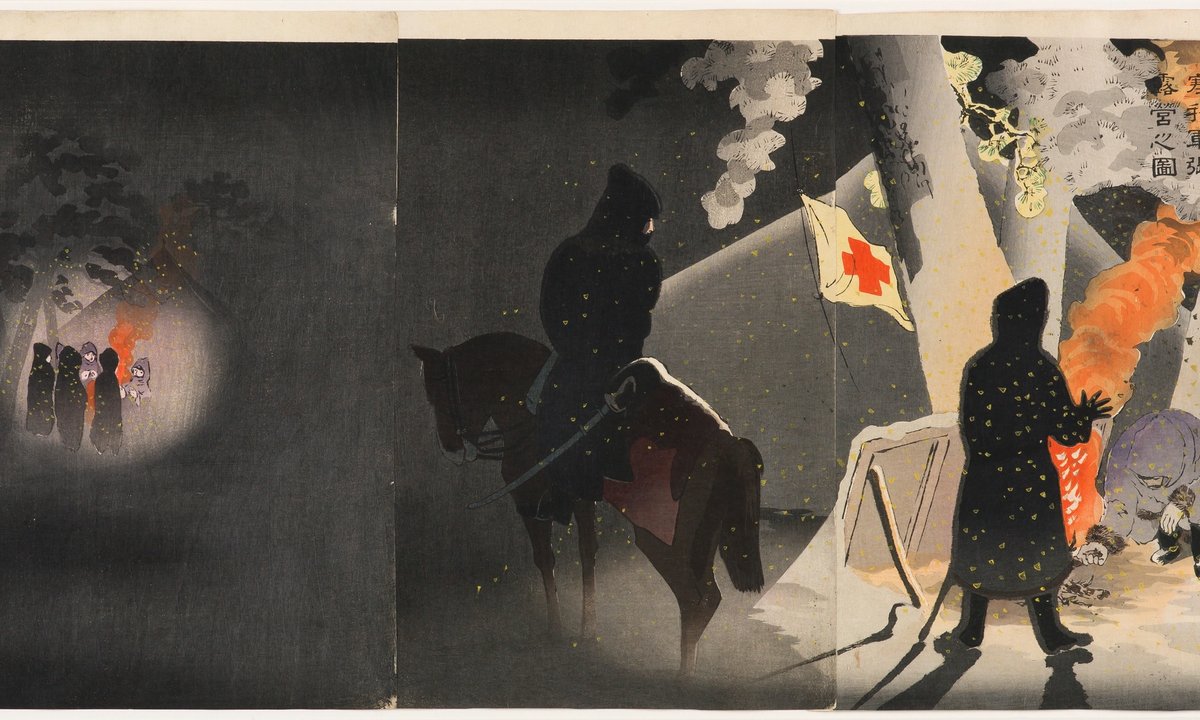
"Illustrations are important not for what they are, but for what they refer to: a passage in a book, an event, a cultural or a natural fact. We do not admire them the way we would a painting in a museum."
"Dowd lets illustrations tell their stories, from the first known example, the frontispiece of the Diamond Sutra in Tan China (AD868), to Molly Crabapple's devastating pictorial reports from Gaza in 2015."
"Chéret's poster, for one, would have been unthinkable without the xylography perfected by 17th-century printmakers in Japan."
The poster created by Jules Chéret in 1891 features a confident woman, Kanjarowa, and was designed to advertise the Alcazar d'Été Club in Paris. Illustrations are significant for their cultural references rather than as standalone art. D.B. Dowd's book, Reading Pictures, chronicles the history of illustrations, emphasizing their storytelling role from ancient to modern times. The professional title 'illustrator' emerged in the 19th century, with influences from earlier printmaking techniques, showcasing the evolution of visual communication across cultures.
Read at The Art Newspaper - International art news and events
Unable to calculate read time
Collection
[
|
...
]