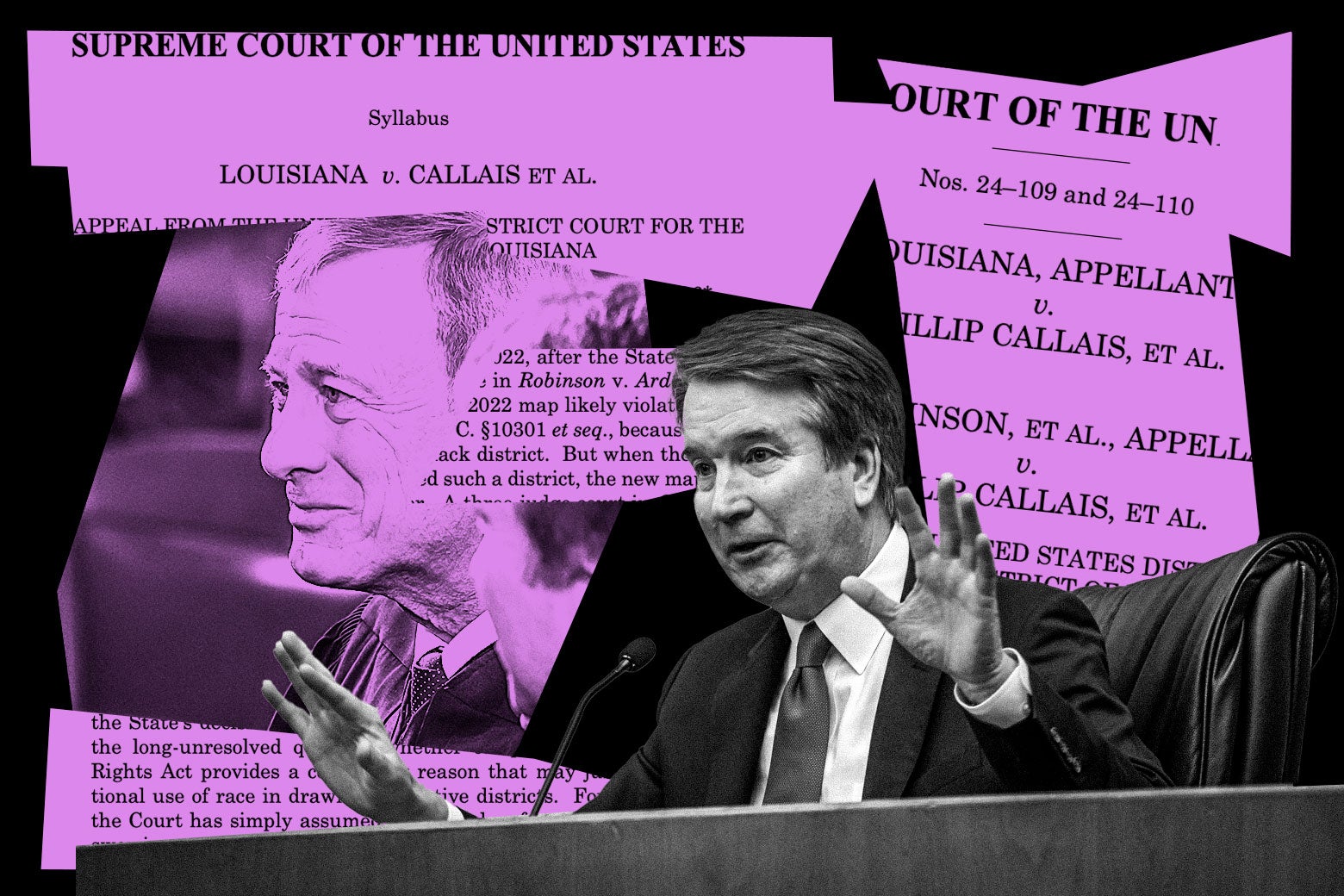
"The Supreme Court handed down a decision that effectively terminated decades of protections for minority voting rights, allowing conservatives to gerrymander across both racial and party lines. This ruling has been celebrated by conservatives as a significant win for their voter disenfranchisement efforts."
"The court's order allowed Louisiana to cancel its primary and rewrite its maps, removing at least one district designed to enable Black Democrats to vote for their candidate of choice. This action disregards the longstanding regulation that decisions should not go into effect immediately."
"Justice Samuel Alito and Justice Ketanji Brown Jackson engaged in a tense exchange regarding the timing of the rule of law, highlighting the contentious nature of the court's recent decisions and their implications for future elections."
"Mississippi's Republican governor, Tate Reeves, remarked on the significance of these decisions, linking them to a broader conservative agenda that includes the overturning of Roe v. Wade and the dismantling of the Voting Rights Act."
The Supreme Court's recent ruling has effectively ended decades of protections for minority voting rights, allowing conservatives to gerrymander freely. The court's decision enables Louisiana to cancel its primary and redraw maps to diminish Black Democratic representation. This ruling, along with the Callais decision, marks a significant victory for voter disenfranchisement efforts by the Republican Party. The implications of these decisions are profound, as they reflect a conservative agenda that has been in the making for years, particularly regarding voting rights and reproductive rights.
Read at Slate Magazine
Unable to calculate read time
Collection
[
|
...
]