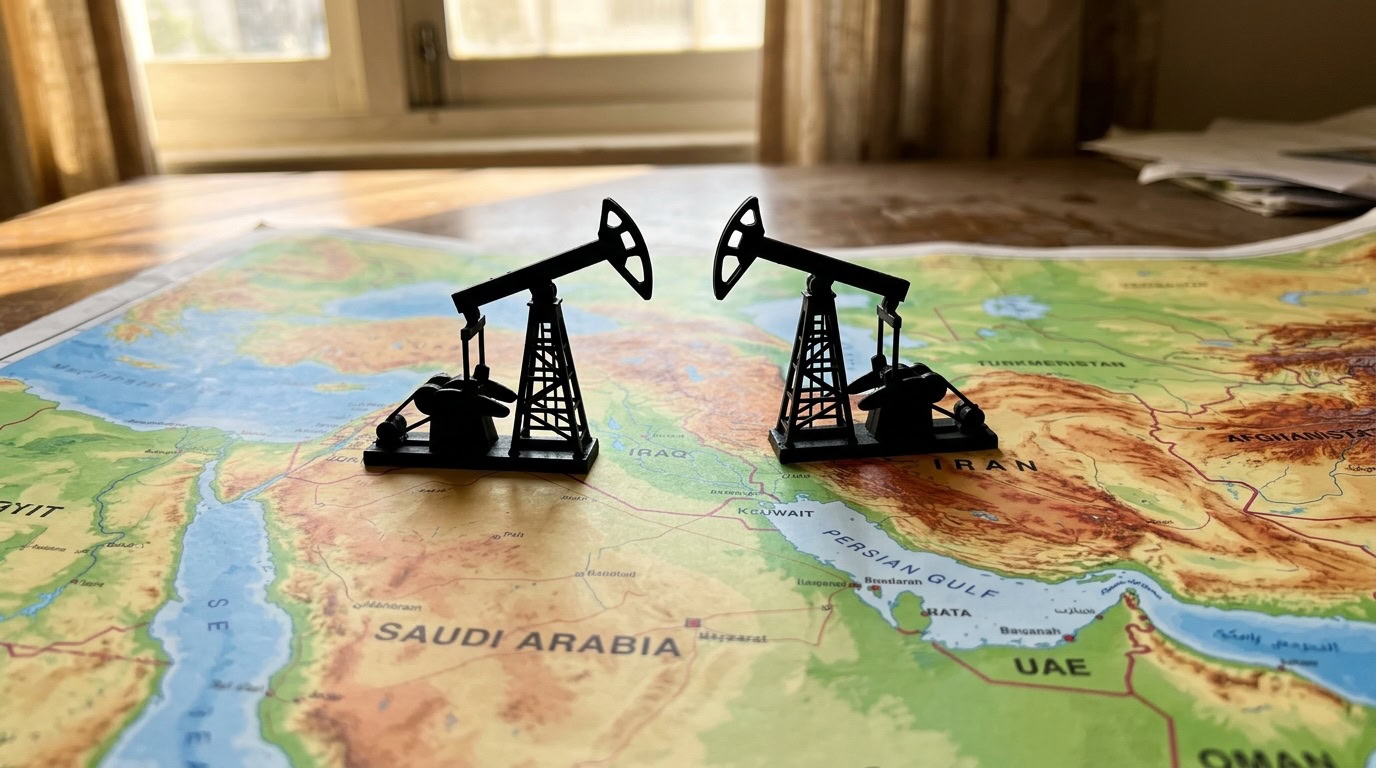
"President Trump said he believed oil could have surged to $200 or even $250 per barrel during the conflict, while stocks might have crashed 20% to 25%, risks he was willing to accept for regime change in Iran."
"According to the U.S. Energy Information Administration, roughly 20% of the world's petroleum liquids consumption passes through the Strait of Hormuz each day. Any disruption there instantly raises fears of supply shortages."
"For context, Brent crude briefly traded above $130 per barrel after Russia invaded Ukraine in 2022. U.S. inflation later hit 9.1% in June 2022, according to the Bureau of Labor Statistics. Gasoline prices averaged more than $5 per gallon nationally that summer."
"Consumers would have been squeezed from every direction at once. Higher fuel costs raise shipping expenses. Shipping raises retail prices. Food prices rise because farming relies heavily on diesel fuel and fertilizer. Airlines raise ticket prices. Manufacturers pay more for plastics and chemicals derived from petroleum. In short, expensive oil acts like a tax increase on the global economy."
A potential Iran conflict escalation raised fears of a major energy shock and rapid portfolio impacts. Oil prices could have surged to $200 or $250 per barrel, while stocks could have fallen 20% to 25%. Oil supply risk centered on the Strait of Hormuz, where about 20% of the world’s petroleum liquids consumption passes daily. Past disruptions showed how quickly oil price spikes can translate into inflation, with Brent briefly above $130 in 2022 and U.S. inflation reaching 9.1% that summer. At $200 oil, higher fuel costs would increase shipping, retail, food, airline fares, and manufacturing costs for petroleum-derived inputs, functioning like a broad tax on the economy.
Read at 24/7 Wall St.
Unable to calculate read time
Collection
[
|
...
]