#authoritarianism
#authoritarianism
[ follow ]
#democracy #protests #human-rights #trump #viktor-orban #hungary #donald-trump #trump-administration #lgbtq-rights


#philanthropy
Non-profit organizations
fromNonprofit Quarterly | Civic News. Empowering Nonprofits. Advancing Justice.
6 days agoRethinking Wealth and How We Deploy it-Strategically | Nonprofit Quarterly | Civic News. Empowering Nonprofits. Advancing Justice.
Philanthropic funding for left organizations is increasingly threatened by political pressures and requires strategic organizing to counteract authoritarian influences.
Social justice
fromNonprofit Quarterly | Civic News. Empowering Nonprofits. Advancing Justice.
4 weeks agoAfter the Breaking: A Black Feminist Response to Retrenchment | Nonprofit Quarterly | Civic News. Empowering Nonprofits. Advancing Justice.
The world is fracturing, revealing authoritarianism, while philanthropy struggles to adapt, necessitating new visions for justice and community-centered practices.






fromThe American Conservative
1 week agoMeet the Democrat Trying to Save Deep State Spying Powers For Trump
Under the pretext of targeting foreigners abroad, Section 702 has become a vehicle for unconstitutional, warrantless backdoor searches of Americans' private communications. The FBI conducts up to 3.4 million illegal backdoor queries in a single year.
Right-wing politics
Berlin music
fromwww.theguardian.com
1 week agoThe doorbell went at 5am. Six masked men were outside': Belarus Free Theatre bring totalitarian terror to the Venice Biennale
Belarus Free Theatre presents an ambitious art project at the Venice Biennale, reflecting on authoritarianism and political oppression in Belarus.
World politics
fromwww.theguardian.com
1 week agoThe international right has CPAC. Has the left finally found its answer? | Owen Jones
Progressives gathered in Barcelona to address rising authoritarianism, highlighting the absence of European leaders and the need for a return to social democratic values.
Non-profit organizations
fromNonprofit Quarterly | Civic News. Empowering Nonprofits. Advancing Justice.
2 weeks agoFaster Than Authoritarianism: Rapid Response as a Frontline Strategy for Democracy Defense | Nonprofit Quarterly | Civic News. Empowering Nonprofits. Advancing Justice.
Rapid response is essential for effective movement building and defending democracy against authoritarian strategies.
#hungary



Europe politics
fromwww.theguardian.com
3 weeks agoViktor Orban inspired rightwingers across the EU and in Britain. His defeat could represent a turning of the tide | Polly Toynbee
European liberal democratic values triumphed in Hungary, defeating the populist-nativist right and weakening authoritarian forces across Europe.
#democracy
Social justice
fromNonprofit Quarterly | Civic News. Empowering Nonprofits. Advancing Justice.
1 month agoHope in the Dark: Four Tests for the Pro-Democracy Movement in 2026 | Nonprofit Quarterly | Civic News. Empowering Nonprofits. Advancing Justice.
Active hope is essential for shaping a brighter future for democracy amidst current challenges.

Social justice
fromNonprofit Quarterly | Civic News. Empowering Nonprofits. Advancing Justice.
1 month agoHope in the Dark: Four Tests for the Pro-Democracy Movement in 2026 | Nonprofit Quarterly | Civic News. Empowering Nonprofits. Advancing Justice.
Active hope is essential for shaping a brighter future for democracy amidst current challenges.
fromwww.dw.com
3 weeks agoBurkina Faso: Moving forward without democracy
People must forget about democracy. If an African wants to tell you about democracy, you should run away. Democracy kills. This statement by Traore reflects a stark rejection of democratic principles in favor of military governance.
World news
#dystopian-fiction
Right-wing politics
fromInverse
1 month ago20 Years Later, An Iconic Dystopian Thriller Remains Tragically Timely
V for Vendetta remains relevant across decades because its core emotional foundation of sadness transcends its specific political context, resonating with audiences regardless of contemporary circumstances.
Europe politics
fromwww.theguardian.com
4 weeks agoFrom stink bugs' to enemies of the people': how Viktor Orban blazed a trail for Trump's media assaults
Viktor Orban's vision includes purging journalists and civil society organizations, reflecting a broader trend of media repression in authoritarian regimes.


fromenglish.elpais.com
1 month agoNicaragua and Cuba in the mirror of Venezuela
The so-called troika of tyranny in Latin America, the dictatorships of Cuba, Venezuela, and Nicaragua, was always a misleading oversimplification. Despite sharing some common elements due to their authoritarian resilience, 21st-century dictatorships were never a homogeneous bloc.
World politics

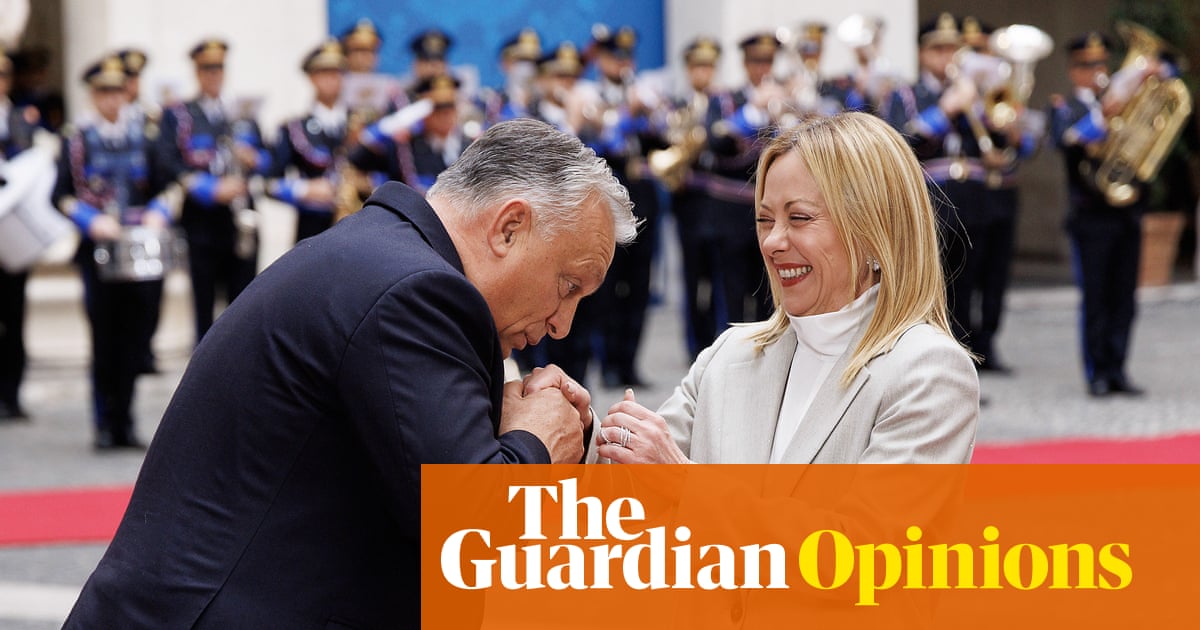


fromLGBTQ Nation
1 month agoThe far-right's dehumanization of trans people is similar to the Nazi's treatment of Jewish people - LGBTQ Nation
Dehumanization, as a psychological and socio-political process, represents one of the most destructive phenomena in human history. It involves the denial of attributes that define individuals or social groups as human, thereby devaluing their moral status and legitimizing violence and cruelty against them.
Right-wing politics
Media industry
fromPoynter
1 month agoA year after Trump administration cuts, Voice of America and its sister outlets are mostly shadows of their former selves - Poynter
Termination of Voice of America staff has left many, including Donmez Ersoz, in precarious situations amid health and job uncertainties.
US Elections
fromTruthout
1 month agoTrump Is Destroying US Democracy at Unprecedented Rate, Global Watchdog Finds
Trump's second term has dismantled U.S. democracy at an unprecedented rate, concentrating executive power while suppressing dissent and civil rights faster than autocratic leaders in other countries.
World news
fromwww.theguardian.com
1 month agoWe are being silenced': Mongolian politicians face jail after vote calling for PM to resign
Younger Mongolian politicians, including women, face lengthy jail sentences for challenging leadership in what they characterize as efforts to prevent authoritarianism amid factional power struggles within the ruling party.
fromBig Think
2 months agoHow the U.S. Constitution protects liberty from the powerful's dark impulses
The real Führer is always a judge. Out of Führerdom flows judgeship. One who wants to separate the two from each other or puts them in opposition to each other would have the judge be either the leader of the opposition or the tool of the opposition and is trying to unhinge the state with the help of the judiciary.
History
World politics
fromwww.dw.com
2 months agoIran's supreme leader dead at 86: Who was Ali Khamenei?
Ayatollah Ali Khamenei increasingly claimed divine authority, stating God spoke through him and positioning himself as God's representative on Earth while maintaining absolute control over Iran's state affairs for over three decades.
US politics
fromThe Nation
2 months agoDemocrats Should Launch a "Nuremberg Caucus" to Investigate the Crimes of the Trump Regime
Cory Doctorow proposes a 'Nuremberg Caucus' to document Trump administration crimes and establish accountability through public trials, arguing healthy democracies must prosecute those who attempt authoritarian rule.


US politics
fromwww.mediaite.com
2 months agoInsane Dictator Sh*t!' Jim Acosta Goes Off on Giant Trump Banner at DOJ Shows He's Staying in Power No Matter What!'
A giant Trump banner at the Department of Justice was denounced as 'insane dictator' behavior and seen as evidence of efforts to cling to power.
fromAdvocate.com
2 months agoHillary Clinton and Sarah McBride expose how weaponizing 'scarcity' drives anti-trans political attacks
The first out transgender member of the U.S. Congress took the world stage in Germany last week, warning that attacks on people like her and on LGBTQ+ rights more broadly are being weaponized in the current political climate, as she joined former first lady and Secretary of State Hillary Rodham Clinton on a high-profile panel at the Munich Security Conference.
LGBT
fromwww.mediaite.com
2 months agoAn Age of Authoritarians': AOC Issues Grave Warning About Trump at Munich Security Conference
They are looking to withdraw the United States from the entire world so that we can turn into an age of authoritarianism, of authoritarians, that can carve out the world where Donald Trump can command the Western Hemisphere and Latin America as his personal sandbox, where Putin can saber-rattle around Europe and try to bully around our own allies there, and for essentially authoritarians to have their own geographic domains.
US politics
fromwww.mediaite.com
2 months agoTrump Gives Glowing Endorsement to Strong and Powerful Leader' Viktor Orban As He Faces Tough Reelection Fight
Highly Respected Prime Minister of Hungary, Viktor Orban, is a truly strong and powerful Leader, with a proven track record of delivering phenomenal results. He fights tirelessly for, and loves, his Great Country and People, just like I do for the United States of America. Orban has served as Hungary's prime minister since 2010, and previously held the post from 1998 to 2002.
US politics
fromThe Conversation
2 months agoFifteen years after Egypt's uprising, how faith and politics reshaped a generation
Fifteen years ago, Egyptians from all walks of life took to the street to demand "bread, freedom, social justice." They were protesting the oppressive 30-year rule of Hosni Mubarak. Egypt had been under martial law for 31 years. This meant that political opposition was silenced, and opponents were often imprisoned and tortured. Police brutality was the norm. Egypt's economy was also weak and relied heavily on foreign aid and loans from the World Bank and International Monetary Fund.
Philosophy
US politics
fromLos Angeles Times
2 months agoCommentary: Yes, Trump's video showing the Obamas as apes is racist. But it's also about the election
President Trump's social post depicted the Obamas as apes, linking racist imagery to false 2020 voter-fraud claims and escalating attacks on voting rights.
[ Load more ]