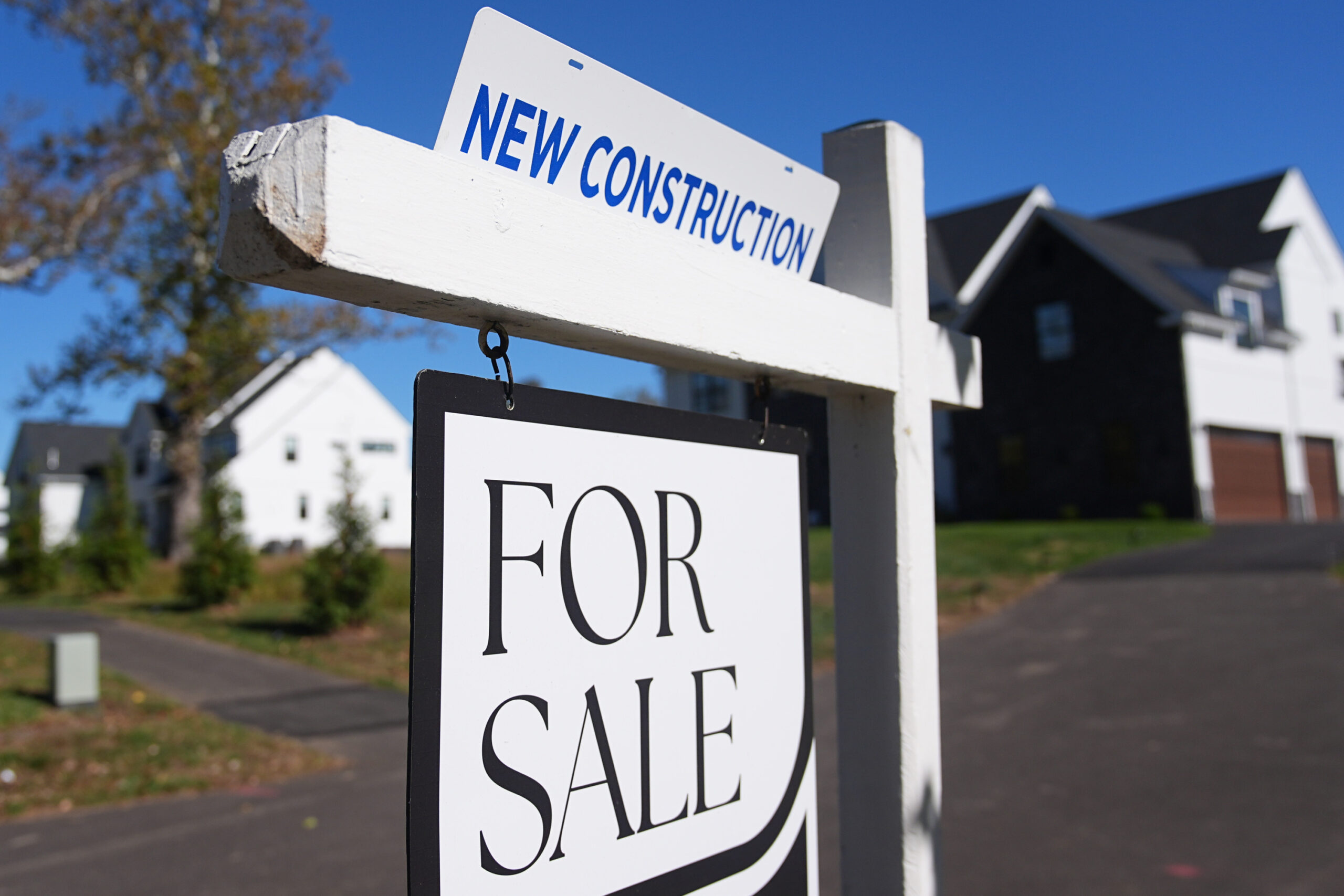
It is also, according to multiple people with direct knowledge of homebuilders' policy engagement, not an accurate representation of where things stand. That distinction matters. In an environment starved for credible, scalable solutions to America's housing affordability crisis, mischaracterizing what is in motion versus what is merely being floated or theorized risks obscuring the real problem: there is currently no grand, coordinated federal-homebuilder initiative underway despite months of investment in conversations, proposals, and strategic exploration.
A major, unheralded source of their success is the mainstream media's virtual blackout of their critics. By 'mainstream media,' I mean venues ranging from Mother Jones to The Wall Street Journal, as well as NPR. Thanks to its reach and stature, the liberal New York Times is the most influential pro-Yimby censor. When did you last read a serious challenge to Yimby orthodoxy in the Times, other than in the readers' comments? Never.
SUFFERN, N.Y. Rep. Mike Lawler, a Republican in a competitive New York congressional district, ran into a disruptive and sometimes hostile crowd at a town hall on Sunday night. With the GOP holding onto a slim majority in the U.S. House of Representatives, Democrats hope to flip the seat in this year's midterm races. The Cook Political Report considers the election in New York's 17th Congressional District, which covers several suburban New York counties in the Hudson River Valley, a toss-up race.
President Donald Trump's bid to put home ownership in reach for more Americans is sputtering, just weeks after it launched. With voters signaling that pocketbook issues are top-of-mind ahead of the November midterm elections, the White House has floated a series of trial balloons aimed at lowering the cost of buying a home, only to see several shot down by Congress, the financial industry or even Trump himself.
Utah lawmakers opened their 2026 legislative agenda with a proposal to revive a once-bedrock fixture of the American Dream of homeownership: starter homes. By streamlining permit approvals and rezoning for smaller property lots, Beehive State legislators will try to pry open a path to first-time homeownership. The bill would reduce minimum lot sizes to encourage the construction of starter homes and improve problematic statewide housing affordability.
When there aren't enough houses for everyone who wants to buy one, the price goes up as wealthier people bid up the cost of existing housing. Building more houses would drive down the prices of existing houses. That's good for people looking to enter the housing market, but many existing homeowners view their homes as investments, assets they believe should appreciate faster than inflation over time.
Cape Town tourism is a booming industry, and the Mother City needs foreign cash to operate as one of the planet's elite destinations. However, some locals are getting a little annoyed by the oversupply of digital nomads. European tourists are loving Cape Town, and why wouldn't they? When one single Euro gets you R19, an Uber to Boulders Beach to check out the penguins isn't all that pricy.
As Victoria DeLuce, senior vice president of home equity lending at Rate and a speaker at HousingWire's Housing Economic Summit, states in a recent interview, the Trump administration is paying attention to the affordability crisis and the industry is also ready to step in to address it. DeLuce will join John Toohig, head of whole loan trading at Raymond James, on stage at the Housing Economic Summit to discuss housing opportunities and risks through the lens of capital markets.
Earlier this month, the City of Louisville, Ky., announced a partnership with Govstream.ai, a technology company that utilizes AI to speed up the permitting process, reflecting a broader national push to utilize AI to accelerate permitting and approvals. Municipalities are increasingly under pressure from their constituents and the federal government to streamline residential development amid a national housing affordability crisis.
Ask most people what's wrong with housing affordability, and the answer comes quickly: rates are too high. It's an easy diagnosis, clean and intuitive, and it fits neatly into headlines and political talking points. But it's also incomplete, and increasingly, misleading. To understand why, it helps to start with something personal. The first home I bought was in 1989. It cost $259,000. My mortgage rate was 10 percent.
A significant number of Santa Clara County residents say they're considering leaving the Bay Area, a reflection of the persistent frustration over housing costs and affordability even as population data suggests the region is not experiencing a mass exodus. Joint Venture Silicon Valley's annual survey found 40% of respondents in Santa Clara County said they are likely to leave in the next few years, a decline from recent years when up to 57% of respondents were looking to move.
Nationwide, wages have barely crept up over the last decade - rising by 21.24% between 2014 and 2024, according to the Federal Reserve. Over the same period, rent and home sale prices more than doubled, and healthcare and grocery costs rose 71.5% and 37.35%, respectively, according to the Fed. National home price-to-income ratios are at an all-time high, and coastal states like California and Hawaii are the most extreme examples.
Sarah works full-time as a school teacher, but has been forced to take up a second job to pay the spiralling bills from the management company of her building. While she was aware of the annual service charge of around 1,400, she wasn't prepared for the bills for a reserve fund which have risen steeply as the management company aims to secure an extra 400,000 from residents for a roof replacement and other projects.
Regional Concentration: Most relocations now occur within the same region rather than across the country. Households are increasingly "trading one nearby city for another" to find better housing affordability without leaving their home state or region. Proximity to Home: Over 50% of moves stay within the same county, and approximately 80% remain within the same state. Long-distance interstate moves accounted for only about 19.3% of all relocations in 2024-2025.
Seniors main source of income is their Social Security. The five largest worries for seniors are housing, transportation, food, health care and taxes. Living in high-cost areas where school and infrastructure bonds are an open checkbook makes it impossible for seniors to keep their homes, let alone sell their homes in an unstable housing market. If families cannot afford housing, how can seniors with fixed incomes afford to thrive? They cannot.
Investors own roughly one in six of California's single-family residences. That's what my trusty spreadsheet found after reviewing a BatchData report that estimates investor ownership of houses and townhomes nationwide. Investors in this study include everything from giant companies controlling thousands of houses to folks with a small collection of rentals to short-term rental operators to people with a second home.
including seeing membership of the Congressional Real Estate Caucus, a bipartisan group working to tackle housing supply and affordability, grow to 100 members; having over 1000 grants, programs and initiatives funded to advance pro-housing policies and elect legislators focused on housing at the state and local level; defeating 11 harmful tax proposals over the past decade, which NAR said prevented $1.3 trillion in new taxes on real estate;
San Francisco is one of the cities the authors use as a case study, and their mathematical simulation suggests that is could take up to 100 years of increasing housing supply at levels that are unrealistic at best to see rents fall to the level where a worker without an advanced degree could afford. "The simulation makes clear it is unrealistic to think that we can deregulate and build our way out of the affordability crisis with market-rate housing, even with large positive supply shocks, in any reasonable time frame," the study states.
President Donald Trump plans to use a key address Wednesday to try to convince Americans he can make housing more affordable, but he's picked a strange backdrop for the speech: a Swiss mountain town where ski chalets for vacations cost a cool $4.4 million.On the anniversary of his inauguration, Trump is flying to the World Economic Forum in Davos - an annual gathering of the global elite - where he may see many of the billionaires he has surrounded himself with during his first year back in the White House.
"At the end of the day, it's the investors and billionaires at Davos who have his attention, not the families struggling to afford their bills," said Alex Jacquez, chief of policy and advocacy at Groundwork Collaborative, a liberal think tank.
Last year, the U.S. Department of Justice sued California, along with 22 other states and Washington, D.C., for access to their full, unredacted voter files. That includes driver's license, social security numbers and other sensitive data. DOJ officials said they needed the data to assess whether states were properly maintaining their voter rolls and ensuring "only American citizens are voting, only one time," as Assistant Attorney General Harmeet Dhillon said in a social media post in December.
Collins, the best-selling author of Pathfinders and The Simple Path to Wealth, said the reasoning is simple: Buying a home "dramtically inflate[s]" your cost of living. While your mortgage payment and rent payment may be similar on paper, owning a home ends up costing more in the long run and comes with unexpected expenses-often referred to as the "hidden costs" of homeownership, like insurance, repairs, and updates.
Invitation Homes' $89 million acquisition of ResiBuilt one of homebuilding mergers and acquisitions' 2026 table-setters is a small deal that can change the rules of engagement and shift the balance of competitive power for two adjacent ecosystems. Here's the context: Single-family rental REITs, with an exception or two, have historically been buyers of homes. Single-family builders have historically been sellers of them.
According to a report from KXAN, Farrah Abraham known for her appearances on the shows Teen Mom and 16 & Pregnant filed paperwork to enter the mayoral race Wednesday. The next day, she appeared on TMZ to talk about her decision to run for public office. During this interview, she was informed by the hosts that the election wasn't until 2028.
The order names a problem that anyone who has spent time in civic life recognizes. Too often, "community" is defined by the few who repeatedly show up or happen to be in the room. That is not because they care more, but because they have the time, flexibility, and familiarity with civic processes that many New Yorkers do not. When those voices are treated as synonymous with an entire district, our understanding of the public and consensus becomes distorted.
Even as price growth slows - and falls in some cities - buying a home still feels unaffordable for many people, in part because mortgage rates remain high and down payments are still steep. Redfin reported in October that the average down payment hit a record $70,000 in August. While some people are cutting back on discretionary spending to afford a home purchase,
The city of St. Cloud was rated the "biggest boomtown" in the Sunshine State thanks to the thousands of people who have been drawn to the growing lakeside community over the past decade, according to new data from personal finance resource GOBankingRates. In fact, the company noted the city has seen a 49.3 percent increase in population from 2015 to 2023. That's coupled with a 33.9 percent increase in per capita income, which was $28,985 in 2023.
"Affordability isn't about keeping costs down, it's about keeping people in their homes," Chow said. "When we invest in keeping people housed, we're making Toronto more affordable for everyone and we're preventing the far greater cost of homelessness. We're making sure that one bad month or one medical emergency or layoff doesn't destroy the entire family," she added.
North Carolina lawmakers once again will try to pass statewide housing reform in a Tar Heel State push to catch up with several of its own cities. Several bills on the agenda this session prioritize housing affordability. They would preempt local control on parking, housing types, and permitting timelines. The measures would apply to all of North Carolina's districts the same types of reforms that cities such as Raleigh and Durham have already codified.
According to a new report from the California Association of Realtors, you now need an income of $524,000 to buy the median priced home in San Mateo County. "How are you supposed to make that living? Especially as a single person, there's just no way," said Prieya Sahni. The numbers for San Mateo County compare to an income of $326,000 needed to buy a home in the Bay Area as a whole, and just over $223,000 for California overall.