One of the solutions to the housing crisis can be found in our backyards, our attics, or our basements - in an Ancillary Dwelling Unit. By making it easier for New Yorkers to turn their homes into an extra place for a loved one or a little more income, we're allowing our city to grow while keeping the character of the neighborhoods we love.
An in-depth analysis of the social cost of carbon, conducted during the competition phase, led the project team to propose an entirely new construction while remaining within budget. The existing school building lacked the capacity for sustainable transformation; its demolition would free up land and allow for a reimagined urban future.
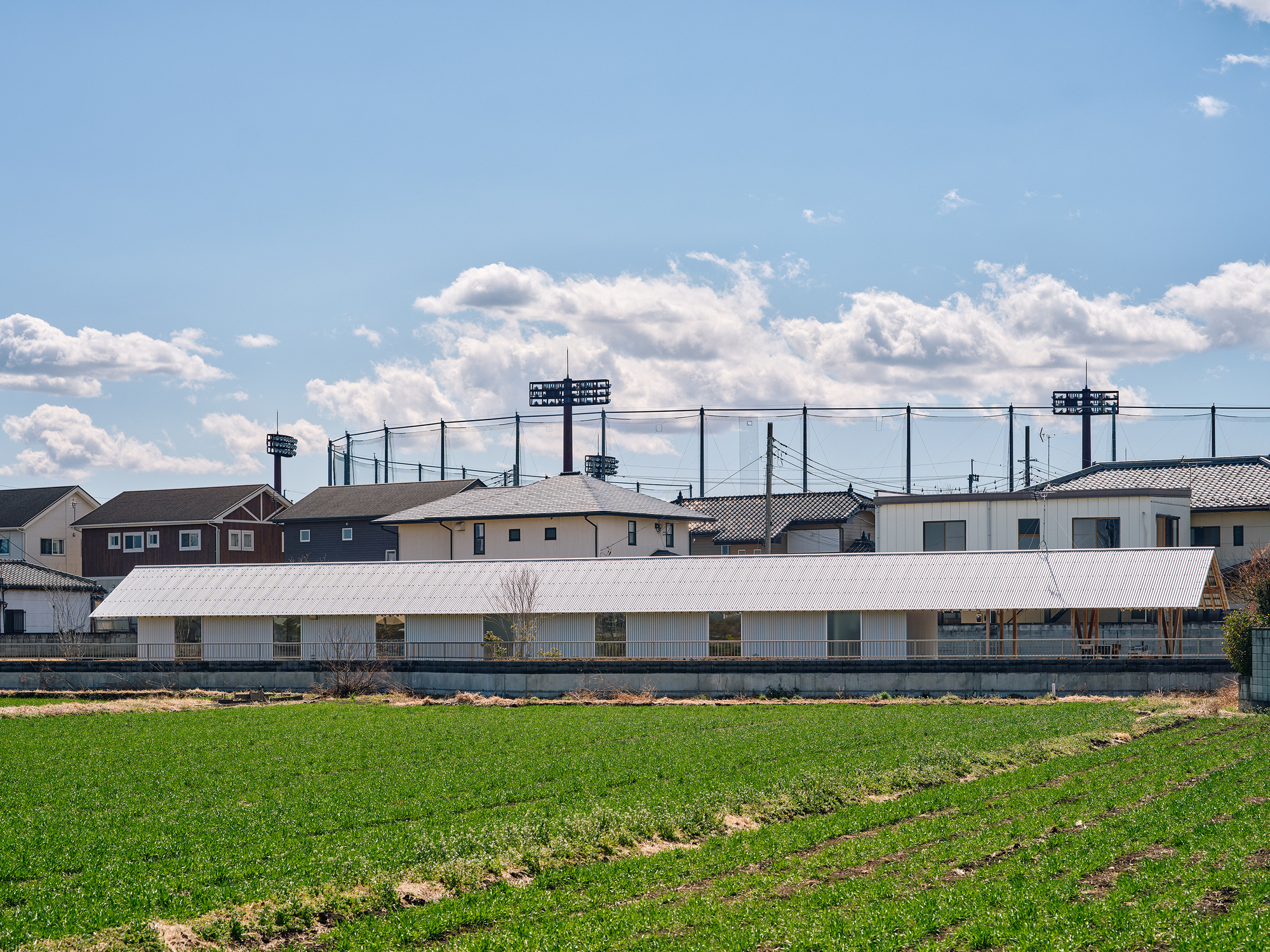
This is a house for the designer himself and his family. The site is adjacent to a long-established community center on the north side, while the surrounding area is an old settlement where signs of gradual residential development and generational change can be seen.
He had just sold his fashion brand, Via Vai, after which he spent four years growing roses at his home in Uruguay. Born into a family of Syrian immigrants and with a Sephardic Jewish surname, those four years were enough to generate a new idea. On the one hand, he wanted to build a luxury residential project in that wasteland, and, on the other, he wanted to attract global talent.
Skeptics have suggested the universal preschool tax was driving high-income earners out of Multnomah County. The latest data doesn't support that notion.
The project will contain two matching 12-story office towers of 240,000 square feet each. The first tower is scheduled for completion in June. Phase 2 will consist of the second tower and a five-story garage for 1,600 cars.
Over 44 years in public office, Moses reshaped the city like no other government official had in the 20th century. When he came to the Bronx, his aim was driven solely by moving traffic - and he did not care how many lives he needed to upend, or neighborhoods to bulldoze, to make the traffic move.
Monterey Park residents describe their predominantly Asian and Hispanic city as peaceful and quiet, with a convenient location in the San Gabriel Valley near to downtown Los Angeles. The intense data center backlash is prompted by an Australian asset manager's proposed project, a 247,000-square-foot site for computer servers that would also include a new electrical substation and, to stave off power interruptions, around a dozen diesel generators.
Urban Renaissance, the real estate development group that partly owns the mall, has a vision for what comes after demolition. The group's Lloyd Center Central City Master Plan wipes the venerable mall from the map in favor of development that will be familiar to most Portlanders: an intersecting street grid with green space and mixed-used architecture.
No one will ever mistake this for a tilt-up building in an industrial park. This is the Mormon temple being built adjacent to Interstate 5 on San Diego's affluent northern edge. After all, how many San Diego buildings have a multiterraced design, 190-foot twin spires and a 14-foot-tall gold leaf statue of the angel Moroni atop one of the spires facing eastward and blowing his prophetic trumpet? Try none.
Often, these buildings were insensitive to their contexts and had little to offer their users in the way of interesting forms and spaces or solid craftsmanship. This trend was especially apparent among small retailing projects that met the growing demand for services in both residential and commercial neighborhoods. From Chula Vista to Oceanside, San Diego to El Cajon, cheap-looking, peach-colored pseudo-Mediterranean strip centers became the norm.
Over the past century, the fabled property in the 7200 block was home to the Ralphs supermarket founder; the wealthy scion of the Cudahy meatpacking family; and producer Joseph M. Schenk and his then-wife, actress Norma Talmadge. Before that, in 1904, it was reputedly owned by Hollywood's first official mayor, George Dunlop.
Located just upstream from where the Arroyo Seco and Los Angeles River merge, Mount Washington has been home base to a former mayor, a world-famous yogi and the official witch of Los Angeles County. The Arroyo Seco - which, after all, begins near a place called Devil's' Gate - has always been a location known for the offbeat, a neighborhood that was keeping it weird before Portland, Ore., or Austin, Texas, ever was.
Last time the two met, Trump asked him to return with ideas to build big things. Mamdani came back with a massive housing proposal. Mamdani's team created mock headlines to show Trump how such a project would be received. He was very enthusiastic.
Compact, low-rise villages and cities made sense based on how far people could reasonably travel on foot or by horse. This was true all the way up until the late 1800s. Then came an invention that let people travel incredible distances in seconds, entirely reshaping cities with dense population clusters.
The hotel is on a prime cut of the Midtown East business district near Grand Central that the Bloomberg and de Blasio administrations upzoned in the 2010s. That change was meant to spur projects like this one, replacing older mid-rise buildings with newer taller ones, and we're seeing the results now.
I'm proud to live in Canoga Park. What's wrong with it? Perhaps it's not as elegant as Woodland Hills or Sherman Oaks, but I've produced two wonderful children from Canoga Park. The markets have fed my family. The shops have clothed my children. It will always be Canoga Park to me.