#leila-hekmat
#leila-hekmat
[ follow ]
#iran #contemporary-art #cultural-heritage #war #lebanon #art #conflict #human-rights #mf-husain #milan-design-week
#milan-design-week
Arts
fromdesignboom | architecture & design magazine
1 day agolaila gohar spins a surreal carousel of fruits and vegetables for arket during milan design week
Laila Gohar's carousel installation at Milan Design Week 2026 introduces her first ready-to-wear collection, blending art and fashion with oversized fruits and vegetables.
Renovation
fromdesignboom | architecture & design magazine
1 day agolina ghotmeh floods milan's palazzo litta with pink labyrinthine landscape
Palazzo Litta is transformed into a dynamic, inhabitable landscape with Lina Ghotmeh's installation, creating a dreamlike experience during Milan Design Week 2026.



fromBerlin Art Link
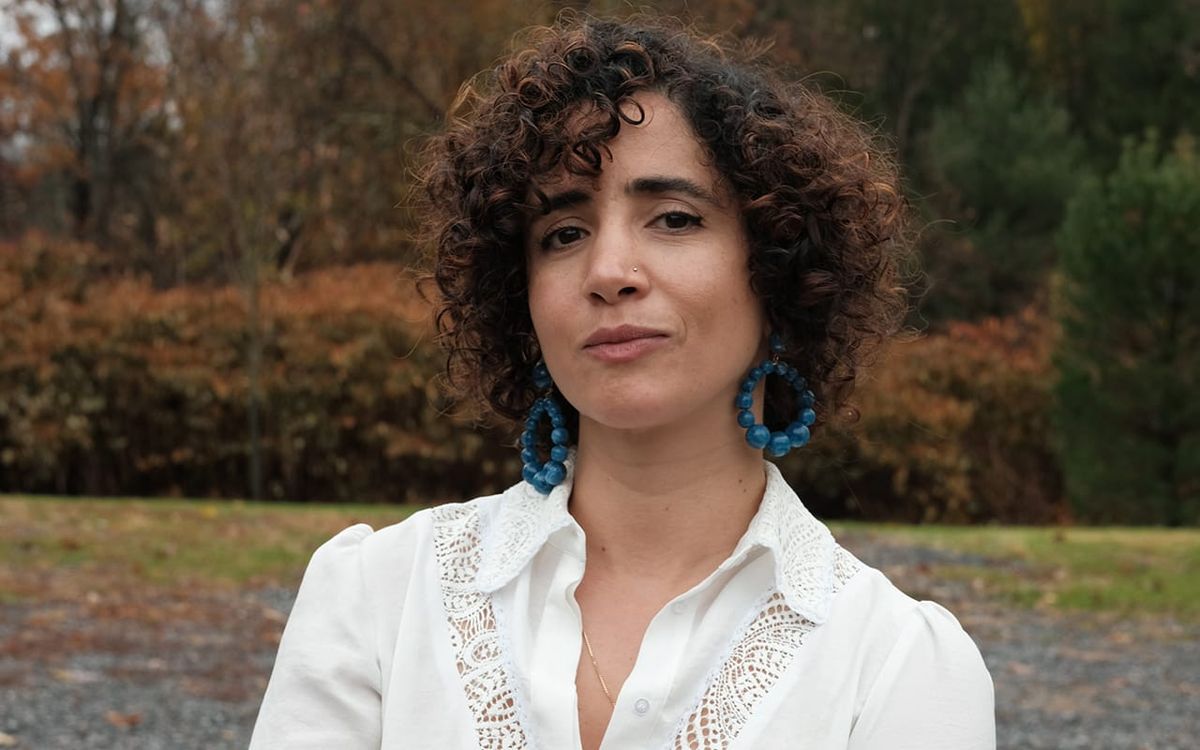
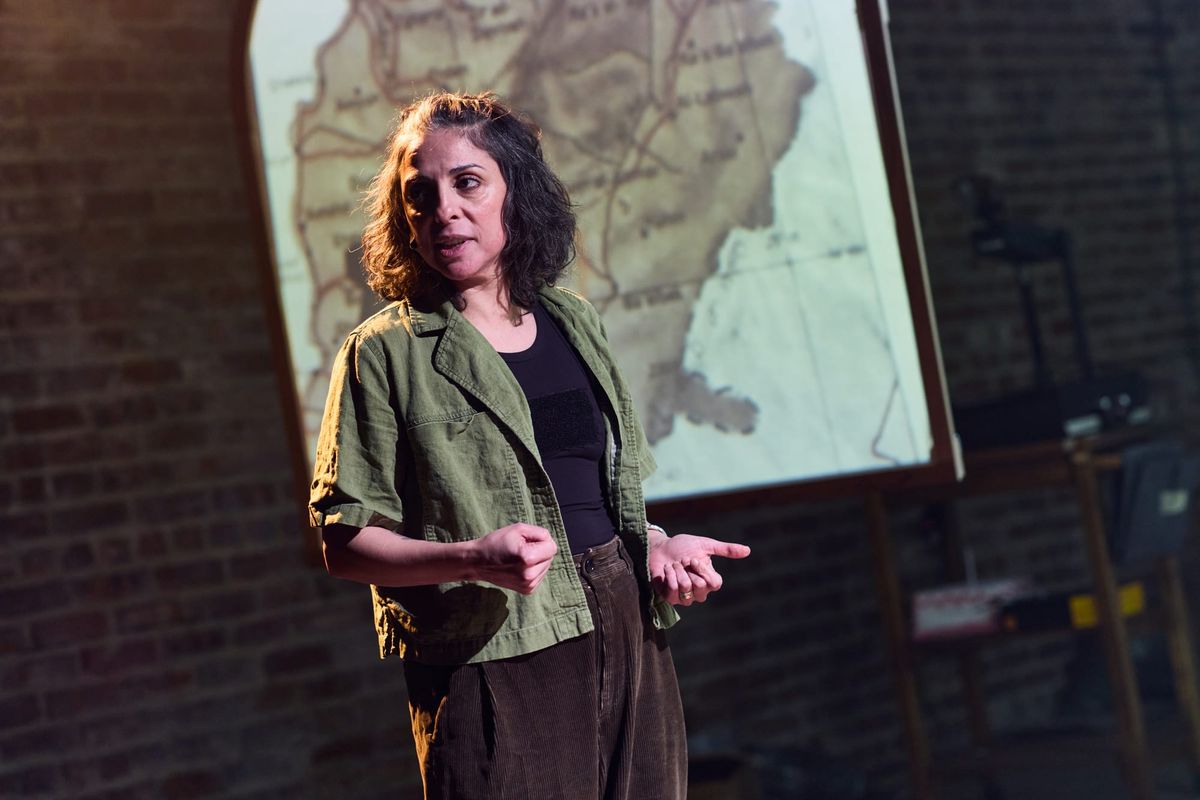
1 week agoAn Interview with Leila Hekmat | Berlin Art Link
The title was spontaneous, impulsive. It was inspired by Kenneth Anger. He has two films with 'Rising' in the title - 'Lucifer Rising' and 'Scorpio Rising' - and I wanted to make something in this supernatural, surreal, occultist, exaggerated, fantasy world, like his films.
Berlin music
fromThe Atlantic
2 weeks agoThe Iranian Opposition's Urgent Task
Pahlavi pledged to lead a transition to a 'free and democratic Iran.' He called on President Trump to continue the American-Israeli military operation against Iran, in the hope of displacing a regime he decried for placing a 'sea of blood' between itself and its people.
World news

fromwww.npr.org
1 month agoFear, defiance, and anger: Iranians describe life under bombardment
The Islamic Republic, which killed hundreds of thousands of people in Iraq and Syria, killed and tortured hundreds of thousands of Iranians in the most brutal way after all these years, and which now wants to have nuclear weapons: we, the Iranian people, who have lived with them for half a century, know how ridiculous their claim to be peaceful was.
US news
Music production
fromwww.theguardian.com
1 month agoIranians embrace anthem by AI singer created by UK-based, Iran-born artist
An AI-generated singer named Nava created by Iranian-origin artist Farbod Mehr has become the voice of Iranian resistance, with her songs gaining 13 million Instagram views amid protests and military conflict.
Women in technology
fromwww.theguardian.com
1 month agoShahrnush Parsipur: The women of Iran will cause the fall of the Islamic Republic'
Shahrnush Parsipur's banned novella Women Without Men, longlisted for the 2026 International Booker Prize, uses magical realism to condemn the policing of women's bodies in Iran through five women's stories converging in a garden refuge.

fromwww.theguardian.com
1 month agoMy cultural awakening: a Rihanna song showed me how to live as a gay man in Iran
My parents fell in love with the Islamic Revolution when I was a baby and welcomed life under its strict religious rules. The Ayatollah's face stared down from the walls at home, a daily reminder of what was expected and what was forbidden. This included being gay, but by my teenage years I knew I was different from my peers, and began hiding my sexuality from my parents and the world outside.
LGBT
Film
fromwww.theguardian.com
2 months agoA love letter to Beirut': Lana Daher on sifting 20,000 sources and 70 years of film to make Do You Love Me
Excavating suppressed archives and remembering wartime realities is essential to confront Lebanon's past, preserve collective memory, and challenge cultural erasure and censorship.
fromHyperallergic
3 weeks agoLebanese Artist Ali Sbeity Reportedly Killed in Israeli Strike
Ali Sbeity painted vibrant portraits and landscapes of his rural hometown in Southern Lebanon, often sharing his works on his Facebook. He participated in numerous local arts exhibitions and created murals for schools in Beirut.
Arts
fromwww.aljazeera.com
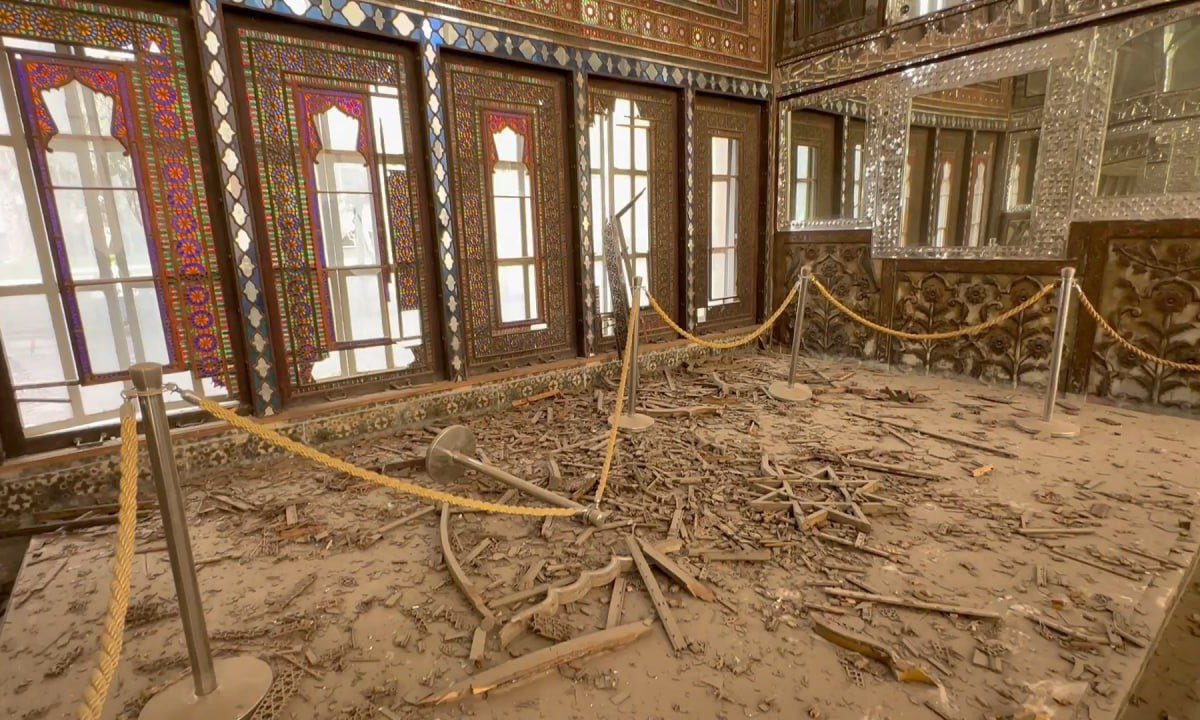
1 month agoAre the US and Israel waging war on Iran's cultural heritage?
The Ministry of Cultural Heritage, Tourism and Handicrafts said on Saturday that at least 56 museums, historical monuments and cultural sites in Iran have been damaged over the course of the war, which began on February 28, state-run news media reported. The heritage sites damaged include the Qajar-era Golestan Palace in Tehran.
World news
fromVulture
2 months agoIt Was Just an Accident Co-Writer Mehdi Mahmoudian Arrested in Iran
"The mass and systematic killing of citizens who bravely took to the streets to bring an end to an illegitimate regime constitutes an organized state crime against humanity," it reads. "The use of live ammunition against civilians, the killing of tens of thousands, the arrest and persecution of tens of thousands more, the assault on the wounded, the obstruction of medical care, and the killing of injured protesters amount to nothing less than an assault on Iran's national security and a betrayal of the country."
Film
fromThe Atlantic
1 month agoDark Humor and the Iranian Resistance
This targeting success surely owes much to advanced electronic surveillance and deep cyber penetration of Iran's weapons systems and infrastructure. But in this war, as in the 12-day war last year, Israel and the United States are obviously benefiting from intelligence from some Iranians themselves, who are willing to risk their lives to help bring down the Islamic Republic.
World politics
Writing
fromKqed
1 month agoA Glimpse of Iran Through the Eyes of its Artists and Journalists
Iranian-American artists and writers explore diaspora, identity, and historical trauma through poetry, fiction, and documentary, examining the lasting impact of political upheaval and U.S. intervention on Iranian communities.
fromwww.bbc.com
1 month ago'Iran's women are heroes - they want to be free'
Imagine the pressure. You want to compete at your best, but then before even the game starts you have to decide how you're going to stand, how you're going to look and what you're going to do. I just think that's so unfair. The players were confused about what to do. If they salute and sing the national anthem, they are embraced and endeared by the government. If they do that, the fans, the Iranian people hate them.
World news
World politics
fromwww.aljazeera.com
1 month agoEmotional turmoil grips Iranians watching conflict unfold overseas
Iranian diaspora members experience profound anguish and helplessness as conflict threatens their homeland, struggling with fragmented communication with relatives and deep emotional connection to Iran despite living abroad.
Arts
from48 hills
1 month agoFor Iranian artist Shiva Ahmadi, 'ornamentation becomes a form of resistance' - 48 hills
Shiva Ahmadi's interdisciplinary art practice channels personal experiences of displacement, political upheaval, and immigrant anxiety into visually seductive works that address brutal global issues affecting marginalized communities.
Arts
fromHyperallergic
1 month agoZarina Brought the World to New York
Zarina's artistic practice, rooted in South Asian history and shaped by migration and displacement, established her as a foundational figure for South Asian American artists while maintaining independence from nationalist frameworks.
fromHyperallergic
1 month agoFlying Back With the Birds to My Hometown of Tehran
Distance does not soften the terror. It only deepens my helplessness. In moments like this, I realize that geography is not measured in miles, but in attachment. War rearranges distance. These days I find myself returning to "The Conference of the Birds," the 12th-century poem by Attar of Nishapur, seeking meaning through ancient wisdom about spiritual journeys and transformation.
Arts
fromHyperallergic
1 month agoWhen a Palestinian Artist Asserts Her Own Humanity
There is a scene in "Morgenkreis | Morning Circle" (2025), a 16-mm film by Berlin-based Palestinian artist Basma al-Sharif, that unfolds at the threshold of a daycare center. A young boy clings to his father, his fists locked into the fabric of his coat, his arms wrapped tightly around him. The father gently tries to pry himself free while a daycare worker crouches nearby, attempting to distract the child and coax him inside. It is an ordinary moment, one that anyone who has ever been a child - or cared for one - recognizes instantly, as well as the gut-wrenching feeling it provokes.
Arts
Arts
fromThe Art Newspaper - International art news and events
1 month agoArt communities and heritage in Iran, moderate recovery in the art market, Sydney Biennale-podcast
Cultural communities in Iran and Lebanon respond to Middle East conflict while heritage sites face damage, alongside global art market recovery and contemporary art installations addressing regional tragedies.
Arts
fromThe Art Newspaper - International art news and events
1 month agoThe story behind the only Van Gogh in Iran: 'At Eternity's Gate'"
A Van Gogh lithograph titled 'At Eternity's Gate' from 1882, depicting an elderly man, remains locked in Tehran's museum vaults since the 1979 Islamic Revolution, symbolizing cultural disconnection amid Middle East tensions.
World news
fromwww.theguardian.com
1 month agoThere's no safe place any more': inside Tehran under attack photo essay
Iran faces escalating military conflict with the US and Israel, resulting in over 1,200 deaths including Supreme Leader Ali Khamenei, widespread destruction in Tehran, and retaliatory strikes across the Middle East.
World news
fromwww.independent.co.uk
2 months agoLeila Shahid, first female Palestinian ambassador, dies in France at 76
Leila Shahid, pioneering Palestinian diplomat, died in France at 76 after decades representing Palestinians, leading student movements, and serving in prominent European diplomatic posts.
World news
fromThe New Yorker
1 month agoAn Iranian Political Dissident on Khamenei's Killing and What Comes Next
Iranian dissident Mehdi Mahmoudian, imprisoned nine of the past sixteen years for activism, reflects on Khamenei's death and his experiences surviving Iran's prison system amid ongoing military conflict.
fromJuxtapoz
2 months agoJuxtapoz Magazine - Hayv Kahraman: Libations @ Vielmetter, Los Angeles
the artist's newest body of work responds to an urgent question precipitated by the catastrophic events of the past year: What does one do when the world collapses? The works attempt to make sense of her experience of the fire and its enduring aftermath, while continuing her exploration of the poetics of loss, displacement, and migration. Kahraman views these works as an offering, a libation, to a burning world.
Arts
Arts
fromArtnet News
1 month agoUnveiling Hiba Schahbaz's Painted Paradise, Where Women Meet Mythical Beasts | Artnet News
Hiba Schahbaz creates a phantasmic world of female self-portraits across varying scales, blending Indo-Persian miniature traditions with contemporary artistic practice throughout her 15-year career.
fromHyperallergic
2 months agoQueer Arab Artists on Their Own Terms
"The show is about giving the pen back to the writer, giving the paintbrush back to the artist, during this time of genocide," the Ridikkuluz told Hyperallergic in an interview at the gallery. "And when there's been so much censorship, these are artists that might not have been able to do this anywhere else."
Arts
fromThe Art Newspaper - International art news and events
2 months agoLawrence Abu Hamdan and Lydia Ourahmane among artists confirmed for new Qatar quadrennial
The quadrennial exhibition introduces a new type of transnational, transdisciplinary program to Doha, rooted in issues that affect both Qatar and the wider region. The artists exhibiting broadly represent the diverse nationalities that live in Qatar, while their work reflects the shared geographical, environmenta
Arts
Arts
fromArtnet News
1 month agoIn Riyadh, Sweeping Survey Traces the Origins of the Saudi Art Movement
A comprehensive exhibition at the National Museum of Saudi Arabia documents the evolution of Saudi art from the 1960s-1980s, showcasing pioneering works and establishing the foundations of the modern Saudi art movement.
Arts
fromArtnet News
1 month agoRiyadh Is Becoming a Public Art Destination. The Leader Behind It Offers Her Insights | Artnet News
Tuwaiq Sculpture Symposium has evolved into an inclusive international platform that permanently integrates over 120 sculptors' works throughout Riyadh's urban landscape as part of Vision 2030's cultural transformation.
Arts
fromThe Art Newspaper - International art news and events
2 months agoAfrican LGBTQ+ art at the Smithsonian, the Iran crisis, Louise Nevelson at Pompidou Metz-podcast
Here: Pride and Belonging in African Art at the Smithsonian showcases LGBTQ+ artists from Africa and its diaspora, with a related book forthcoming.
fromAnOther
2 months agoChiharu Shiota, the Artist Making Human Connection Tangible
Known most for her large-scale artworks created from vast, intricate networks of thread, she developed her unique practice to make tangible the endless speculative configurations of human connections - something to be experienced rather than defined. But by asking her to describe her new exhibition, Threads of Life at the Hayward Gallery, I'm dragging her back into a reductive world of language. "If I wanted to express myself in words, if I could explain in words, I'd rather write," she says. "So I want to build visually, and I want to create visually. What I want to describe is beyond words."
Arts
Arts
fromThe Art Newspaper - International art news and events
2 months agoFrom a bakery pop-up to an I.M. Pei survey: the exhibitions to see in Doha during Art Basel Qatar
Rirkrit Tiravanija's Untitled 2025 is an interactive bakery installation enabling communal baking sessions that foster cultural connectivity and participatory social exchange.
fromianVisits
2 months agoA medieval Persian allegory takes flight in a London gallery
The poem itself is an allegory: a gathering of birds set out on a spiritual quest, each one embodying a particular human flaw or attachment. Passing through seven symbolic valleys, they face trials and moments of revelation, before realising that the divine presence they seek lies within themselves. That sense of pilgrimage carries into the gallery. You are invited to take your own quiet journey through a wide range of avian-themed artworks inspired by the poem, each offering a different response to its ideas.
Arts
[ Load more ]