#tadashi-kawamata
#tadashi-kawamata
[ follow ]
#architecture #contemporary-art #design #public-art #memory #climate-change #japan #art-installation #immersive-art
#architecture

UX design
fromdesignboom | architecture & design magazine
5 days agohow wutopia lab's 'magical realism' turns everyday spaces into ethereal interior atmospheres
Wutopia Lab creates immersive architectural experiences that transform ordinary spaces into imaginative environments, enhancing perception through design elements like light and geometry.

fromDesign Milk
2 days agoSabah House NYC Pays Homage To Set + Setting
Sabahs are made entirely by hand from 100% leather in either Texas or Turkey—two regions with distinct yet deeply rooted relationships to the material. The result is a shoe that varies subtly from pair to pair, even within the same size.
Brooklyn
fromSFGATE
5 days agoFans pilgrimaged to SF for 73-year-old YouTube sensation Masayoshi Takanaka
Takanaka, who sold out the 3,000-capacity Masonic with resale tickets going for upwards of $300, is one of the best examples of a renewed interest in the sounds of 1970s and '80s soft rock from Japan known as city pop.
SF music
fromdesignboom | architecture & design magazine
4 days agolook back on olympus perspective playground: a traveling series of room-sized dreamworlds
The Olympus Perspective Playground operates as a fully built system, where walls, lighting rigs, circulation paths, and signage are developed together with each installation, creating a continuous spatial script.
Berlin
fromwww.businessinsider.com
2 weeks agoI thought this Tokyo museum would be a major tourist trap. It ended up being a highlight of my first trip to Japan.
TeamLab Planets quickly made a name for itself after opening its doors in 2018. It holds the Guinness World Record for the most-visited museum dedicated to a single group or artist, bringing in more than 2.5 million visitors from April 2023 to March 2024.
Digital life
fromHyperallergic
3 days agoMoMA PS1's "Greater New York" Is Gritty, Stunning, and Gutting
The curators of Greater New York really captured the energy of the city well - not the out-of-towner's New York with its glossy surfaces, brands, and trendy fare, but the gritty New York that's always in the process of formation, that rejects surface in favor of rawness.
Arts

Berlin music
fromdesignboom | architecture & design magazine
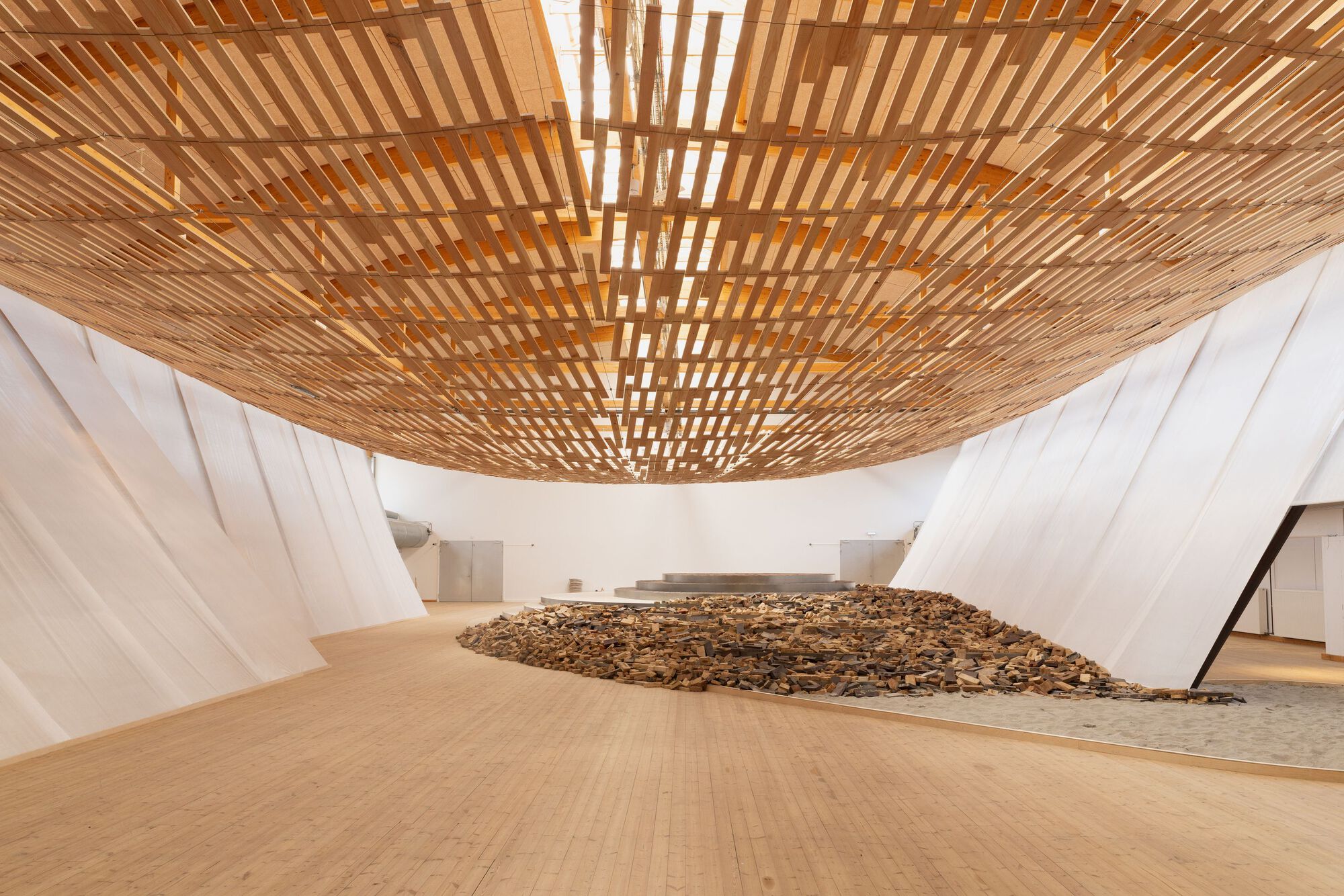
1 month agohow yuri suzuki builds social architecture through sound sculptures and playful interaction
Yuri Suzuki uses sound sculptures and horns as social connectors that build collective experiences and community through shared listening and interactive participation in public spaces.
Arts
fromdesignboom | architecture & design magazine
4 days agoactivated space: allan kaprow's happenings and their afterlife in immersive environments
Allan Kaprow's 'happening' redefines art as an event involving space, body, and instructions, emphasizing active participation over passive observation.
fromArtnet News
5 days agoPainting Has Entered Its Performance Era | Artnet News
Much of Instagram's video content is organized around transformation-the virtual magic of the before-and-after and clips that show cause and effect. A person makes pasta from scratch in 20 seconds via edits that compress time-intensive labor.
Arts
Miscellaneous
fromdesignboom | architecture & design magazine
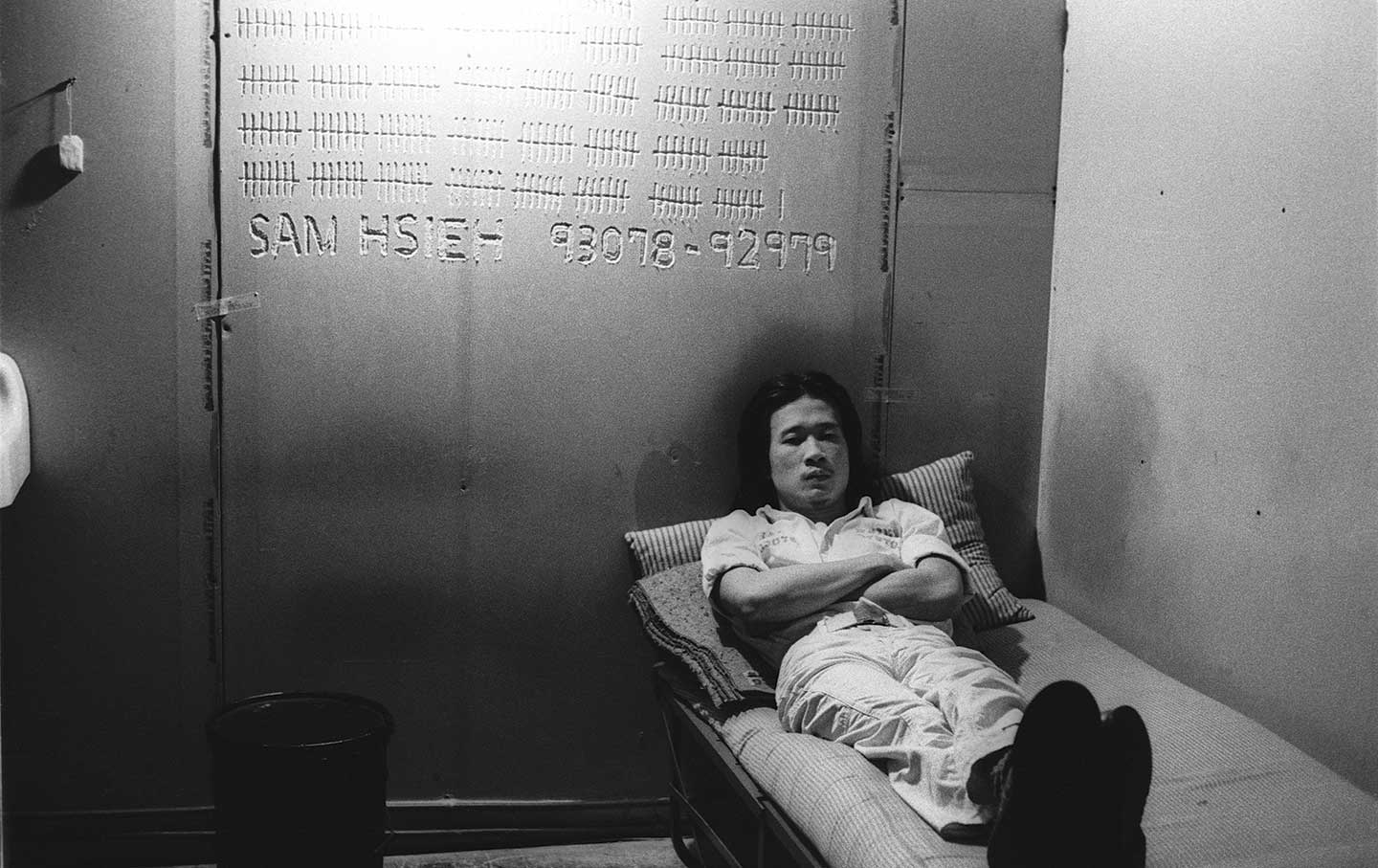
1 month agoinspired by the japanese engawa, a new installation opens at accra's limbo museum
Limbo Museum in Accra opens an architectural installation reinterpreting the Japanese engawa concept using woven structures from salvaged billboard material within an unfinished concrete frame.

Berlin
fromTravel + Leisure
1 month agoThe 9 Best Museums in Tokyo-With Ancient History, Stunning Architecture, and Dazzling Immersive Exhibits
Tokyo contains nine exceptional museums ranging from prestigious national institutions to specialized collections, with the National Art Center standing out for its architectural design and diverse rotating exhibitions.
#art-installation
Design
fromdesignboom | architecture & design magazine
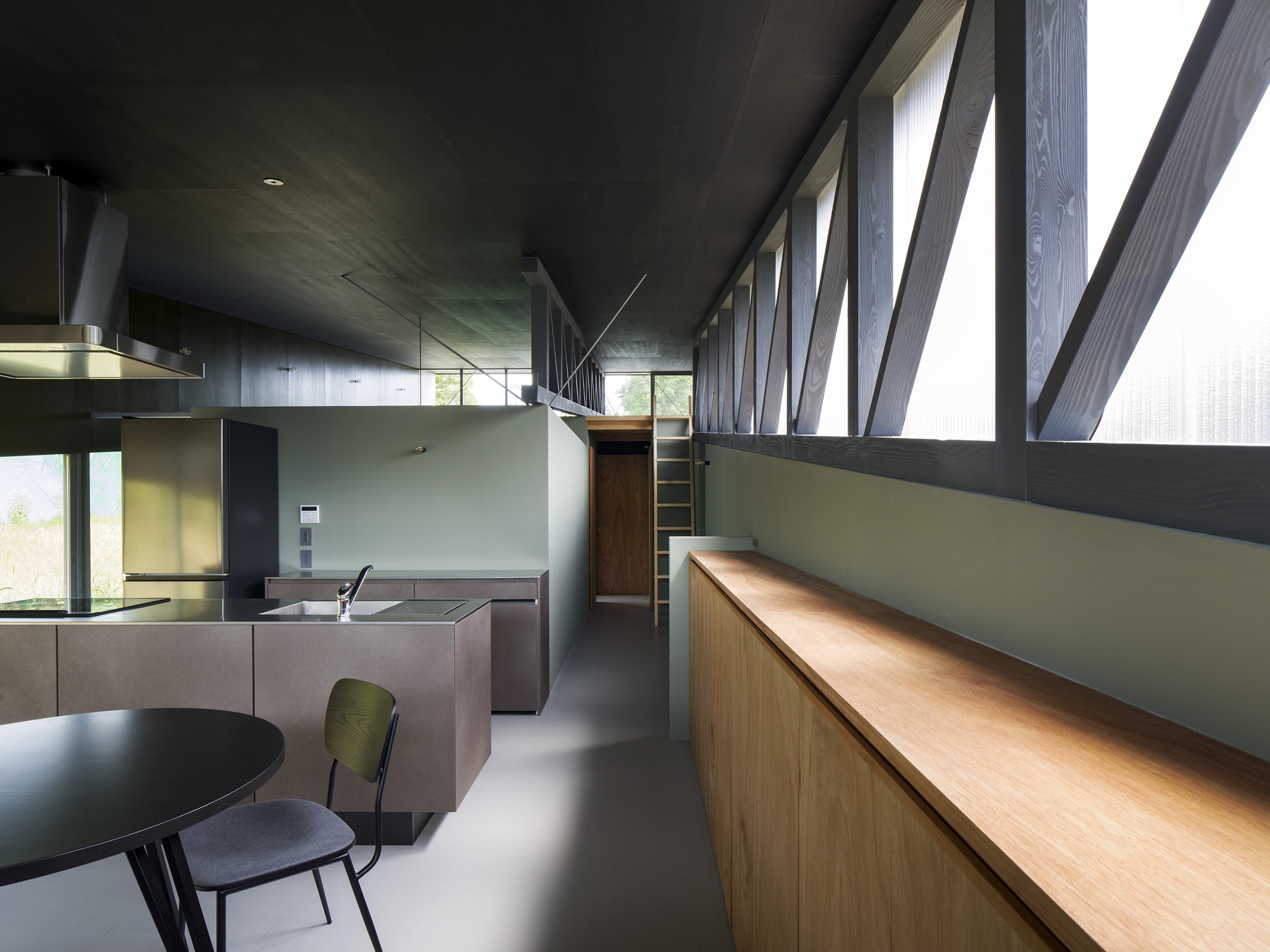
2 weeks agoartwork uses floating fabric corridor and bodily movement to visualize climate change
Ryo Yamada's Perception Corridor is an immersive installation in Edinburgh that explores perception and environmental awareness through a 40-meter fabric corridor.
fromArchDaily
1 month agoTOTTEI Green Hill / Tomohiro Hata Architect and Associates
Kobe is a city where the sea and mountains are close together, with its urban area spreading across the slopes at the base of the mountains. In the Sannomiya area, the current city center, the most important urban axis connecting the sea to the mountains is Flower Road, running north-south from Shin-Kobe Station to the port.
SOMA, SF
fromArchitectural Digest
2 months agoOn a Volcanic Japanese Island, a Local Art Collective Has Transformed a House Into a Geothermal Cavern
Haruka Kojin (artist), Kenji Minamigawa (director), and Hirofumi Masui (production manager) are the founding trio of 目[mé] (which means "eye" in Japanese). Their approach? "To create works that allow us to relive the 'world as it is' that constantly unfolds before our eyes," they explain on their website. This rather mysterious intention has nonetheless led the Japanese collective, created in 2013, to exhibit at the Japan Society in New York and the Centre Pompidou-Metz, which have presented several of their installations. Japanese private homes seem to be a favorite disruptive space for the artists, who have previously integrated an extremely minimalist art gallery into a dilapidated house on another Japanese island in 2020. Other notable works include giant inflatable faces installed above natural landscapes and the recreation of monumental waves.
Remodel
Miscellaneous
fromArchDaily
1 month agoKumamoto Exhibition Explores Shoei Yoh's Pioneering Timber Structures and Computational Design
Shoei Yoh, a pioneering Japanese architect born in Kumamoto in 1940, revolutionized timber construction and computational design through rational methodology and elastic architecture principles.
Design
fromYanko Design - Modern Industrial Design News
3 weeks agoThis walkable steel sculpture turns geometric chaos into an experience - Yanko Design
Five Fragmented Cubes is an interactive sculpture designed for immersion, challenging traditional viewing by inviting people to enter and explore its structure.
fromdesignboom | architecture & design magazine
1 month agosculptural steel ladder imitates the flowing geometries of brass musical instruments
SO KOIZUMI DESIGN has developed Resonique, a ladder that explores the relationship between functional structure and sculptural form. The project draws on the structural logic of ladders while referencing the flowing geometries associated with brass musical instruments. Through this combination, the object shifts from a purely utilitarian tool toward a design piece that engages both function and spatial presence.
Design
fromwww.theguardian.com
2 months agoCardboard crazy! Scavenger genius Shigeru Ban on building cathedrals and quake shelters with paper
He takes materials others might overlook or discard from cardboard tubes to beer crates, styrofoam to shipping containers and subjects them to a kind of alchemy, refining rough edges and transforming fragility into sturdiness. The outcome is a perpetually ingenious and curiously poetic scavenger architecture that finds beauty and purpose in the everyday. From high-end boutiques to housing for refugees, Ban's buildings blur the lines between eastern and western design traditions, between the luxurious and the ordinary.
Design
Arts
fromdesignboom | architecture & design magazine
1 month agochiharu shiota's woven webs meet yin xiuzhen's clothing installations at hayward gallery
Hayward Gallery presents two major concurrent textile installations by Chiharu Shiota and Yin Xiuzhen that transform ordinary materials into immersive spatial explorations of memory, identity, and shared human experience through large-scale installations.
Design
fromdesignboom | architecture & design magazine
2 months agokinetic lighting activates mechanical movement in a sculpture of steel and glass
Kinetic lighting object integrating pulleys, counterweights, glass sphere reflector, and onyx diffuser to produce adjustable directional and diffused illumination via physical interaction.
fromHyperallergic
2 months agoNaoto Nakagawa 2026 Is on View at KAPOW
Naoto Nakagawa's current show at KAPOW brings together a significant group of new acrylic paintings and intimate watercolors, situating his recent practice within both the Japanese shunga tradition of erotic art and his own six-decade exploration of perception, material culture, and the natural world. On view at KAPOW in Manhattan's Lower East Side through February 22, works across the exhibition resonate with themes that have defined Nakagawa's career since the 1960s - most notably his persistent pairing of man-made objects with organic life.
Arts
fromAnOther
1 month agoChiharu Shiota, the Artist Making Human Connection Tangible
Known most for her large-scale artworks created from vast, intricate networks of thread, she developed her unique practice to make tangible the endless speculative configurations of human connections - something to be experienced rather than defined. But by asking her to describe her new exhibition, Threads of Life at the Hayward Gallery, I'm dragging her back into a reductive world of language. "If I wanted to express myself in words, if I could explain in words, I'd rather write," she says. "So I want to build visually, and I want to create visually. What I want to describe is beyond words."
Arts
Arts
fromArchDaily
1 month agoTuwaiq Sculpture 2026 Transforms Riyadh into a Platform for Public Art
Contemporary sculpture functions as a critical urban mediator that reshapes public space and contributes to city transformation, exemplified by Riyadh's Tuwaiq Sculpture 2026 symposium integrating large-scale artworks into the urban environment.
Arts
fromdesignboom | architecture & design magazine
2 months agotuwaiq sculpture exhibition transforms riyadh's urban fabric with large-scale public artworks
Tuwaiq Sculpture Symposium installs 25 large-scale works along Al Tahlia, using locally sourced materials and public art to catalyze Riyadh's urban renewal and cultural identity.
[ Load more ]