#ucsf-benioff-childrens-hospital
#ucsf-benioff-childrens-hospital
[ follow ]
#gender-affirming-care #san-francisco #transgender-youth #healthcare-access #lgbtq #healthcare-policy
fromwww.aljazeera.com
4 days agoChildren's hospital in Tehran keeps hopes and smiles alive during war
Resident doctors and interns at the Children's Medical Center have been pooling their own money with some donations to organise activities for the children suffering from underlying health conditions.
NYC parents


fromBoston.com
6 days agoHow one family's bipolar disorder experience led to more than $1 billion for the Broad Institute in Cambridge
The Stanley Family Foundation announced another $280 million for the Stanley Center for Psychiatric Research at Broad Institute earlier this month, bringing its total contributions to the Massachusetts-based nonprofit over $1 billion.
Medicine
fromBrooklyn Paper
2 weeks agoHealing through music: JoyRX lifts spirits of Maimonides' pediatric patients * Brooklyn Paper
"Kids who understand why they're here in the hospital are more compliant, and they have less stress because they know what's going on," Ellis explained. "We also do support for families, whether that be bereavement, new diagnosis, just kind of helping support the whole family and the patient while they're here in the hospital."
Brooklyn


fromThe Washington Post
2 weeks agoJ. Michael Bishop, who illuminated genetic roots of cancer, dies at 90
Dr. Bishop and Varmus showed that oncogenes - genes that cause cancer - are not foreign genes introduced into the body by viruses, as was widely believed at the time. Instead, normal versions of oncogenes are present in healthy cells, where they help regulate normal growth.
Cancer
Health
fromKqed
1 month agoMusic Creates Connections for Bay Area Residents and Families Confronting Memory Loss | KQED
Music therapy programs help people with Alzheimer's and cognitive decline improve quality of life by facilitating communication, emotional connection, and memory recall beyond what medication alone can achieve.
Medicine
fromABC7 San Francisco
2 weeks agoCook surviving on artificial heart saved with donor heart in first-ever UCSF transplant
UCSF surgeons successfully implanted an artificial heart in a patient as a bridge to transplant, later replacing it with a donor heart, marking a first for the institution.
Healthcare
fromAdvocate.com
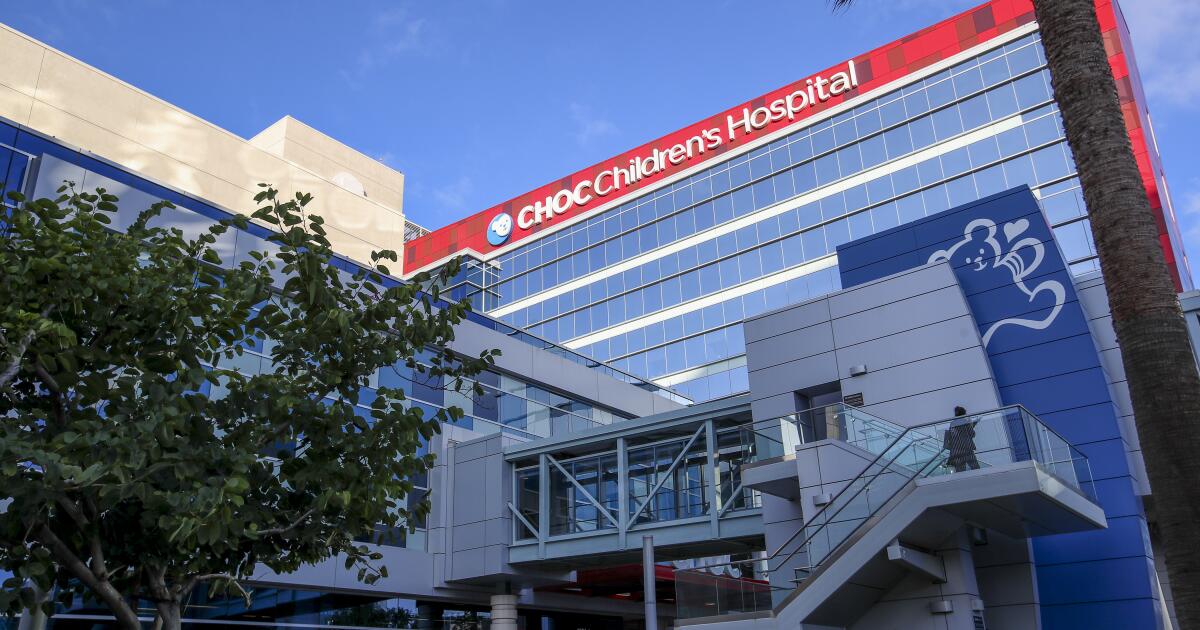
2 weeks agoFamilies sue Southern California hospital system for withholding care from transgender youth
California families are suing Rady Children's Hospital for discriminating against transgender youth by halting gender-affirming care under Trump administration pressure, affecting approximately 1,900 patients.
#period-poverty


NYC parents
fromThe Mercury News
1 month agoLetters: Meeting needs of mothers helps care for children
Meeting mothers' basic needs for menstrual products and diapers is essential for supporting child development and family stability, while automated license plate readers create risks for innocent drivers.
NYC parents
fromwww.mercurynews.com
1 month agoLetters: Meeting needs of mothers helps care for children
Basic sanitary products for mothers and diapers for children should be universally accessible as fundamental human rights, requiring policy changes to provide free menstrual products and permanent publicly funded diaper banks.
fromwww.bbc.com
1 month agoParents of gravely ill child refused respite care
It is really, really hard. He said the family had 'cried and begged for help' in meetings at home. 'Does our family unit have to break down? Does it have to get to a point where we no longer sustain this and then they'll step in and give you support? Because right now that's where we're at. We don't have any alternatives. If grandparents were an option, we'd already be doing it.'
Public health
fromABC7 San Francisco
1 month agoOkizu strong: How NorCal camp program helps kids with cancer, their families
We thought it was a growth thing... we thought maybe she didn't have enough sleep... it all seemed within the realm of normal childhood stuff. Her eyes were swollen... that was the first sign that something was different. So that's when we took her to the doctor.
Cancer
San Jose Sharks
fromwww.mercurynews.com
1 month agoChildren's Discovery Museum in San Jose announces its new CEO
Linda Tsai becomes the new president and CEO of the Children's Discovery Museum in San Jose starting March 16, 2026, bringing extensive nonprofit leadership experience and personal connection to the institution.


SF politics
fromABC7 San Francisco
2 months agoHere's why SF's subsidized child care program could have negative impact on some preschools
San Francisco expanded subsidized childcare eligibility to higher-income families to retain families, funded by Proposition C and raising qualifying thresholds significantly.
fromwww.mercurynews.com
2 months agoGive Good Program lets blood donors support charitable partners
Among the contributors recognized at the ceremony was blood donor Kathy Stiles, one of SBC's top Give Good contributors, who donated 6,000 points to support Blood Cancer United. During the visit, Blood Cancer United representatives took a behind-the-scenes tour of SBC's laboratory facilities. Seeing the lab processes firsthand was incredibly moving, Jenaye Shepherd, Northern California executive director for Blood Cancer United, said in a release.
Fundraising
Fundraising
fromwww.mercurynews.com
2 months agoValley Health Foundation's chief believes health care is public good
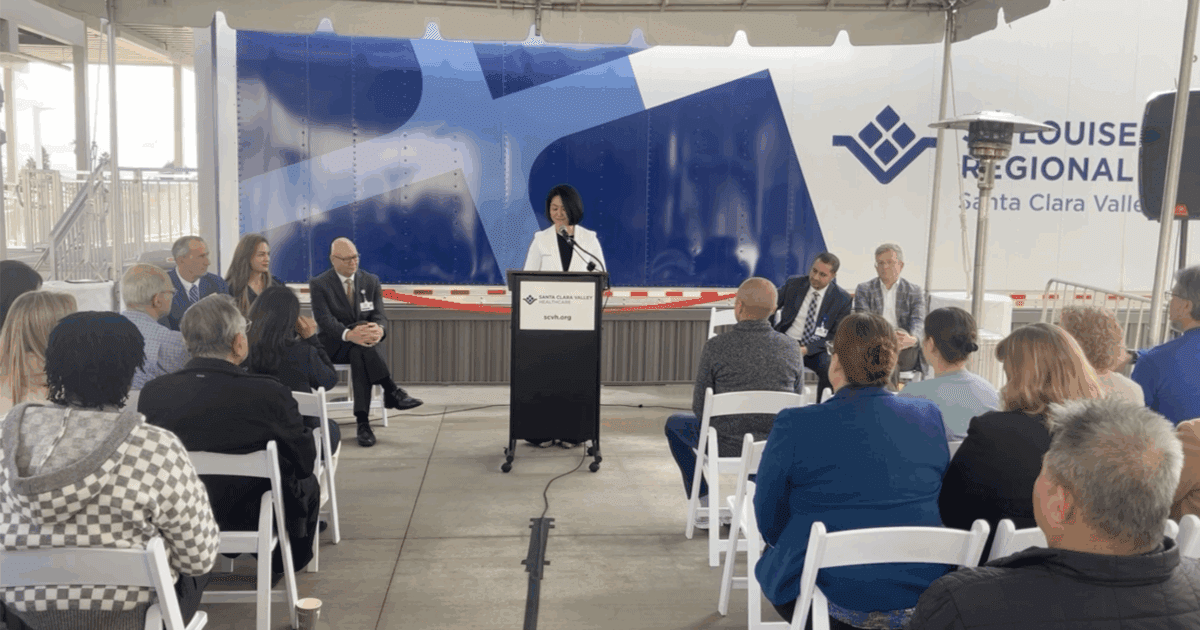
Valley Health Foundation raises community funds to support, innovate, and advocate for Santa Clara County’s expanding public health system, funding patient care, technology, and wellness.
fromMission Local
2 months agoThe Great Highway is poised to become San Francisco's kidney dialysis
Barring unforeseen lunacy, come November, you'll be voting on cars on the Great Highway - for the third time since 2022. Like PAY YOUR PROPERTY TAXES BY DECEMBER 10 AND APRIL 10!!! there are some things you can apparently mark in permanent pen on your calendar. At the statewide level, you'll be voting about kidney dialysis and, locally, you'll be voting on this.
SF politics

fromwww.mercurynews.com
2 months agoCan AI help make homeless Bay Area residents healthier?
Akido Labs, a Los Angeles-based health care technology company that runs clinics and street medicine teams in California, plans to start using its AI model on homeless and housing insecure patients in the Bay Area next month. The program generates questions for outreach workers to ask patients and then suggests diagnoses, medical tests and even medication, which a human doctor then signs off on remotely.
Public health
fromBrooklyn Eagle
2 months agoMother Cabrini Foundation awards grants to Maimonides' nursing and parenting programs
BOROUGH PARK - MAIMONIDES MEDICAL CENTER HAS BEEN AWARDED GRANTS from the Mother Cabrini Health Foundation. Named for an indefatigable immigrant nun from Italy who helped the needy in Brooklyn and beyond, the Mother Cabrini Foundation recently awarded its 2025 Year-End Grants, including $1.5 million in healthcare workforce funding to enable Maimonides Medical Center to strengthen its Nurse Residency Program and $400,000 in general funding for its Brooklyn Parenting Center.
Healthcare
fromMission Local
1 month agoS.F. healthcare workers say safety issues continue at city's clinics
But as the city's Department of Public Health follows Mayor Daniel Lurie's directions to make cuts, they wanted to make one thing clear: safety in the city's medical facilities requires more than just the presence of security personnel. It requires widespread training in de-escalation, working with patients with complex needs, and crisis response, they said. These programs are on the chopping block.
Public health
fromScienceDaily
2 months agoStanford scientists found a way to regrow cartilage and stop arthritis
A study led by Stanford Medicine researchers has found that an injection blocking a protein linked to aging can reverse the natural loss of knee cartilage in older mice. The same treatment also stopped arthritis from developing after knee injuries that resemble ACL tears, which are common among athletes and recreational exercisers. Researchers note that an oral version of the treatment is already being tested in clinical trials aimed at treating age-related muscle weakness.
Medicine
fromHarvard Gazette
2 months agoReal-world answers for patients running out of time - Harvard Gazette
But these studies typically require large numbers of patients, huge amounts of data, and thorough follow-ups, none of which comes easy or free. The upshot is fewer investigations into scenarios that are clinically important but unlikely to yield a profit for the firms funding them. Accordingly, researchers have been developing an option that uses real-world data from insurers to save patients from falling through the cracks.
Medicine
Public health
fromThe Mercury News
1 month agoSaratoga High School event informs community on heart health
Free youth heart screenings revealed undiagnosed heart conditions—highlighting the importance of EKG screenings to detect risks like Wolff-Parkinson-White syndrome and prevent sudden cardiac arrest.
[ Load more ]