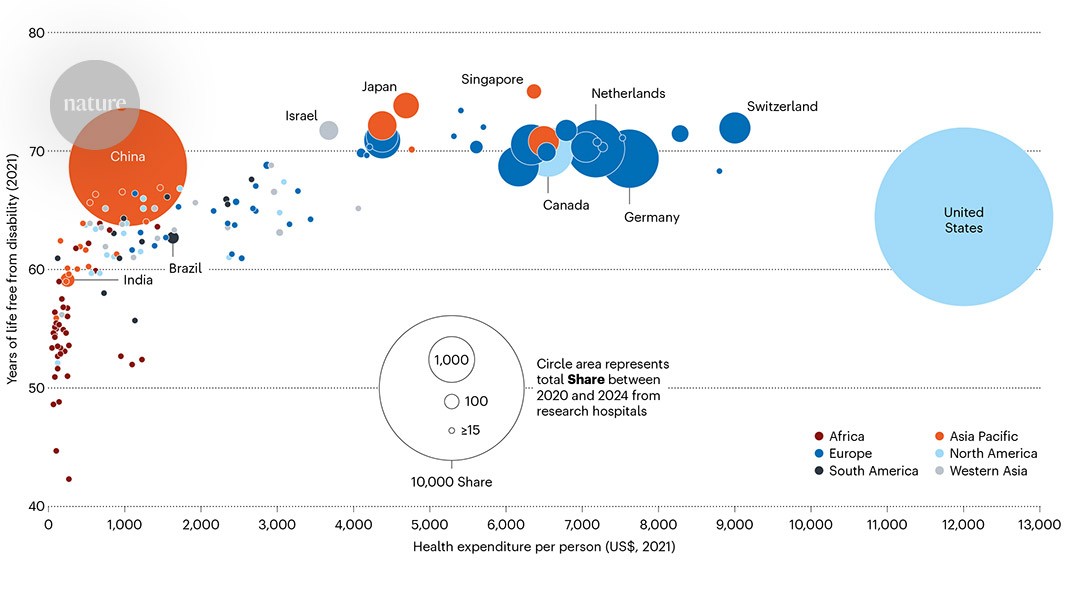
We're living in a curious moment for the status of cancer diagnosis and treatment, within the United States. The overall rate of prevalence for diseases that fall under the wide, wide title of "cancers" is increasing. At the same time, steady improvement to the standard of care and treatment, and newer breakthroughs in therapeutics, have raised survival rates higher than they've ever been before. But for all too many patients, the question is whether they'll be able to afford those
At 79, he's been a smoker most of his life but quit a decade ago, the day he was diagnosed with chronic obstructive pulmonary disease (COPD). He was struggling to breathe to such an extent it was impacting his ability to work his director of conventions sales job at the local visitors' bureau, unable to show potential clients around venues.
While the number of children in the care system in England has fallen from its all-time high of 83,750 in 2023, the latest figure of 81,770 in March last year is still 17.7% higher than a decade ago. A recently announced raft of reforms, including free prescriptions for care leavers, will not solve all of the problems. The dire financial position of many councils, and depleted state of local services, have a particularly damaging impact on the lives of those who rely most on the state.
Research into the trends of COVID-19 hospitalizations has revealed disproportionate levels of hospitalizations among Black and Hispanic populations (Pham et al., 2023). Recent studies have found similar disparities in children, with Black and Hispanic children being more likely to be hospitalized (Anglin et al., 2025). Notably, rates of previous trauma are higher in these populations (Pumariega et al., 2022), and being hospitalized can lead to additional trauma and negative psychological outcomes for children and their families (Meentken et al., 2021).
The United States lags behind many other wealthy, highly developed countries in key public health indicators. According to a report published by the World Obesity Federation , a London-based non-profit advocacy group, the adult obesity rate in the U.S. was nearly 43% in 2022, higher than in all but a handful of high-income countries, and more than double the obesity rate in France, Germany, Italy, Switzerland, and across Scandinavia.
As outlined in the recently published, NHS-England commissioned, Independent ADHD Taskforce Report, there is robust evidence that unsupported ADHD can lead to multiple adverse outcomes. 2 I was Chair of this Taskforce, but this work is now completed, so these blog posts are independent of that position. Despite the risk of adverse outcomes, we know that people with ADHD can and do thrive if they are offered early support and intervention.
Breathless as if the smoke still lingered, on a recent morning she bundled her effervescent 3-year-old daughter, Luna, into her car seat for the two-hour trek from her aunt's house in Riverside, where they have lived for much of the past year, back to their family's 1909 Craftsman home. It stands steps from the Eaton fire burn scar - untouched, but uninhabitable.
While past studies have explored how cancer patients' financial health influenced their risk of mortality, new research digs in deeper by zeroing in on objective data: credit scores. It found that when a cancer patient's credit score drops - regardless of where it started pre-diagnosis - odds of survival decrease drastically. The findings were presented earlier this month at the American College of Surgeons Clinical Congress and have not been peer-reviewed.
COVID-19 is no longer one of the top 10 causes of death in the U.S. Early data on deaths in 2024, published by the Centers for Disease Control and Prevention, show that COVID dropped from the list for the first time since the start of the pandemic. It became the third leading cause of death in the U.S. in 2020, and remained among the leading causes until now.
STATEN ISLAND, N.Y. -- Staten Islanders are more likely to be diagnosed with various forms of cancer than residents of any other New York City borough, with higher rates for more than a dozen types of cancers, state health data shows. Staten Island has had the highest overall cancer rate of any borough in New York City every year since 1997, according to data from the New York State Cancer Registry.
The reason why heart disease and cancer and obesity and diabetes are bigger in the black community is because of the stress we carry from having to deal with being called the N-word directly or indirectly every day.
"Young, a 1985 Reagan appointee, said at the hearing that he has 'never seen government racial discrimination like this' in his 40-year career, calling the funding cuts 'arbitrary and capricious, and unlawful' in his ruling."},{
The pandemic illustrated the deep-rooted disparities faced by Black communities, highlighting issues in health, wealth, and access to resources, with single Black women experiencing unique challenges.