#interest-rates
#interest-rates
[ follow ]
#federal-reserve #inflation #kevin-warsh #jerome-powell #economic-policy #trump-administration #bank-of-england






#bank-of-england
UK news
fromLondon Business News | Londonlovesbusiness.com
6 days agoRates frozen, volatility rising as markets brace for another monetary tightening phase - London Business News | Londonlovesbusiness.com
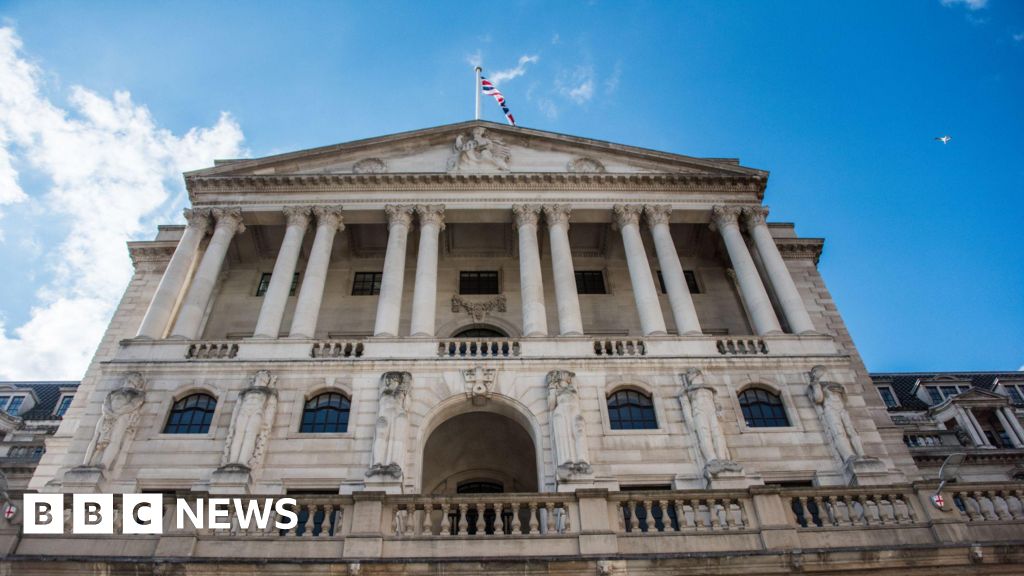
The Bank of England has decided to maintain interest rates at 3.75% amid rising global inflation risks and cooling domestic demand.
UK news
fromLondon Business News | Londonlovesbusiness.com
6 days agoRates frozen, volatility rising as markets brace for another monetary tightening phase - London Business News | Londonlovesbusiness.com
The Bank of England has decided to maintain interest rates at 3.75% amid rising global inflation risks and cooling domestic demand.
World news
fromLondon Business News | Londonlovesbusiness.com
2 days agoUSDJPY struggles to stabilise after sharp drop as markets await fresh signals - London Business News | Londonlovesbusiness.com
USDJPY has stabilized after a sharp decline, reflecting cautious market sentiment amid intervention expectations and a wide US-Japan interest rate differential.

fromLondon Business News | Londonlovesbusiness.com
6 days agoECB holds rates as inflation climbs to 3.0% - London Business News | Londonlovesbusiness.com
The European Central Bank has kept interest rates on hold, despite inflation rising to an estimated 3.0% in April 2026, driven primarily by energy prices.
Europe news
London startup
fromLondon Business News | Londonlovesbusiness.com
1 week agoBorrowing costs surge as gilt yields breach crisis-era levels amid oil shock fears - London Business News | Londonlovesbusiness.com
The ongoing Strait of Hormuz standoff is raising energy concerns and impacting global economies, leading to higher borrowing costs and potential interest rate hikes.
fromBusiness Matters
1 week agoBritain braces for 35bn energy shock as Iran conflict pushes inflation back above 4%
The war in Iran and the resulting blockade of the Strait of Hormuz will tear a £35 billion hole in UK output over the next two years, push consumer price inflation back above 4 per cent, and force the Bank of England to raise interest rates rather than cut them.
UK news
Russo-Ukrainian War
fromFortune
1 week agoRussia's economy minister admits 'reserves have largely been used up' while communist lawmaker warns of 1917-style revolution as GDP shrinks | Fortune
Russia's economy faces significant challenges, with military spending reliance and labor shortages impacting growth and productivity.
#student-loans


Higher education
fromwww.businessinsider.com
2 weeks agoShe can't get payment relief on her $137,000 in private student loans. It's a warning for millions of federal borrowers.
High private student loan debt leads to crippling financial burdens and limited repayment options for borrowers like Samantha Ferguson.
#dollar-index
World news
fromLondon Business News | Londonlovesbusiness.com
1 week agoDollar set for weekly gain as Hormuz tensions sustain safe-haven demand - London Business News | Londonlovesbusiness.com
The dollar index is poised for its first weekly gain in three weeks due to geopolitical tensions and strong economic data.
US Elections
fromLondon Business News | Londonlovesbusiness.com
2 weeks agoDollar edged higher amid geopolitical uncertainty and Fed outlook - London Business News | Londonlovesbusiness.com
The dollar index rose slightly amid US-Iran negotiations, with markets anticipating volatility and a prolonged pause in interest rates.
from24/7 Wall St.
1 week agoTreasury and Bond ETFs Are Back in Fashion: Here's What to Own in April 2026
The iShares U.S. Treasury Bond ETF holds only U.S. Treasury notes and bonds across the maturity curve, providing the cleanest expression of flight-to-quality stability in a single ticker. Credit risk is effectively zero because every holding carries the full faith and credit of the U.S. government.
Business
from24/7 Wall St.
2 weeks agoPCY's 6.1% Yield Just Got Safer as Fed Rate Cuts Ease Emerging Market Pressure
PCY holds U.S. dollar-denominated sovereign bonds issued by emerging market governments. The interest payments those governments make flow through to PCY shareholders as monthly distributions.
Business
fromFortune
2 weeks agoThe bond market would be a big casualty of the U.S. debt crisis, former Treasury secretary says | Fortune
"That's a dangerous thing," he said Thursday during an interview with Bloomberg TV, describing a scenario where demand and prices for Treasuries fall as foreign interest in the market declines.
Business
fromIrish Independent
2 weeks agoBank of Ireland raises rate on savings account in move seen as response to neobanks
It's obviously welcome to see savings rates go up. Albeit from a low enough base. Several new providers such as Moco, Monzo, and Bankinter are all now quite active in the savings space in Ireland, so this is perhaps a response to increased competition.
Retirement
from24/7 Wall St.
3 weeks agoCapital Southwest's 41% Premium Hinges on Rate Cuts That May Never Come
Capital Southwest is an internally managed BDC that provides loans to lower-middle-market companies and earns interest on those loans. It borrows at lower rates, lends at higher rates, and passes the spread through to shareholders as income.
Business
Cryptocurrency
fromLondon Business News | Londonlovesbusiness.com
3 weeks agoBitcoin pulls back from $74,000 as macro momentum gradually weakens - London Business News | Londonlovesbusiness.com
Bitcoin's recent price correction reflects a lack of strong foundation for a sustainable uptrend despite short-term positive market conditions.
fromJezebel
3 weeks agoSmart Money Is Not Buying Trump's 'Ceasefire' with Iran
Stock markets, which have fully devolved into a circus animal responding to the one stimulus they know, bought the dip hard on the president's word. Even before this insane AI rally where stock markets are doing their best crypto impression, the concept of smart money in finance was not defined by the number-go-up traders on the floor of the New York Stock Exchange.
World politics
from24/7 Wall St.
4 weeks agoRetirees Are Choosing These Monthly Income ETFs Over High-Yield Savings Accounts
High-yield savings accounts (HYSAs) are insured by the Federal Deposit Insurance Corporation or the National Credit Union Administration up to $250,000, per depositor, per insured institution.
Retirement
World politics
fromLondon Business News | Londonlovesbusiness.com
4 weeks agoGold holds amid geopolitical uncertainty, risks remain - London Business News | Londonlovesbusiness.com
Gold remains stable amid geopolitical tensions and central bank demand, but US labor data and interest rate outlook may limit its potential upside.
Retirement
fromLondon Business News | Londonlovesbusiness.com
1 month agoEvery time you borrow from a bank, you're paying more than you think - London Business News | Londonlovesbusiness.com
Opportunity cost in loans includes lost potential earnings from repayment dollars, not just the interest rate paid.
[ Load more ]