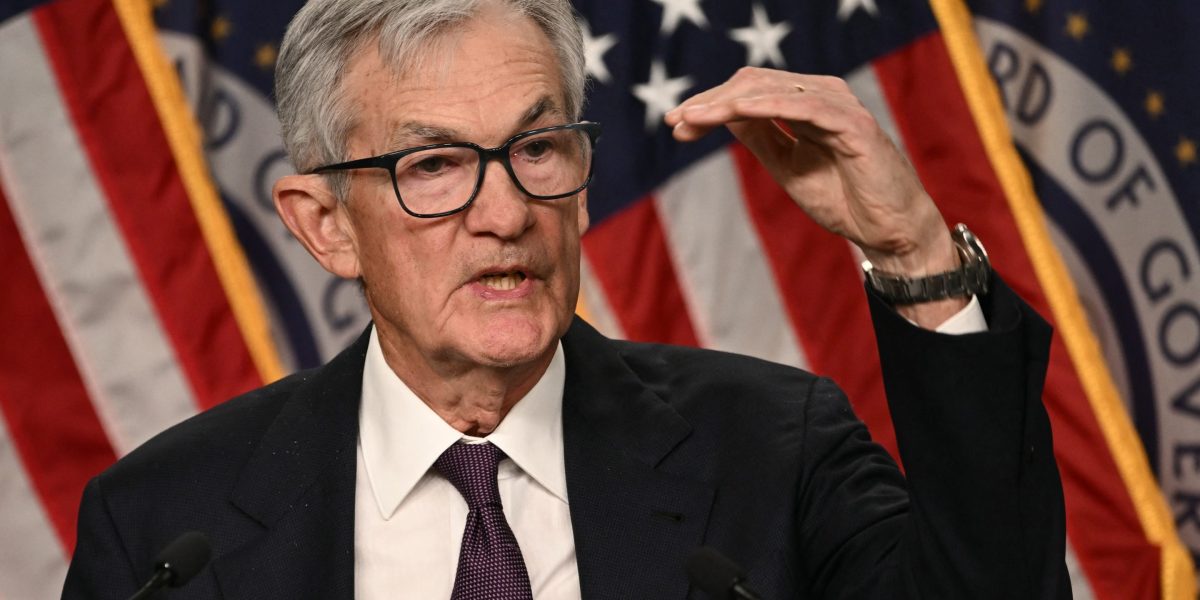
"Inflation is still stubbornly above its 2% target, and while the jobs sector is weak, it has not been alarming enough to spur significant action from the rate-setting Federal Open Market Committee (FOMC)."
"The conflict in the Middle East has a significant impact on the Fed's mandate because it affects a range of factors for businesses and consumers alike."
"Prices at gas station pumps are already rising above $4 a gallon, the most visible pass-through of rising barrel prices to the day-to-day consumer."
"The inflationary pressure from the conflict may persist longer than expected, meaning the Fed may ultimately be restrained."
Wall Street's expectation of a downward trend in the Fed's interest rates is being challenged by persistent inflation above 2% and geopolitical tensions. The conflict in the Middle East is disrupting oil supply, causing gas prices to rise above $4 per gallon. Economists are now speculating that the Federal Open Market Committee may raise rates instead of cutting them. The situation remains volatile, with recent military actions indicating that tensions are unlikely to de-escalate soon, potentially prolonging inflationary pressures.
Read at Fortune
Unable to calculate read time
Collection
[
|
...
]