#gasoline-prices
#gasoline-prices
[ follow ]
#inflation #oil-prices #strait-of-hormuz #middle-east-conflict #iran-conflict #electric-vehicles #energy-markets
from24/7 Wall St.
1 day agoTrump Promised Lower Inflation. Instead, Gas Prices May Get Worse Than Under Biden
The national average price for regular gasoline now stands at $4.483 per gallon, up from $4.176 just one week ago. In less than two weeks, gas prices have surged 11%, putting them within striking distance of the all-time AAA record of $5.016 set on June 14, 2022.
Business
World news
fromwww.mediaite.com
3 days agoA Gut Punch For The Airlines': Energy Expert Rejects Trump Official's Claim About Spirit Airlines' Demise
High jet fuel costs from the Iran war significantly impacted Spirit Airlines, leading to flight cancellations and financial struggles in the airline sector.






fromwww.npr.org
4 weeks agoDrive slower, go electric, don't drive at all? Americans weigh options for saving gas
The key to getting the most miles out of each gallon is driving efficiently. That means smooth acceleration, soft braking and slowing down. Cars tend to be the most fuel efficient when driven at about 50 miles per hour.
US news
#middle-east-conflict
World news
fromFortune
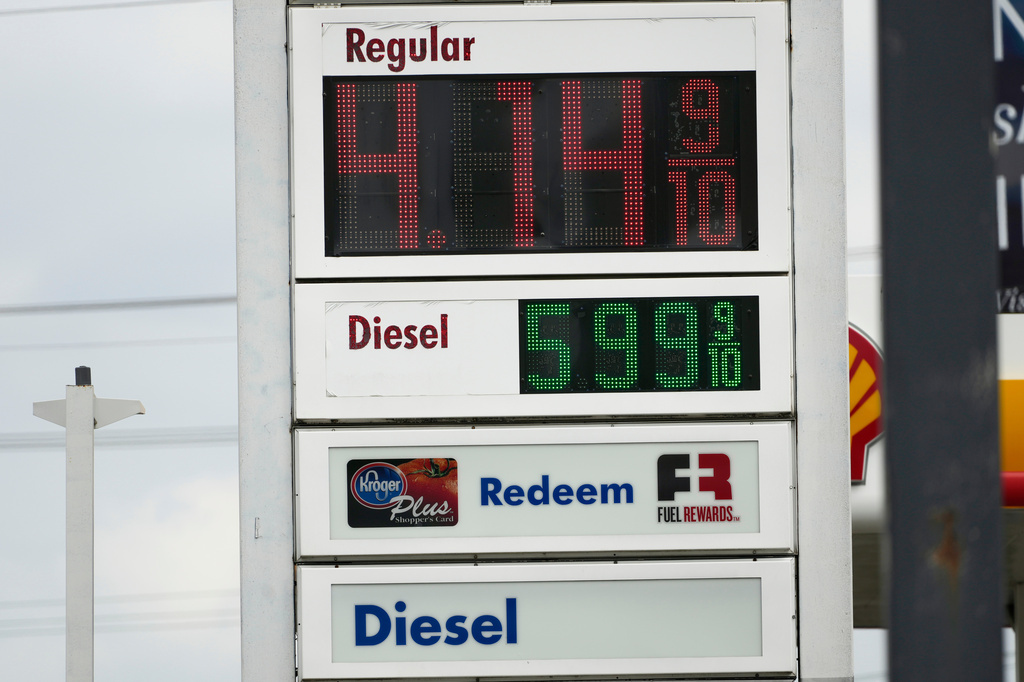
1 month agoTrump officials say gas prices will return to normal in 'a few more weeks,' but his own Energy Department says it will be 2027 | Fortune
Average U.S. gas prices reached $3.84 per gallon, up 31% in one month due to Middle East conflict, with prices unlikely to drop below $3 per gallon soon despite administration claims.
World news
fromAxios
1 month agoWhite House says it's not planning oil or gas export restrictions
The U.S. administration ruled out oil and gas export restrictions while pursuing alternative measures to address rising gasoline prices, including Strategic Petroleum Reserve releases and potential Iranian oil sanctions waivers.
US politics
fromwww.npr.org
1 month agoTrump temporarily waives the Jones Act to try to lower gas prices
The Trump administration issued a 60-day Jones Act waiver to reduce shipping costs and potentially lower gasoline prices following geopolitical tensions, though experts question its effectiveness in significantly lowering pump prices.
US Elections
fromFortune
1 month agoA market correction of 10% could be on the cards as consumer psychology shifts due to gas prices, says top economist | Fortune
Consumer visibility of gasoline prices, not crude oil costs, determines economic impact and inflation expectations through wage-price spirals.
fromPoynter
1 month agoThe US exports oil, but that won't shield Americans from higher gas prices - Poynter
The United States - we produce more oil than we can consume. We're a net oil exporter," Wright said. This comment misses some important context. Some metrics show the U.S. as a net exporter, but for crude oil - the material that's refined into gasoline - the U.S. is a net importer.
World politics
fromAxios
2 months agoWhy filling up the gas tank will soon get more expensive
Refiners will soon start the switch to so-called summer blends, which don't vaporize as easily, to meet air pollution requirements. It's more expensive and time-consuming to create fuel that's resistant to evaporation, explains Aixa Diaz, an AAA spokesperson. What's next: The seasonal cost rise typically starts at the end of February or early March as "spring break season kicks off and refineries start production of summer-blend gasoline," Diaz said via email.
Business
fromBusiness Insider
3 months agoHere's where Costco gas savings can pay for your membership the fastest
One of Costco's biggest ways to save doesn't involve setting foot inside a warehouse. The wholesale club has been selling gasoline since 1995, and many US warehouses now have pumps for members to top up. The company is even set to open its first-ever stand-alone gas station in California this year. The savings make gasoline one of the biggest ways shoppers say their annual membership fee basically pays for itself.
Business
from24/7 Wall St.
4 months agoFord, GM Race Ahead of the Market
The "win" for Ford and GM is that they are fossil-fuel kings in a fossil-fuel nation. The EV market has died, thanks mostly to the end of the federal $7,500 EV tax credit. iSeeCars research says that EV sales as a percentage of total U.S. new car sales dropped from 8% in the third quarter to 4% in the fourth quarter. It will stay at that level through 2026, the research firm forecasts.
Cars
fromwww.mediaite.com
5 months agoTrump Fumes at Fox Reporter: Americans Are Getting Fake News From Guys Like You' on Affordability Crisis
We won every swing state, we won the popular vote, we won everything. You take a look at districts, it was 2,750 to 500, 525, Because that was an affordability problem. We brought it down. Look at energy, look at look at the gasoline price. That's like the simplest, and it's the biggest. Because if energy comes down, everything comes down, that's the way it works.
US politics


fromwww.mercurynews.com
6 months agoCalifornia gasoline prices rise after refinery fire
As of mid-afternoon Tuesday, average per-gallon prices for unleaded gasoline were $4.61 in San Jose, $4.67 in Oakland, $4.76 in San Francisco, $4.75 in Los Angeles, and $4.66 in California. On Oct. 2, per-gallon prices for unleaded gas were $4.55 in San Jose, $4.65 in Oakland, $4.69 in San Francisco, $4.71 in Los Angeles, and $4.64 in California.
California



fromAxios
8 months agoHere's how power and gasoline costs compare by state
The nonprofit Electric Power Research Institute studied U.S. households' "energy wallet" - what they pay for gasoline, power, natural gas, heating oil and propane, and more. The big picture: Last year, total "wallet" spending averaged $5,530 per household, with $1,860 for electric bills and $2,930 for gasoline. That's pretty similar to 2020 levels in inflation-adjusted dollars. But there was lots of variation in between, largely from gasoline price changes, while power has been steadier.
Environment
[ Load more ]