Media industry
fromNieman Lab
21 hours agoHow newsrooms are bringing their archives to life
News organizations are repurposing archives to create new stories and engage audiences, moving beyond simple reprints.
The growing Aadam Jacobs Collection is an internet treasure trove for music lovers, especially for fans of indie and punk rock during the 1980s through the early 2000s.
The predictable file structure of the content management system makes it easy to guess where a file is stored, leading to potential leaks, as demonstrated by a journalist accessing a leaked UK budget document.
Meta has agreed to 'substantially reduce' its references to PG-13 and include a rather remarkable disclaimer: 'There are lots of differences between social media and movies.'
Bregman claims, 'Today the whole of Europe risks turning into one big Venice, a beautiful open-air museum. A great destination for Chinese and American tourists. A place to admire what was once the centre of the world.' This statement encapsulates the concern that Europe is losing its cultural significance.
The contemporary technology museum has emerged as a performative participant in the systems it seeks to document. The architecture of these institutions has become increasingly fluid and bold, often mirroring the velocity and complexity of the systems it houses. They operate as mediators between the human, the ecological, and the technological realms, transforming from encyclopedic warehouses into active educational engines.
Librarians have been actively collaborating and talking about it almost every day, whether it's creating tutorials and digital learning objectives or thinking about the conversations to have with instructors. It can feel like cognitive dissonance to be actively working with AI on a regular basis and also saying we're constantly thinking about the harms and the biases.
I wanted to write a book about how the smartphone changed the world, but the more I researched, the clearer it became that phones were actually the latest step in this evolution of storytelling technology that stretches all the way back to prehistoric times.
As part of Wikipedia's 25th anniversary, parent company Wikimedia a slew of partnerships with AI-focused companies like Amazon, Meta, Perplexity, Microsoft and others. The deals are meant to alleviate some of the cost associated with AI chatbots accessing Wikipedia content in enormous volumes by giving the tech companies streamlined access. As noted by , the timeline on these deals is a little squirrely.
Within a couple of years of ChatGPT coming out, I had come to rely on the artificial-intelligence tool, for my work as a professor of plant sciences at the University of Cologne in Germany. Having signed up for OpenAI's subscription plan, ChatGPT Plus, I used it as an assistant every day - to write e-mails, draft course descriptions, structure grant applications, revise publications, prepare lectures, create exams and analyse student responses, and even as an interactive tool as part of my teaching.
The org revealed the new partnerships in a post celebrating its 25th birthday, and which points out it is among the world's ten most-visited websites, and the only one to be run by a nonprofit. The post notes that 250,000 editors work on at least one Wikipedia article each month, and that editors make 324 changes each minute as they contribute to the 65 million-plus articles the site contains. 1.5 billion unique devices reach Wikipedia each month.
Recently, AI decided that a painting long thought to be a copy of Caravaggio's The Lute Player is actually by the master, while another version of the same subject, previously thought to be authentic, is not. Both conclusions were disputed by the former Metropolitan Museum of Art curator Keith Christiansen. A similar debate erupted in March 2025 when AI declared that portions of The Bath of Diana, also long believed to be a copy, could have been painted by Peter Paul Rubens.
Publishers' adoption of generative AI is reducing the friction between content and format, making it easier for the same story to appear as shorter summaries, audio, or video, often in real time. To some publishers, a text article may soon be more of a vehicle for original reporting, not a final product. That information could become no longer available strictly in a static piece of content, but transformed into different shapes and formats, based on a reader's signals and preferences.
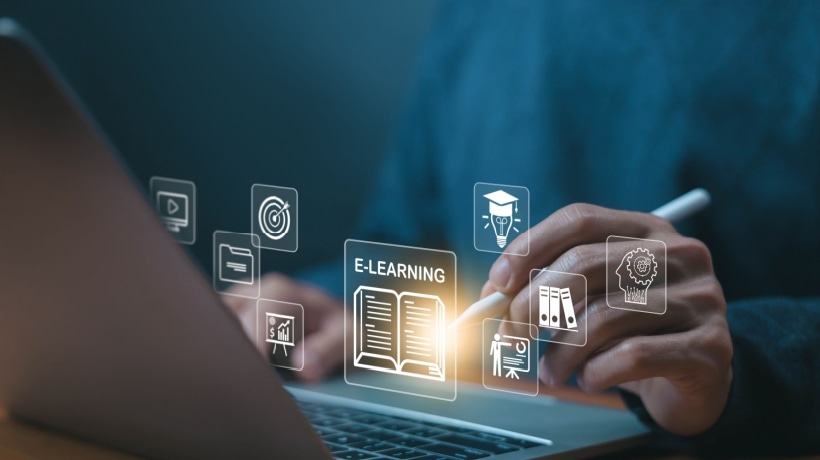
Education has never been static, but digital learning has made that movement visible. What once looked like a straight line from curriculum to classroom now feels more like a living system: stretching, folding, responding, and reshaping itself around learners, teachers, technology, and policy. Digital learning is no longer a "format." It's a motion subtle at times, seismic at others, shifting shape as expectations evolve. And here's the quiet truth many are discovering: the biggest changes aren't about more technology. They're about different technologies.
If you've worked in a technical role in news for long enough, you likely remember when the "show your work" spirit was everywhere. Newsroom nerds shared code on GitHub, swapped tips on social media and unfurled long blogs guiding others on how to get things done. You might also have a vague sense that - like reaction GIFs, demotivational posters, and that guy who sang "Chocolate Rain" - you're seeing less of it these days.