#ai-marketing
#ai-marketing
[ follow ]
#personalization #marketing-automation #openai #chatgpt #digital-marketing #generative-ai #content-creation



fromTipRanks Financial
1 month agoMicrosoft Stock (MSFT) Pops on AI Marketing Tie-Up with French Ad Giant - TipRanks.com
The partnership will combine Microsoft's cloud and AI capabilities with Publicis' business digital transformation and identity data expertise to deliver agentic or autonomous AI across marketing workflows.
Marketing tech
fromSouth China Morning Post
2 months agoWill users stick around after China's US$1 billion AI marketing battle?
In an unprecedented Chinese New Year marketing blitz, Alibaba Group Holding, Baidu, ByteDance and Tencent Holdings spent an estimated 8 billion yuan (US$1.1 billion) to turn their artificial intelligence assistants into household names, according to Morgan Stanley.
Marketing tech
fromGeeky Gadgets
2 months agoUse Claude Skills to Build A Marketing Team in 16 Minutes
In this tutorial Grace Leung explains how to create an AI-supported marketing team using Claude Skills in just 16 minutes. Claude Skills are structured workflows that translate standard operating procedures and brand guidelines into repeatable AI-driven processes. These workflows can handle tasks such as content creation, data analysis, and campaign management, allowing teams to maintain consistency while saving time for higher-level strategic work.
Marketing tech
fromPetaPixel
2 months agoGoogle's Pomelli Photoshoot Feature is Here to Hammer Nails into the Coffin of Photography
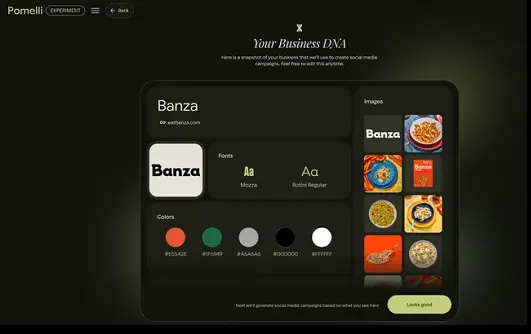
Introduced yesterday, Photoshoot uses Google's powerful generative AI tools, including Nano Banana, to create "professional" images of a product. Users simply click on 'Create a Product Photoshoot' and upload a photo of their product. It can be any photo, no matter how bad. "Don't worry about polish - we'll take care of it," Google says facetiously. From that user-generated image, Photoshoot will create various shot templates, including 'Studio', 'Floating', 'Ingredient', and 'In use'.
Marketing tech
Marketing tech
fromTechCrunch
2 months agoKana emerges from stealth with $15M to build flexible AI agents for marketers | TechCrunch
Kana provides loosely coupled AI agents for marketers to handle data analysis, audience targeting, campaign management, customer engagement, media planning, and chatbot optimization.


fromwww.marketingdive.com
2 months agoUnilever changes its brand discovery calculus with Google Cloud AI pact
Unilever has struck a five-year partnership with Google Cloud as the CPG giant prepares for a shift toward agentic commerce and artificial intelligence-powered marketing, according to a press release. The owner of brands like Dove and Hellmann's Mayonnaise will migrate its integrated data and cloud platforms to Google to build out an enterprise-wide AI infrastructure. Unilever will use tools such as Google's Vertex AI to develop capabilities in areas including brand discovery, measurement and marketing.
Marketing tech
fromThe Jerusalem Post | JPost.com
2 months agoFurkat Kasimov e-commerce returns fix: Sell confidence | The Jerusalem Post
.Most e-commerce returns stem from guessing; personalized marketing builds shopper confidence.(photo credit: Courtesy of GetSelene.AI)By TAMI DEMSKY For ecommerce operators, returns have become a structural profit leak that hits in three ways: shipping and processing costs, inventory stuck in limbo, and the long-term damage to trust that lowers repeat purchase rates. The scale is significant. Retailers estimate that 15.8 percent of annual sales will be returned in 2025, totaling approximately $849.9 billion, according to the National Retail Federation and Happy Returns .
E-Commerce
Marketing tech
fromMarTech
2 months agoMarketing owns customer data and the risks that come with it | MarTech
Successful modern marketers must master data fundamentals, governance, and privacy-compliant handling of customer and technical data because AI-driven marketing depends on accurate, lawful data.
fromForbes
2 months agoHow CMOs Can Embrace AI And Reject Shiny Object Syndrome
Nearly half of 15,639 adults from 16 countries surveyed by VML's research practice Sonar put the high cost of living in the top five problems facing society, while 86% said they find that people are more divided and unwilling to listen to one another. Nearly two-thirds say they sometimes struggle to find meaning in the day-to-day. But consumers are choosing to feel optimistic.
Marketing
Business
fromThe Motley Fool
2 months agoKlaviyo (KVYO) Q4 2025 Earnings Call Transcript | The Motley Fool
Company delivered 32% annual revenue growth to $1.23 billion with double-digit operating-margin expansion, rising international revenue, multi-product adoption, and accelerating AI-driven marketing.
fromForbes
2 months agoBy Year's End, 4 In 5 Small Businesses Will Use AI Marketing Tools
By the end of 2026, more than 80% of small businesses will be using artificial intelligence for marketing. That's the picture emerging from Constant Contact's Q1 2026 Small Business Now report, which surveyed over 1,500 SMB owners across five countries. The numbers tell the story: 54% of small businesses already use AI marketing tools, and another 27% plan to start this year. In a single calendar year, AI will go from a slight majority to near-universal adoption among small businesses.
Marketing tech



Marketing tech
fromDigiday
3 months ago'Our marketing is not a bullshit machine': Why Perplexity is investing in targeted, organic growth
Perplexity leverages brand reputation, targeted outreach to high-level professionals, and experimental marketing rather than traditional SaaS approaches to grow amid stiff AI competition.
US politics
fromenglish.elpais.com
3 months agoThe Trump administration's crusade for whole milk revives the iconic Got Milk?' white mustaches on social media
Law allows whole and reduced-fat (2%) milk back in school cafeterias and grants parental choice for plant-based alternatives, reversing 2010 restrictions.
fromThe Jerusalem Post | JPost.com
3 months agoRainmaker: AI marketing agency adapts to global & Mideast | The Jerusalem Post
This article examines the rise of AI-led marketing systems through the lens of Rainmaker, an AI marketing agency built to help B2B organizations navigate regional complexity, international competition and measurable growth. Rainmaker is an AI marketing agency that helps B2B organizations make measurable marketing decisions using applied artificial intelligence. It analyzes search demand, audience behavior and performance data to identify where growth exists and how it can be captured efficiently.
fromSfgate
4 months agoWhat We Learned From AI & Social Media Marketing Trends in 2025
With artificial intelligence reshaping nearly every aspect of how we work, reaching customers has become even more challenging. Search is increasingly less effective, people are overwhelmed by continuous noise on social media, and brands are struggling to find their voice. In 2025, AI upended traditional marketing strategies. It drastically reduced the effectiveness of search engine optimization, yet it also allowed savvy brands to reach new potential clients with well-honed, engaging content.
Marketing tech
fromNational Mortgage News
4 months agoAI is changing the rules of mortgage industry marketing
"Definitely within the last year, we've all from a marketing perspective have had to look at things a little bit differently and focus on being the best answer and not just the loudest bidder," said Sarah DeCiantis, chief marketing officer at United Wholesale Mortgage. "It's challenging all of us to think about things a little bit differently and from more of a consumer-first, consumer-why or consumer-intent perspective, than just focusing on the paid side of things."
Marketing
fromMarTech
5 months agoFive ways AI changed marketing strategy in just one year | MarTech
In last year's report, the main disruption was inside marketing: established vendors vs. upstart AI-native tools, or the challenge of managing ever-expanding martech stacks. This year, the main disruption is outside of marketing's control: The consumer use of tools like ChatGPT, Claude and Gemini for research and buying decisions is turning everything upside down. Half of all consumers already use AI-powered search, putting as much as 50% of traditional search traffic at risk. That's an enormous power shift.
Marketing
fromSocial Media Explorer
5 months agoNavigating AI-Driven Marketing: Balancing Efficiency and Authenticity - Social Media Explorer
Marketing through the ages has always depended on human effort, but now AI's greatest strength is its ability to analyze large amounts of data in a very short time. Marketers no longer have to spend long hours reviewing daily reports, as machines now spot trends, forecast customer behavior, and identify new marketing opportunities. The AI-driven platforms are capable of: Figuring out the audience groups that are going to convert
Artificial intelligence
Marketing tech
fromThe Berkshire Eagle
5 months agoZBANX Launches "CMO Agent" Full-Stack Intelligent System: AI Empowers Global Brand Incubation in 7 Days
ZBANX's CMO Agent uses AI to unify strategic planning, creative automation, and cross-channel optimization for predictable, scalable global brand expansion.
Marketing
fromGeeky Gadgets
5 months agoGemini 3 Supercharged Marketing : 9 Tools & Workflows to Outpace Rivals in 2026
Google's AI tools like Gemini, Notebook LM, and Google AI Studio accelerate marketing by centralizing data, automating tasks, generating creative assets, and enabling smarter decisions.
Marketing tech
fromFortune
5 months agoAirOps raises $40 million Series B at $225 million valuation to rethink marketing in the age of AI | Fortune
AirOps provides marketers concrete AI-driven tools to analyze and refresh public company content, helping adapt organic strategies for LLM-driven discovery while backed by $40M funding and a $225M valuation.

fromGeeky Gadgets
6 months ago9 ChatGPT Marketing Hacks from the Best in the Business
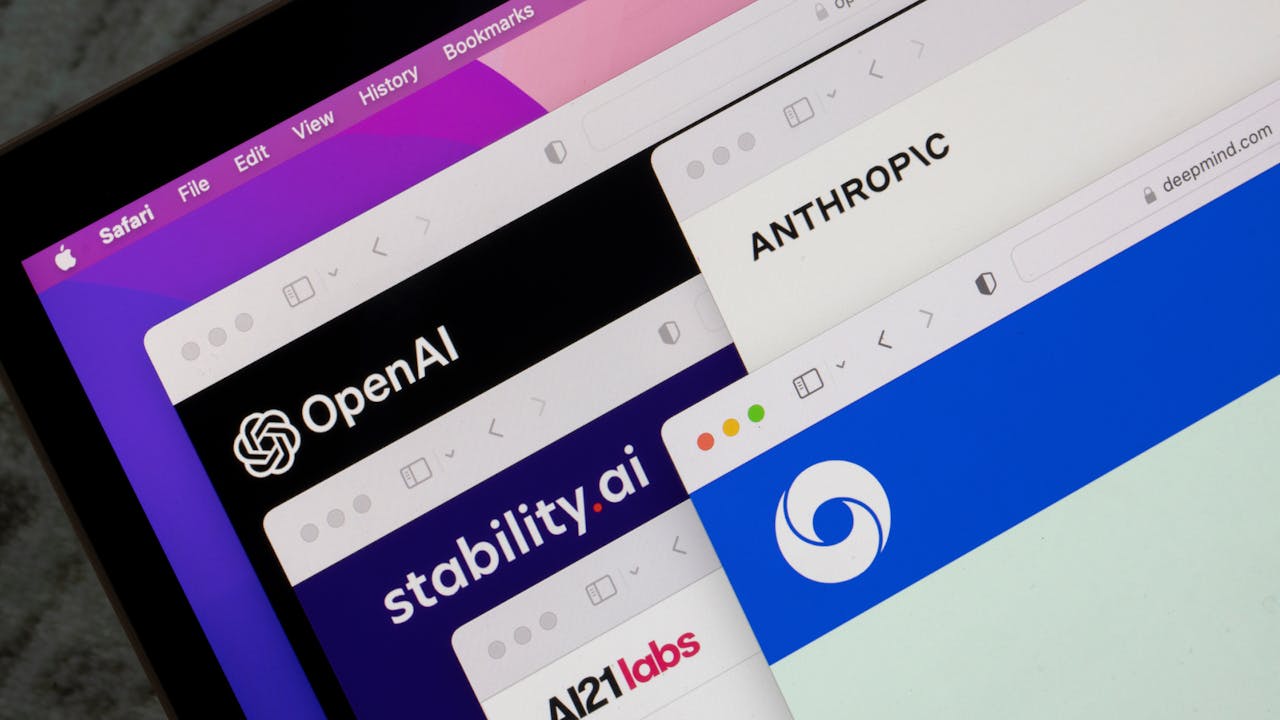
It's not just their creativity or hustle, it's their ability to embrace innovative tools that give them a competitive edge. Enter ChatGPT, the AI powerhouse that's quietly transforming the way elite marketers work. Imagine crafting hyper-targeted campaigns in minutes, uncovering hidden customer insights, or predicting market trends with uncanny accuracy. These aren't futuristic dreams, they're the everyday reality for marketers who know how to harness the full potential of AI.
Marketing
Marketing tech
fromDigiday
6 months agoIndependent agencies face new frontier as agency-in-a-box tools democratize creativity
AI-powered agency-in-a-box tools let SMBs create and manage marketing campaigns in-house, reducing agency budgets and pressuring independent creative agencies' revenue and roles.

Artificial intelligence
fromModern Retail
6 months agoVideo: How AI is redefining brands' approach to creativity and customer connection
AI models and automation let marketers accelerate creative production, personalize customer journeys, surface hidden insights, and build proactive agentic systems while managing brand risk.
Marketing tech
fromExchangewire
6 months agoDigest: WPP Courts Advertisers with Self-Serve Platform Launch; Comcast Linear TV Goes Programmatic; The Observer Signs AI Deal
Major media and ad companies are expanding programmatic and AI-powered self-serve tools to reach more advertisers and enable unified, targetable TV and AI-driven news distribution.
fromwww.housingwire.com
6 months agoScroll, swipe, sold: Klipster app brings the TikTok effect to real estate
The founders said Klipster is intended to replace the multiple tools agents and buyers typically use during the home-search process and characterized it as bringing the TikTok effect to real estate. Consumers can buy everything from sneakers to sofas in seconds on TikTok Shop and Instagram, so why should real estate feel stuck in the past? Dine said. Klipster takes that shift to the next level, giving agents and buyers a seamless way to tour, chat and apply in real time.
Real estate
Miscellaneous
fromTipRanks Financial
6 months agoWPP Launches WPP Open Pro: A New AI Marketing Platform - TipRanks.com
WPP launched WPP Open Pro, an AI marketing platform enabling brands to independently plan, create, and publish campaigns, expanding WPP's addressable market and transforming marketing delivery.
fromeLearning Industry
6 months agoAI Marketing Ideas: 25 Proven Tactics For HR Tech And LMS Vendors To Drive Growth
AI is no longer a niche in marketing; it is a must-have for powerful, measurable, and effective performance. There was a time when Artificial Intelligence looked like a futuristic project, mostly present in movies, cinemas, and books. Nowadays, AI is present in most use cases and industries around the world, making our lives easier. Speaking of use cases, AI is being widely used in marketing, opening the path to success in many industries.
Marketing
fromMedium
6 months agoNostalgia as product strategy
If you haven't seen them yet, OpenAI's launched new ad campaign of short 30 seconds videos that embed AI into an idealised, warmly analog, version of the past. They're quite visually pleasing, to be honest, with a slight VHS grain and muted colours, and depict very relatable everyday scenarios like wanting to impress a girl or getting fitter. They lean hard on 80s soundtracks and cheesy movie vibes.
Marketing
fromMedium
6 months agoNostalgia as product strategy
If you haven't seen them yet, OpenAI's launched new ad campaign of short 30 seconds videos that embed AI into an idealised, warmly analog, version of the past. They're quite visually pleasing, to be honest, with a slight VHS grain and muted colours, and depict very relatable everyday scenarios like wanting to impress a girl or getting fitter. They lean hard on 80s soundtracks and cheesy movie vibes.
Artificial intelligence
fromMarTech
7 months agoAI's value is measured in outcomes, not adoption | MarTech
To justify AI investment, marketers must show whether campaigns convert better, leads improve in quality, brand metrics lift or return on ad spend (ROAS) rises - and then validate that AI was directly responsible. Define the right performance question Before measuring, clarify what AI is expected to impact. Start with specific, outcome-based questions: Will AI-generated product descriptions increase mobile conversion rates compared to our current copy? Does AI-driven bidding deliver a lower cost per acquisition on our key audiences than manual bidding did last quarter?
Marketing tech
Artificial intelligence
fromMarTech
7 months agoMy AI marketing team has a professor, a writer and a slick salesperson. Yours can, too. | MarTech
Use Gemini for deep research and professional analysis, Claude for narrative development and editing, and ChatGPT for fast, versatile brainstorming and everyday tasks.
[ Load more ]