#corporate-culture
#corporate-culture
[ follow ]
#leadership #remote-work #return-to-office #employee-engagement #management #work-life-balance #productivity


Remote teams
fromFortune
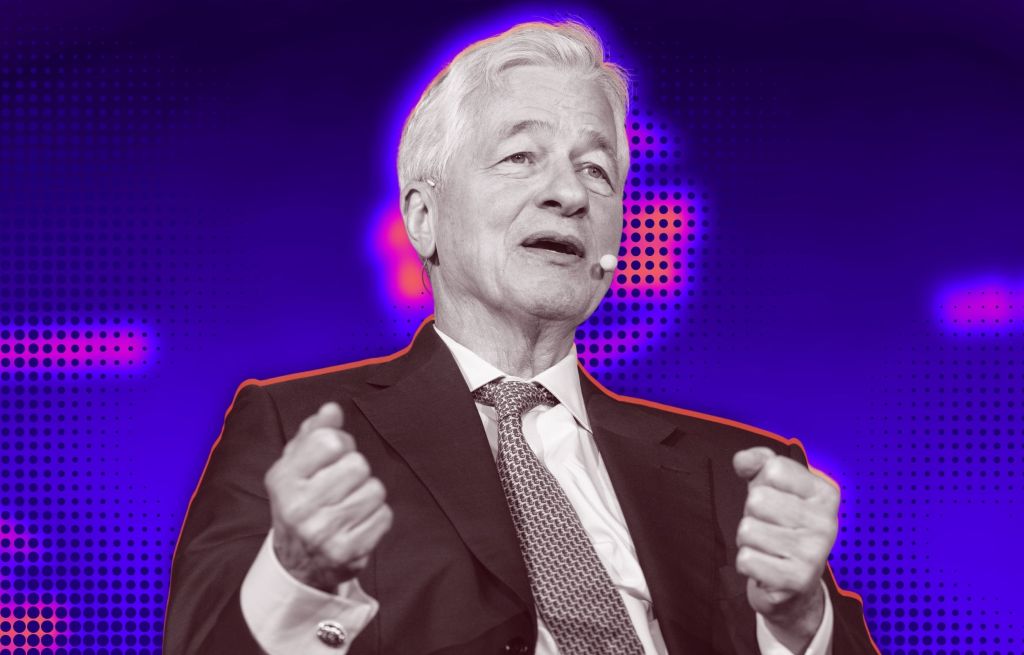
1 week agoJamie Dimon says bureaucracy sinks companies and the solution may be getting rid of the 'jerks' who don't want to solve it | Fortune
Bureaucracy is a silent killer in organizations, leading to complacency and arrogance, which can ultimately determine a company's success or failure.

#remote-work
Remote teams
fromThe Queen Zone
2 weeks agoWhy Americans are refusing to return to the office full-time: 11 valid reasons
Many professionals prefer remote work over returning to the office due to cost savings and improved work-life balance.

fromRolling Out
2 months agoRemote teams
Remote vs in-office debate splits workplaces apart
Remote work evolved from pandemic necessity into a fundamental workplace conflict between employer demands for office returns and employee insistence on flexibility, reflecting deeper power dynamics in employment relationships.

fromThe New Yorker
3 weeks agoCory Doctorow on the High Cost of Living with the Ultra-Rich
Billionaireism describes both the pathology that affects you when you are so wealthy that you're effectively above consequences and above moral consideration for others, and the pathologies that having a society dominated by such people inflicts on the rest of us.
Philosophy
Startup companies
fromwww.businessinsider.com
4 weeks agoRoblox's Peter Yang wants his kids to skip college and corporate life to bootstrap businesses
Artificial intelligence is transforming entrepreneurship, enabling individuals to bypass traditional corporate paths and build businesses more efficiently.
Psychology
fromSilicon Canals
1 month agoA clinical psychologist explains that the need to 'earn' your place in every room you enter isn't humility. It's the residue of a childhood where love had prerequisites, and you internalized the application process as permanent. - Silicon Canals
Humility can mask a dangerous need for validation rooted in childhood experiences, leading to exhaustion rather than true ambition.
Retirement
fromFortune
1 month agoDelta started sharing profits with its 100,000 employees two decades ago. CEO Ed Bastian says shareholders love it | Fortune
Delta's profit-sharing program rewards employees with substantial bonuses, distributing over $1 billion this year, enhancing company culture and employee satisfaction.
Business
fromFortune
1 month ago12 Fortune 500 CEOs worked for Pepsi. Delta's Ed Bastian explains why it's a leadership factory | Fortune
PepsiCo has significantly influenced the development of business leaders, including Delta's Ed Bastian, through its talent-focused culture and leadership grooming practices.
Silicon Valley food
fromTasting Table
1 month agoThis Is What Goes On At Taco Bell's Headquarters In California (Only Select Fans Are Ever Invited Inside) - Tasting Table
Taco Bell's headquarters in Irvine, California, invites select fans to experience menu development and company history behind the scenes.
Relationships
fromSilicon Canals
1 month agoMy brothers and I built a company together, which requires the specific skill of disagreeing with someone you love and then sitting at the same dinner table, and I've come to believe that the families who can do that-argue well and stay-have something most organizations spend millions trying to manufacture - Silicon Canals
Family businesses succeed by separating professional disagreement from personal relationships, maintaining passionate debate while preserving deep bonds.
Women in technology
fromFortune
1 month agoSheryl Sandberg says Silicon Valley's hypermasculine rhetoric is 'terrible'-contributing to 'one of the worst' corporate climates she's ever seen | Fortune
Silicon Valley's hypermasculine corporate culture represents one of the worst cultural shifts in corporate America, contradicting diversity and inclusion progress made in recent years.
Travel
fromTravel + Leisure
1 month agoI've Gone on Dozens of Business Trips-and This Is the No. 1 Thing I Do to Make Each One Feel Like a Vacation
Business travel initially seems glamorous but becomes exhausting due to packed schedules, sleep deprivation, and constant work demands that extend beyond office hours.
Cocktails
fromFast Company
2 months agoIn recovery? Here's how to handle social drinking situations in the workplace
Professionals in recovery from alcohol addiction can maintain sobriety in workplace drinking cultures by setting boundaries, avoiding overexplanation, and recognizing that colleagues care less about abstinence than feared.
Psychology
fromSilicon Canals
2 months agoThe Loyalty Trap: Why Workers Defend the Institutions That Exploit Them - Silicon Canals
Companies systematically manufacture psychological ownership in employees through equity tokens and mission-driven culture to increase loyalty and reduce turnover, despite minimal actual financial benefit to workers.
Business intelligence
fromBusiness Insider
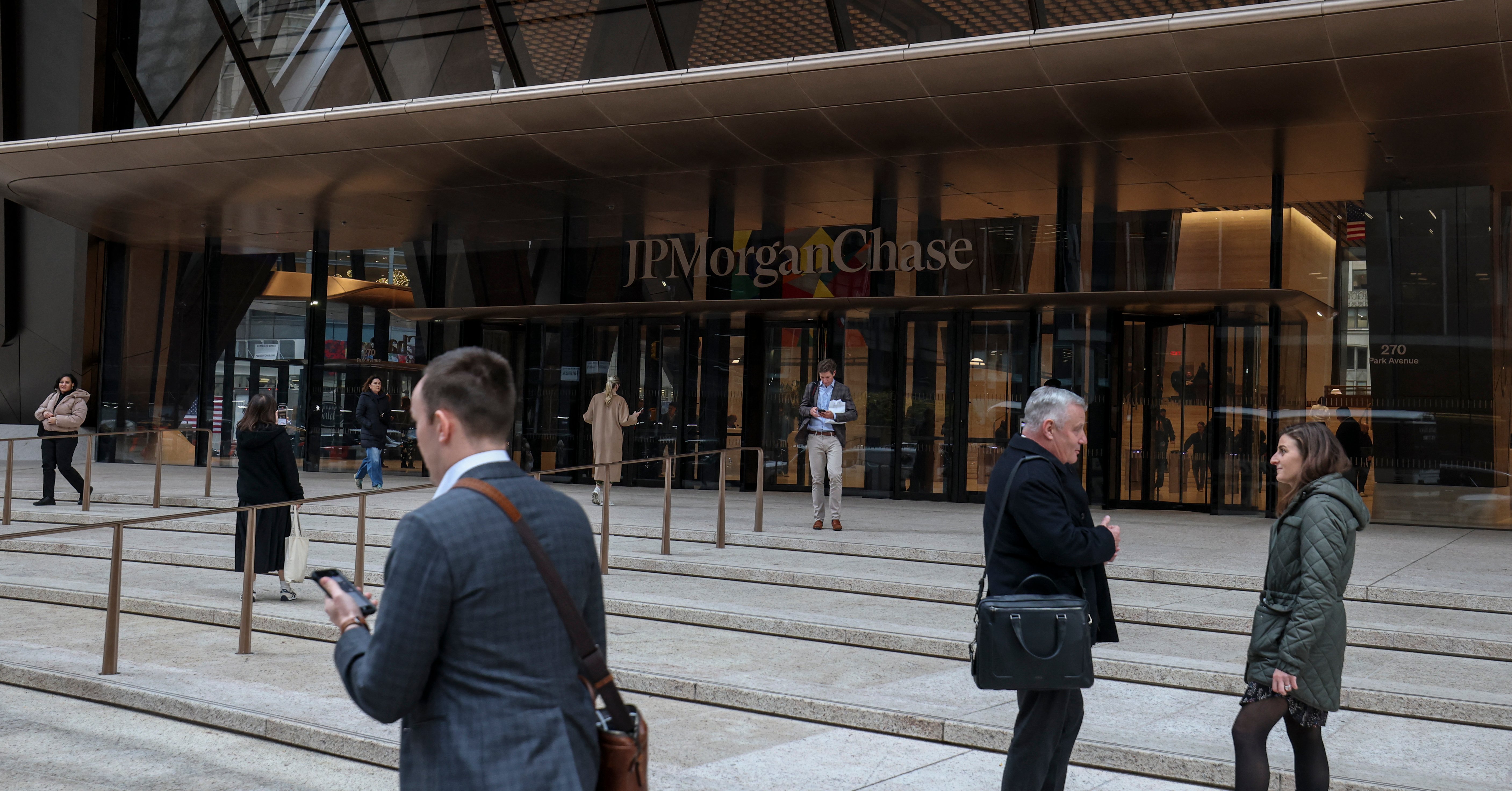
2 months agoA LEGO-style replica of JPMorgan's new 270 Park skyscraper has an internal waitlist and is listed for $500 on eBay
JPMorgan employees can purchase a $150 LEGO-style replica of the bank's new $3 billion headquarters through an internal waitlist with strict pickup procedures.
fromEntrepreneur
2 months agoUber CEO Says He Expects Employees to Answer His Emails on Weekends 'Immediately' - or Else Risk Getting 'Pushed Out'
We're going to be really demanding. If you're not performing, we're going to let you know - and if you don't fix it, we're going to push you out. Hard work is the most important skill in life for young people to develop, whether they study engineering, medicine or literature.
Business
Business
fromFortune
2 months agoBillionaire bosses like Jeff Bezos and Reid Hoffman denounce work-life balance-and some think working nonstop is key to success | Fortune
Several CEOs reject 'work-life balance' as a tradeoff, preferring 'harmony' or 'fluidity', while others enforce strict boundaries or blur work and personal life.
Business
fromFortune
2 months agoAmazon exec says the most important lessons from Jeff Bezos were the power of the 16 leadership principles he once dismissed as a 'cult' | Fortune
Amazon cultivated a strong, shared culture using Leadership Principles that aligned employees, reduced friction, and shaped leaders like Doug Herrington.
Careers
fromBusiness Insider
2 months agoThis Gen Z consultant quit his Big Four job and turned roasting corporate culture into a full-time career
A former Big Four consultant quit to become a full-time creator and comedian after earning more from viral videos satirizing repetitive, absurd corporate culture.
fromFortune
2 months agoWhy GM's supply chain chief sees groupthink as a business liability | Fortune
Shilpan Amin sits at the operational core of General Motors. As the global chief procurement and supply chain officer, his remit cuts across engineering, manufacturing, finance, and the company's vast supplier network. At GM's scale, procurement is not simply about buying parts. It determines how capital is deployed, how risk is priced and absorbed, how quickly vehicles move from design to launch, and how the company navigates geopolitical shocks while protecting long-term margins.
Business

fromBusiness Insider
3 months agoSam Altman included a subtle dig at Mark Zuckerberg in his message to employees
The OpenAI CEO sent employees a message on Slack criticizing Immigration and Customs Enforcement - and appears to have taken the opportunity to also take a subtle jab at his rival, Mark Zuckerberg. The reference can be found where Altman wrote that OpenAI aims to "not get blown around by changing fashions." "We didn't start talking about masculine corporate energy when that was popular," Altman told employees.
Artificial intelligence
fromBusiness Insider
3 months ago10 quotes about xAI and Elon Musk from the engineer who is out days after giving a sweeping podcast interview
How is xAI building its data centers so quickly? Through temporary licenses, Ghori said. "It was the fastest way to get the permitting through and actually start building things," Ghori said. "I assume that it will be permanent at some point." Ghori said that the temporary leases were an exception granted by the local government, one made for carnivals. The host, Ti Morse, laughed: "So xAI is actually just a carnival company?" "It's a carnival company," Ghori responded.
Artificial intelligence
fromwww.housingwire.com
3 months agoTaylor Morrison leads most-trusted rankings for 11th year in 2026
For the past five-plus years up to this very day, an 800-lb gorilla takes a seat at the table at every meeting in every Taylor Morrison conference room in every one of the organization's offices. From its Scottsdale, AZ headquarters, to its three national operating regions, to its divisional hubs in 20 markets across 12 states, to its sales centers in 345 actively selling neighborhoods, that gorilla is physically there in the room in all of those meeting rooms involving Taylor Morrison's 3,000 or so team members.
Real estate
fromFortune
4 months agoAfter 23 years working for Jeff Bezos, the CEO of a $1.3 billion skills platform shares lessons he learned from Andy Jassy and the Amazon founder | Fortune
At the time, Bezos had interviewed virtually every one of Amazon's circa 200 employees; Hart was one of the few the tech entrepreneur hadn't personally appointed. Over the next 23 years at the online giant, Hart reported directly to Bezos as technical advisor to the CEO, and to Amazon's current CEO, Andy Jassy.The lessons Hart learned at one of the world's most famous businesses have stayed with him to this day, where he leads $1.35 billion online learning giant, Coursera.
Tech industry
fromBusiness Insider
4 months agoHere's what it's like to be in Blackstone's annual holiday video
Imagine showing up to work at your high-powered Wall Street job and being asked to play Max Headroom, or execute the iconic lift from "Dirty Dancing?" Blackstone's latest holiday video dropped on Thursday, celebrating the firm's 40th anniversary with a slew of 80s references. Three of the Blackstone executives featured in the latest edition of the "cringeworthy" Wall Street tradition spoke to Business Insider about their experience.
Business
Women
fromFortune
4 months agoSheryl Sandberg says Silicon Valley's hyper-masculine rhetoric is 'terrible'-contributing to 'one of the worst' corporate climates she's ever seen | Fortune
Silicon Valley corporate culture has shifted toward hyper-masculinity and anti-DEI rhetoric, creating a hostile environment for women and marginalized employees.
fromBusiness Matters
4 months agoWhy UK Businesses Are Turning To Premium Off-Site Experiences To Improve Team Performance
Standard conference rooms are losing their grip. UK companies are actively searching for formats outside the office because the old model simply isn't delivering. The predictable setting of a hotel suite or a rented seminar space now often stifles the very energy it aims to create. Teams walk in expecting monotony, and they usually get it. This dissatisfaction is driving a clear pivot toward premium, experience-driven off-sites, with water-based venues rising as a particularly compelling option for those seeking genuine impact.
Business
Business
fromBusiness Insider
4 months agoAT&T CEO says he made a mistake in how he went about fixing company culture - but the viral memo wasn't it
AT&T CEO John Stankey acknowledged he was too slow to prioritize and enforce culture change, taking responsibility and accelerating a market-based shift across the company.
fromHarvard Business Review
4 months agoInside Coinbase's Mission-First, Remote-First Bet
Today's case examines how one cryptocurrency exchange navigated two major resets in a single year. The first was moving to a fully remote workforce, and the second was adopting a policy that explicitly banned political and social activism at work, sparking an intense debate about leadership, culture, and the boundaries of corporate engagement in social issues. Oh, and if that weren't enough, these decisions came at a pivotal moment just as the company was preparing for its historic IPO.
Business
Television
fromFortune
4 months agoAfter he 'fired himself' from a Fortune 100 job that paid up to $800k, the 'Mister Rogers' of Corporate America shows Gen Z how to handle toxic bosses | Fortune
Timm Chiusano left a high-paying VP role at Charter to become a content creator focused on workplace advice and appreciating everyday life on TikTok.
fromFast Company
5 months agoThe CEO of Starbucks is making a very big mistake-and it's destroying what made the company great
In 1983, Howard Schultz was an employee of Starbucks, a small chain of coffee stores that mainly sold beans (and no drinks), when he was sent to Milan for a trade show. As Schultz observed Italians visiting their local cafés, he loved what he saw, describing it as a " sense of community, a real sense of connection between the barista and the customer."
Coffee
Video games
fromFortune
5 months agoNintendo's 98% staff retention rate means the average employee has been there 15 years | Fortune
Nintendo retains employees long-term, preserving institutional knowledge while combining it with fresh ideas to sustain creativity and compete successfully against larger rivals.
fromIndependent
5 months agoKsenia Samotiy: Times have changed and so have work parties, but part of me wants to experience the chaos of Christmas past
The default setting at corporate Christmas parties is a sort of cautious politeness And lo, it was early December. And the bosses said unto the workers: A Christmas party you shall have. Fun shall be organised with your co-workers and food shall be consumed.
Business
Business
fromFortune
5 months agoWarren Buffett's exit is 'leadership at its most selfless,' McKinsey CEO whisperer says. It's a powerful lesson in Fortune 500 succession | Fortune
Warren Buffett's departure exemplifies selfless leadership and deliberate succession planning that prioritizes Berkshire Hathaway's long-term organizational future over personal tenure.
[ Load more ]