Costco Wholesale Corp ( NASDAQ:COST) just reported something remarkable: a 92.3% renewal rate in the US and Canada, with 89.8% worldwide. That's not just a metric. It's the entire business model distilled into two numbers. Most retailers live and die by comparable sales or margin expansion. Costco's stickiness lives in membership renewal. When nine out of ten customers voluntarily write another check each year, you've built something Amazon.com Inc ( NASDAQ:AMZN) and Walmart Inc ( NYSE:WMT) can't easily replicate.
Futures are trading higher after a strong bounce-back Monday, with all major indices ending the day higher, as we started February on a winning note. Investors were able to look past the crypto and precious metals meltdowns, geopolitical hot spots around the world, some big retail and institutional investors' profit-taking, and a surge of additional issues to power stocks higher on Tuesday. The Dow Jones Industrials led the way on Monday, closing at 49,407, up 1.05%,
The company said Sunday night that it planned to raise up to $50 billion in debt and equity during the 2026 calendar year to fund additional data center capacity for its cloud customers. The market's initial reaction was favorable, with Oracle shares rising about 2% in early trading, as investors took the announcement as confirmation that demand for AI infrastructure remained strong and contracted. The market seemed to feel confident that Oracle actually had a plan to address its roughly $100 billion debt load.
New data from Novuna Business Finance reveals the first green shoots of a potentially new upward trend in small business growth forecasts. Following a worrying 18-month period since mid-2024, when the percentage of small businesses predicting growth fell for five-consecutive quarters - to a five-year low of 25% - January 2026 sees an upturn, with 27% of enterprises predicting growth for the first three-months of 2026.
We live in a world where spending freely is often seen as a sign of success. Flash your credit card without checking the price tag, and you're "living your best life." But here's what I've learned after running my own businesses and studying consumer behavior: The shopping habits that look "cheap" are actually the ones that separate the financially intelligent from those drowning in debt. The truth? Those "cheap" behaviors are about discipline, long-term thinking, and understanding the real value of money.
"Every morning the opening screen on my Bloomberg is what's going on with CDS spreads on Oracle debt," Morgan Stanley Wealth Management CIO Lisa Shalett told Fortune in October, seeming to speak for a market that was increasingly worried about the bursting of a bubble in artificial intelligence (AI).
Shares of AppLovin (NASDAQ: APP), the volatile, mobile game-focused adtech stock, were moving lower last month as the company faced another short-seller attack, software valuations came under scrutiny due to threats from AI, and Google unleashed a new platform for AI game creation, which was seen as a threat to gaming stocks. As a result, AppLovin stock fell sharply last month, closing January down 30%, according to data from S&P Global Market Intelligence.
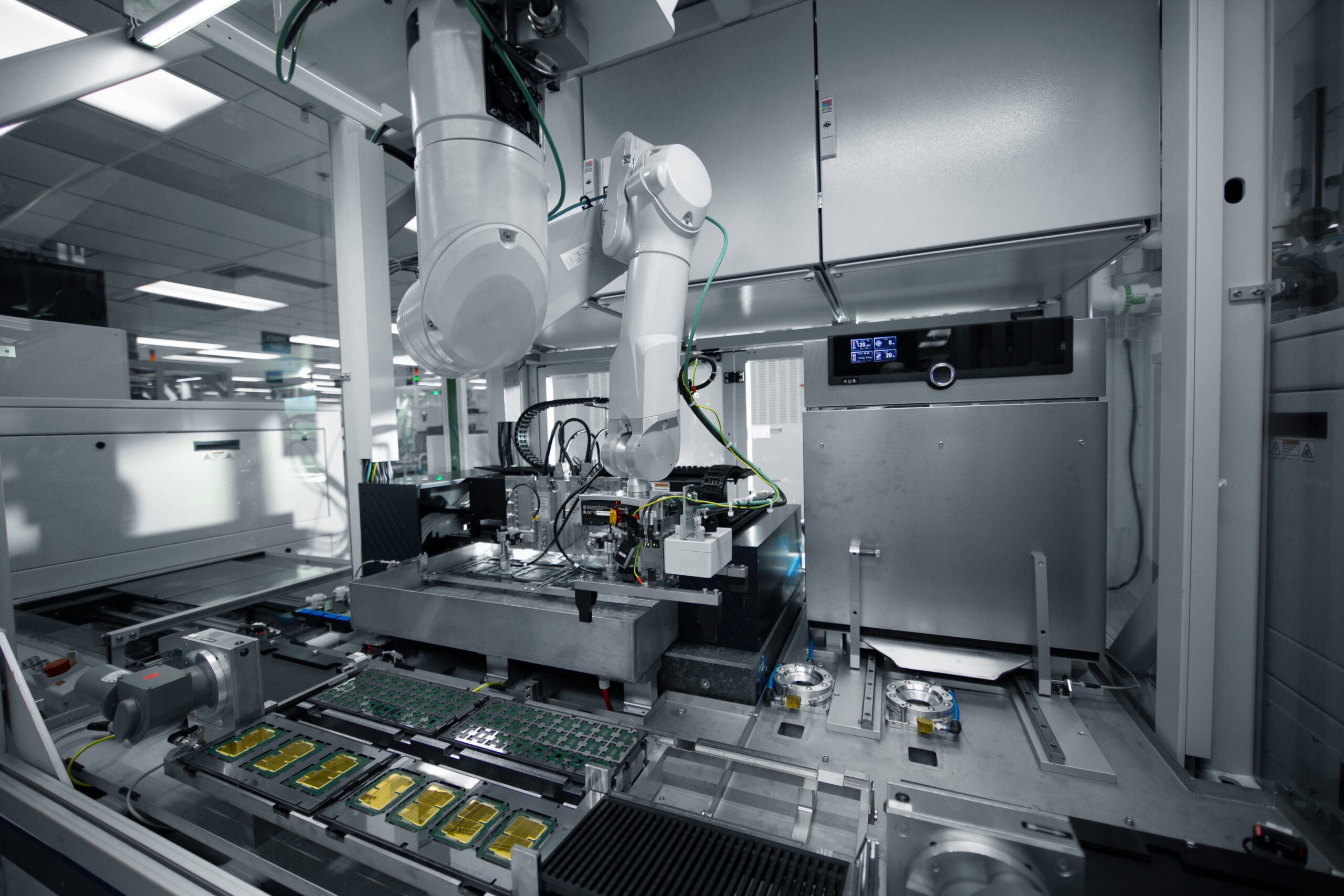
As investors turned their back on software (notably, the seat-based software-as-a-service companies), they're turned towards hardware in a big-time way. You wouldn't know it by looking at those flat shares of Nvidia ( NASDAQ:NVDA), but the iShares Semiconductor ETF ( NASDAQ:SOXX) is up around 13% year to date, with few signs of slowing down. The winners within semis have been broad, but the undisputed kings of the 2026 semiconductor surge belongs to the memory and storage stocks.
The difference between staying wealthy and losing it all isn't about making brilliant investment moves or having insider knowledge. After interviewing over 200 people for my articles, including everyone from startup founders to researchers studying wealth preservation, I've noticed something fascinating: Wealthy people who maintain their wealth make profoundly boring choices that most of us overlook. These aren't the sexy decisions that make headlines. They're the mundane, almost tedious habits that create an unshakeable foundation.
Whether you lead a Fortune 500 division, sell handmade jewelry on TikTok, or shoot threes in the NBA, building your personal brand is essential. For decades, ambitious people flocked to New York or California where legacy newsrooms, corporations, and advertising agencies clustered. While those ecosystems remain powerful, digital and social media now allow Americans to build their brand anywhere. Since traditional hot spots are expensive, it begs the question, "Is it still necessary for your career to live there?"
First, we asked fuel market analyst Patrick De Haan at GasBuddy, an app that finds deals, how many gallons the typical American driver buys in a year. He said 600, which works out to roughly 40 purchases of 15 gallons each. We then identified 13 Costco warehouses in metro areas that cover the continental US and compared their gas station prices to GasBuddy's average price for those local markets on the same day.
"Read 500 pages... every day. That's how knowledge works. It builds up, like compound interest." When Warren Buffett dropped this wisdom bomb, most people probably thought he was exaggerating. Five hundred pages? Every single day? Who has time for that? But here's the thing about Buffett that most people miss. The Oracle of Omaha isn't just talking about reading as some nice-to-have habit. For him, reading IS the work. It's the foundation of everything he's built, from turning Berkshire Hathaway into a $900 billion empire.
"We have also been successful managing complex multi-year programs for a wide variety of clients including school districts, universities and large corporations," GOGO Charters Vice President of Charter Operations Farid Parsa said. "Our company's success is due to hard work and differentiating ourselves from other providers. That includes being transparent, upfront and honest while providing good customer service. But at the end of the day, it comes down to reliability.
The resilience of gold above $4,800 per ounce at this stage reflects a delicate and complex balance between traditional supporting factors and emerging pressures-one that cannot be superficially interpreted or reduced to the movement of the dollar alone. It is true that the U.S. dollar's retreat from its recent peaks, after failing to sustain its recovery momentum from a four-year low, provided gold with a short-term breather and attracted some buyers.
AskGamblers has shared its 2025 report, revealing that $1.68 million was returned to players in the last quarter of 2025 alone. AskGamblers Casino Complaint Service (AGCCS) recovers funds from casino and sports betting complaints, returning money gained via disputes to the players. Between October and December 2025, AGCCS received 3,460 complaints from players around the world. 1,252 cases were processed, with 815 disputes resolved.
Russian military intelligence is recruiting young people online to carry out arson and other acts of sabotage across Europe. In this week's issue, Joshua Yaffa reports on the Kremlin's secret campaign to undermine the West's support for Ukraine-and breaks down how "single-use agents" are being deployed across the Continent. Some of their missions are small-putting up posters, or picking up a package-while others involve physical attacks, for example setting off explosives and starting fires.